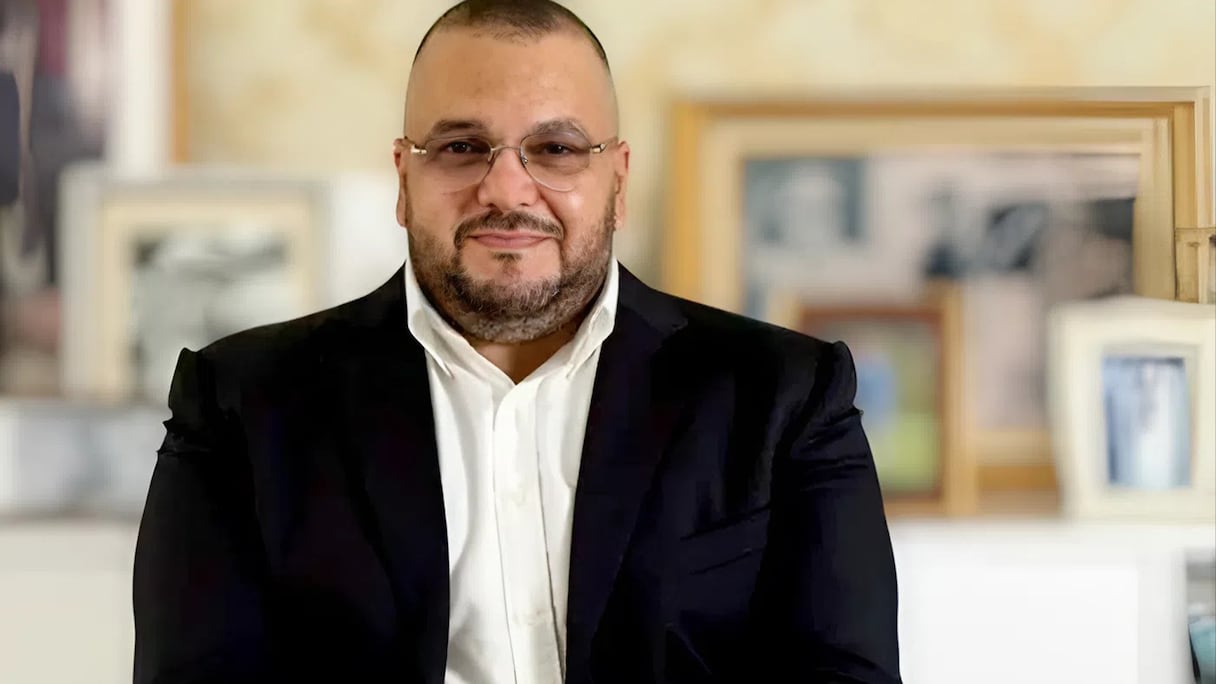
The narrative painstakingly constructed by the defense of Mehdi Hijaouy—the self-proclaimed former number two of Morocco’s foreign intelligence service (DGED), who now presents himself as a whistleblower in exile—has collapsed like a house of cards.
In a brief but unequivocal statement, Sara, Hijaouy’s former wife, categorically repudiates the claims made in her name by French lawyers William Bourdon and Vincent Brengarth. Her denial amounts to a genuine legal and media rebuke, laying bare the excesses of a defense strategy long marked by escalation and political instrumentalization.
On July 16, 2026, Bourdon and Brengarth issued a press release in dramatic terms. Seeking to recast an ordinary criminal case—Hijaouy is the subject of an international arrest warrant on charges of fraud and facilitating illegal migration—as political persecution, the defense declared: “For several months, Mr Mehdi Hijaouy has been the target of a campaign of destabilisation characterised by pressure and legal proceedings that he considers unfounded [...] This campaign has recently intensified in a context marked by the publication of several articles in the French press [...] as well as the revelations emerging from the international investigation coordinated by Forbidden Stories.”
To give their narrative a more alarming and international dimension, the defense also drew Hijaouy’s former wife into the affair, claiming that French police had been alerted following alleged surveillance by state actors.
“Mr Mehdi Hijaouy recalls that a report was filed with the police station in Paris’s 7th arrondissement following acts of surveillance targeting his former wife, Sara [...] He believes there are serious grounds to question possible links between those individuals and the Moroccan authorities,” the statement reads.
An unequivocal repudiation
The response was swift—and devastating for the defense’s credibility.
In a statement of striking clarity, Sara dismantles, point by point, the claims advanced by Hijaouy’s lawyers. She states unequivocally that “the contents of that document amount to a series of false allegations” before setting the record straight.
“I have never filed any complaint whatsoever with the police services of Paris’s 7th arrondissement stating that I was the target of surveillance or monitoring by individuals linked to the Moroccan authorities,” Hijaouy’s former wife writes.
“I maintain that I was never aware of the nature of my former husband Mehdi Hijaouy’s activities and that I severed all relations and contact with him following our divorce,” she adds.
She then distances herself entirely from the maneuvers and recordings attributed to her former husband.
“Regarding the audio recordings of my former husband leaked in recent weeks, which are liable to damage the image of my country, I affirm that I am in no way concerned by them,” she says.
“While solemnly reiterating my profound attachment to my King, my country, Morocco, and its constitutional institutions, I wish to affirm that I have no intention whatsoever of undertaking any action or initiative that could harm the image and interests of my homeland,” Sara concludes.
This firm clarification restores the facts to their proper place. Hijaouy’s former wife refuses to serve as either a prop or an instrument in a campaign of media destabilization.
This latest episode in the Hijaouy affair also shines a light on a well-established method.
William Bourdon and Vincent Brengarth have made something of a specialty of seizing on every sensitive case involving Morocco, systematically recasting criminal prosecutions and common-law offenses as politically motivated cases.
From the Maâti Monjib affair—he is being prosecuted on money-laundering charges and has complained in Paris of “psychological harassment”—to their handling of the Pegasus case, their track record reveals a persistent tendency toward media opportunism.
In once again attempting to portray as politically persecuted a man pursued by his own country’s judicial authorities for fraud and human trafficking, the Bourdon-Brengarth duo crossed a line by invoking the identity and circumstances of Hijaouy’s former wife without her assent.
The backlash has been resounding.
