The government source also said it was “disappointing to see the events in Ceuta exploited for electoral gain and political score-settling,” noting that “at the height of the crisis, amid sensationalist and alarmist media coverage, we heard the most hateful comments and the most outlandish analyses.”
“We saw how some political actors fell far short of the historical moment and how disappointing their reactions were,” the source said, adding that it was deeply shocked not only by the lack of vision, but also by the strategic short-sightedness of some and the political exploitation of the crisis by others.
Having witnessed a lack of rigor, perspective on the partnership and, in some cases, an unwillingness to distinguish between facts and politics, “we have reached a clear conclusion: the rules of engagement must change,” the source said.
“It must be clear to everyone that Morocco protects its own territory, but no one does it on its behalf.”
“Everyone must assume their responsibilities. Morocco is neither Europe’s policeman nor its caretaker. We act as a reliable and committed partner within the framework of a genuine partnership, one that cannot be one-sided,” the source stressed, arguing that the terms of that partnership now need to be updated.
According to the source, political commitment must be renewed, clarity and predictability restored to the partnership, trust and accountability strengthened, and the rules governing cooperation redefined.
“It should not be assumed that simply injecting more funding will magically solve everything,” the source said, emphasizing that financial support has never been Morocco’s motivation for acting.
Morocco has consistently maintained that “there is no exclusively security-based solution to migration,” the source continued, arguing that recent events had once again demonstrated the validity of that position.
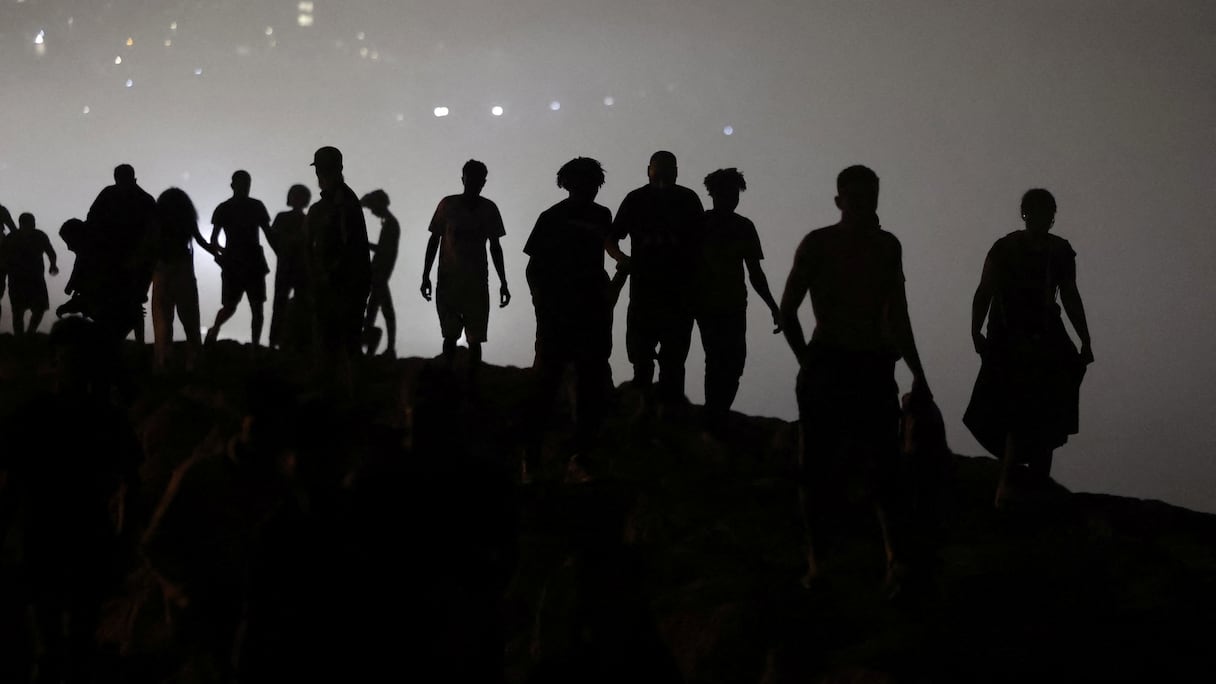
The source pointed to the large-scale voluntary return of migrants from Ceuta, saying it was as significant as the initial movement toward the occupied city.
According to the source, those returns reveal a fundamental reality: His Majesty King Mohammed VI has invested heavily in the socio-economic development of Morocco, particularly in the Kingdom’s northern provinces.
“These young people returned because they saw for themselves that conditions in Morocco are better than the Eldorado they had imagined,” the source said.
“Their return was voluntary. Spain itself says that 95% of those who entered Ceuta have now left,” the source added, arguing that they returned not because of actions taken by Spain, but as a result of their own observations and personal choice.
The government source said this reinforces Morocco’s development strategy and validates the strategic choices made under the leadership of His Majesty King Mohammed VI, noting that investment in the northern provinces has generated unprecedented economic and social development, including the creation of more than 430,000 jobs.
“The idea of Eldorado is a myth that our young people have dismantled for themselves by choosing to return voluntarily. The best response to irregular migration is development,” the source said.
The source concluded by saying that Europe should be a partner committed to Morocco’s development rather than adopting policies that hinder it, citing measures affecting Moroccan ports, the automotive industry, finance, services, transport and the offshoring sector.
