For several years now, a phrase has taken root in Spanish public debate with the quiet force of something self-evident: “Marruecos no existía.” It appears in the press, on the radio, on social media, in the writings of intellectuals. Its virtue lies in its simplicity: it does not dispute a title; it removes one of the parties to the dispute. There can be no dispossession if there was no one to dispossess.
I write this out of unease, not anger. There are subjects on which educated people acting in good faith cease to reason as they would anywhere else: here, the elementary requirements of the discipline—to date, to verify the criterion, to apply it to both sides—are suspended by the very people who teach them. I do not wish to open a national quarrel, but to conduct an examination.

This phrase has a history. It belongs to a family of propositions that Europe used to turn colonial conquest into an act of foundation: lands without masters, peoples without states or civilization, continents without history. Hegel, in his Lectures on the Philosophy of History, excluded Africa from the historical world; colonial law called terra nullius what was empty only to the gaze cast upon it. Today’s Spanish formula is unaware of this genealogy, and that is what makes it effective: it believes itself chronological when it is doctrinal.
Yet Spain knows these arguments better than anyone, having invented them. The conquest of the Americas was justified by the claim that indigenous societies were not genuine political bodies: this was the meaning of the Requerimiento (“requirement” or “demand”) of 1513, read in Castilian to peoples who did not understand it, and the substance of the Valladolid debate in 1550. But it was a Spaniard who first refuted it. Francisco de Vitoria, a Dominican, holder of the chair of theology at Salamanca and a founder of modern international law, established as early as 1539 that the peoples of the Americas had true princes and true dominions, and that neither unbelief nor differences in civilization deprived a people of its sovereignty. An inhabited land is never vacant. The law of nations was born of this refusal. And today, in Vitoria’s own country, people write that a neighbor did not exist.
There is no need to impute intentions to anyone: many have simply inherited this ready-made formula. But the function of a proposition can be established independently of intentions, and this one can be described precisely. In a single stroke, it neutralizes three characterizations—colonial enclave, occupied territory, analogue of Gibraltar—all of which presuppose a dispossessed state. If there was none, then there is neither colonization nor occupation nor analogy, and the dispute vanishes without a single term having been debated.
This proposition is nationalist in the technical sense of the term—not because of intent, which cannot be verified, but because of its construction, which can. It does not establish; it reassures.


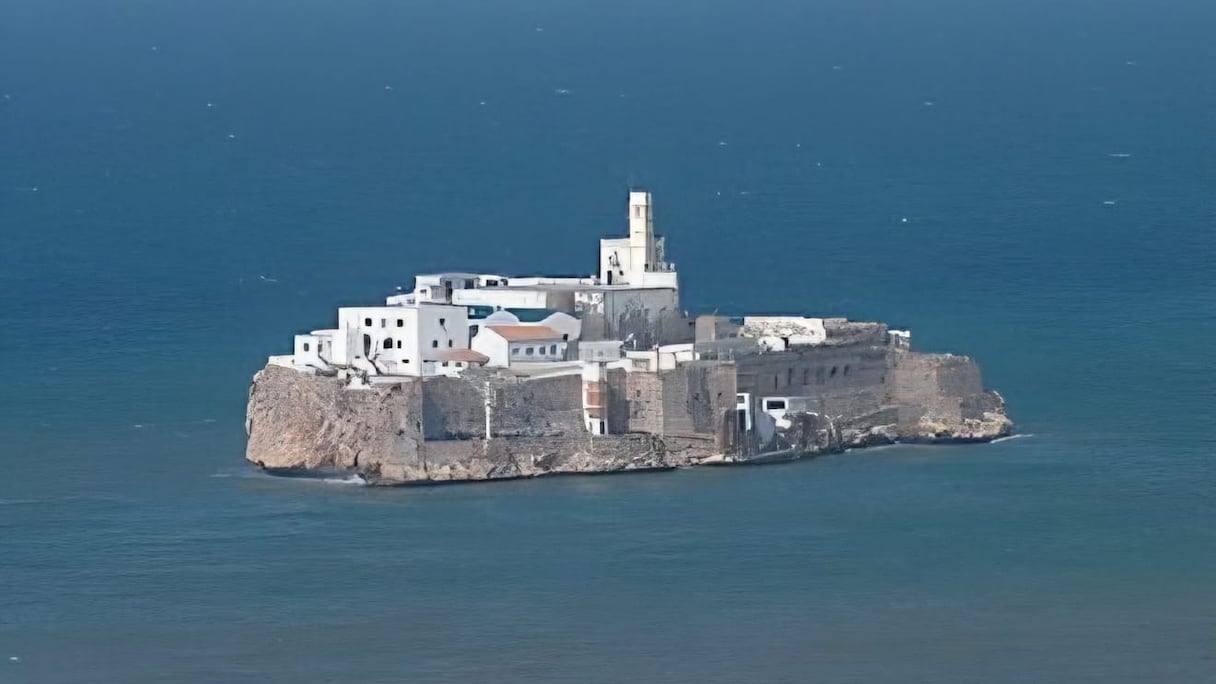
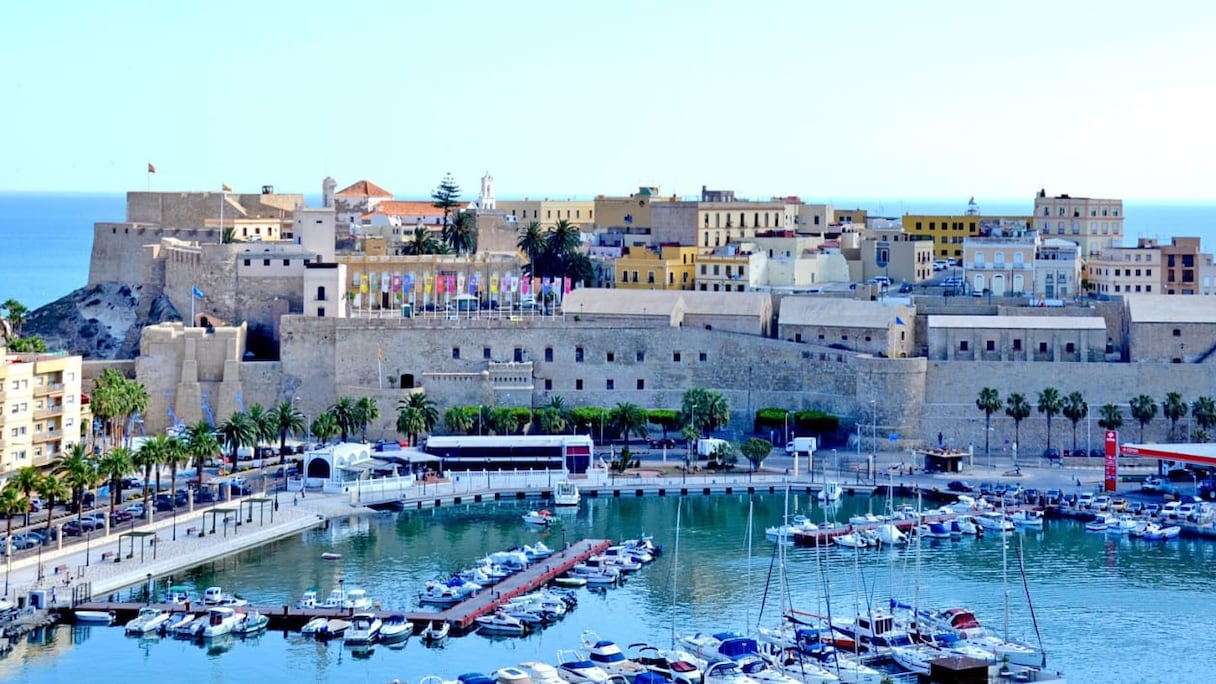
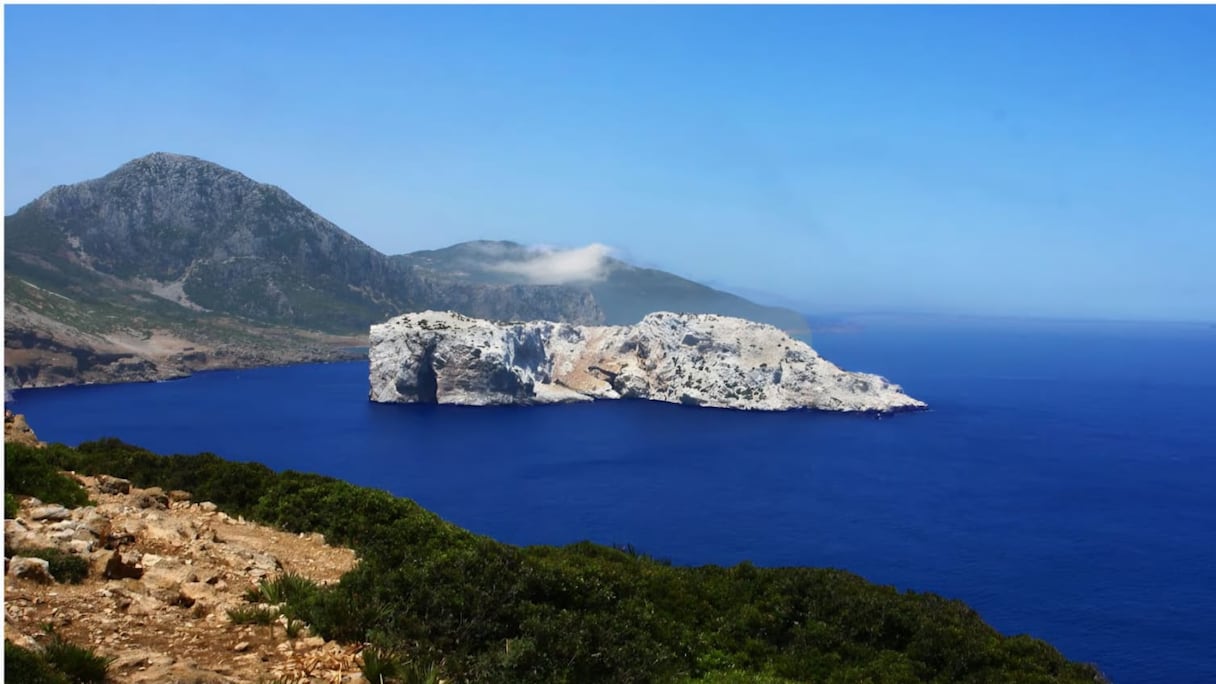
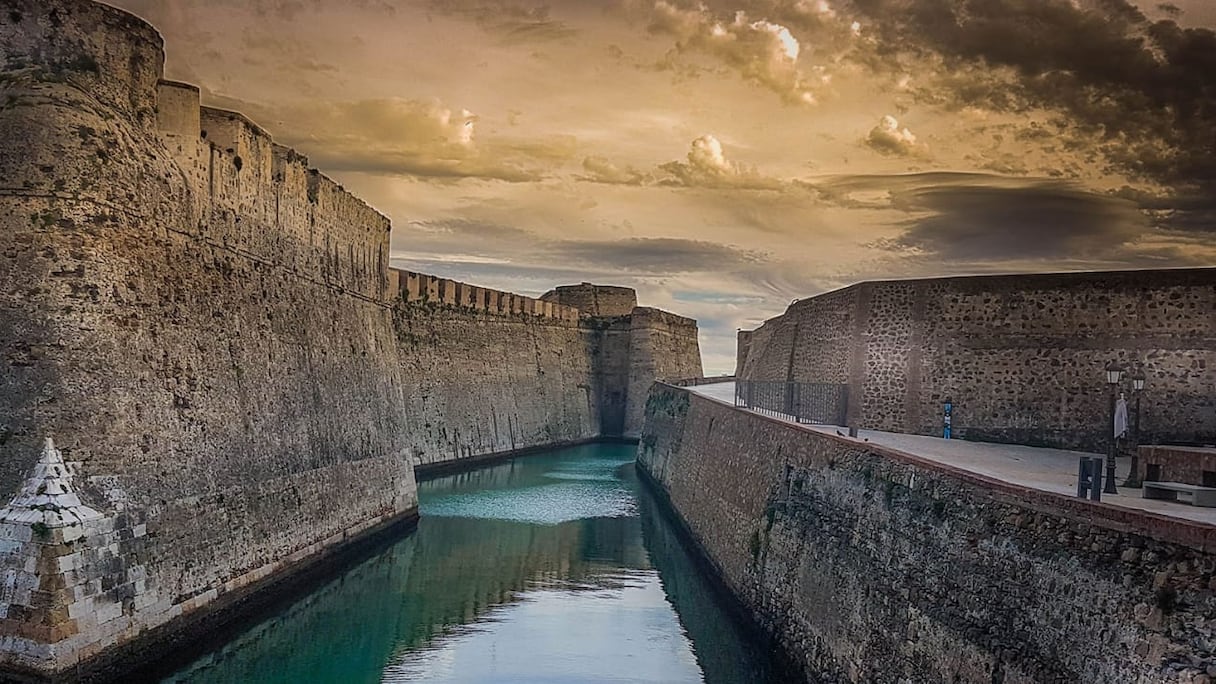
Moroccan enclaves and islets occupied by Spain
It reaches its conclusion before establishing a date. A chronological proposition has a date and a criterion; this one has five—1603, 1666, “well before in the 17th century,” “the Moroccan state as we know it today,” 1956. The first, moreover, is false: the Alaouites settled in Tafilalt around 1631 and did not take Fez until 1666, while 1603 is the year Ahmad al-Mansur died, and thus marks the end of the Saadians. It is the sort of error one makes in conversation and is not, in itself, a grievance. If it is worth pointing out, it is because it belongs to a series, and the series is the phenomenon. Five dates and five criteria for a single conclusion: this is reasoning conducted backwards, with the conclusion fixed and the premises variable.
The fourth formulation deserves closer attention, because it is both the most widespread and the most empty. It rests on an equivocation that must be cleared up at once. The modern nation-state—linear borders, unified administration, sovereignty vested in the nation—existed neither in Morocco, nor Spain, nor France, nor anywhere else before the 19th century: on this point, there is nothing to debate. But the state as such—a sovereign, a capital, an army, taxation, currency, treaties—has existed in the Maghreb al-Aqṣā for more than a thousand years. The entire thesis depends on sliding from one meaning of the word to the other, and does not survive once they are separated.
It is never applied to oneself: none of its proponents writes that Spain did not exist when it took Melilla, even though the same criterion applies. Applied consistently, it would produce this result: Melilla was taken by a state that did not exist from another state that did not exist either. That is not a historical conclusion; it is proof that the criterion is worthless.
It circulates only in times of crisis, after every migration or diplomatic tension: a chronological thesis has no current relevance; this one does. Nor does it circulate where claims are subjected to verification. Spanish academic Africanism has produced a rigorous body of literature on the presidios, one that argues Spain’s titles without ever needing to erase Morocco; the non-existence thesis lives in opinion columns and on social media, and to my knowledge there is no peer-reviewed journal article in which it has been subjected to scrutiny and debate. This essay is not directed at Spanish historiography, but at the discourse circulating outside it.
But we must submit ourselves to the same standard. In Morocco, we repeat that Ceuta and Melilla “have always been Moroccan”—a phrase that commits the very anachronism for which Spain is reproached, “always” being the refuge of those who do not wish to date things. We repeat that Ceuta was taken by Spain: it was taken by Portugal and became Spanish only in 1668. We equate it with Gibraltar as though the analogy were self-evident, when Gibraltar appears on the UN list of Non-Self-Governing Territories and Ceuta does not. And we often overlook the fact that Morocco signed the treaties of 1799 and 1860 containing recognitions. A case argued without the opposing evidence is not a case; it is a mood.
No exemption is being claimed: let the reader apply to these pages the three requirements set out above. This essay concerns the presidios in northern Morocco and the sole thesis of non-existence; the Sahara belongs to another case and will not be discussed here.
The Symmetry Test
Every historical argument must accept being turned around. If “to exist” means to be a sovereign nation-state—sovereignty of the nation, unified administration, continuous territory, linear borders—then Morocco was born in 1956. But then Italy was born in 1861 and Germany in 1871. And France itself, whose monarchical antiquity is beyond dispute, became a nation-state only at the end of a long 19th century: at the time of the Revolution, a large part of its inhabitants did not speak its language, and it was schooling, conscription and the railway that completed its transformation into a nation. The antiquity of a crown has never made a nation-state.
As for Spain, it took shape in the first half of the 19th century: at Cádiz in 1812, whose constitution transferred sovereignty from the king to the nation, or through the liberal centralization of the following decades. The precise range is debatable; the order of magnitude is not. Let us take 1812, the date most favorable to the opposing thesis.
Yet Ceuta was taken in 1415, Melilla in 1497, Vélez in 1564, and Al-Hoceima in 1673. Four of these five possessions predate the nation-state that holds them today. Only the Zaffarines came later, by 36 years, and were taken by a country emerging from seven years of civil war.
At the first two dates, neither a Kingdom of Spain nor a Spanish state existed. In 1415, Castile, Aragon and Portugal were three distinct entities—and it was Portugal that took Ceuta. In 1497, the dynastic union of 1479 existed, but it did not constitute a state: separate Cortes, currencies and tax systems, internal customs barriers, separate councils for Castile and Aragon. What historians, following Koenigsberger and Elliott, call a composite monarchy: a dynastic aggregation governed as separate kingdoms, each according to its own laws. This architecture would endure until the Nueva Planta decrees of 1707 to 1716.
My critics have an answer: the nation-state is beside the point; the Hispanic Monarchy ensured continuity across dynasties—Trastámara, Habsburg, Bourbon—and the Spanish state is its legitimate heir. That is correct, and indeed an excellent answer.
It is simply denied to the neighbor. For on the other side of the Strait runs a continuity of the same kind—but not the one told by our own national narrative, and there is no question of pleading it as it is taught in Morocco.
This country did not wait for Islam to know the state. Before our era, the Kingdom of Mauretania had its kings, its currency, its diplomacy: Bocchus negotiated with Rome, Juba II made it a center of Hellenistic culture. And when Rome withdrew, Berber powers did not vanish: the altars of Volubilis preserve traces of agreements concluded between Roman governors and Baquate chiefs. To negotiate with an empire presupposes that one exists.
Islam did not interrupt this tradition; it reformulated it. The Far Maghreb of the ninth and 10th centuries was not unified: the Barghawata, the Midrarids of Sijilmasa, the emirates of the Rif and the Idrissids of Fez coexisted there. And the Idrissids were born of an encounter—Idris, a Sharifian refugee without troops, was welcomed at Walili, ancient Volubilis, by the Awraba, who pledged allegiance to him in 788 and placed their forces at his disposal. Far from weakening Moroccan continuity, the episode establishes its foundation: it was Berbers who made the sovereign, and society that produced the dynasty. What the Idrissids established for good was Fez and the prestige of the descendants of the Prophet.
The true beginning came with the Almoravids. Sanhaja from the Sahara, bearers of a reformist Maliki doctrine, they unified this space for the first time, founded Marrakech in 1070 and built an empire stretching from Senegal to the Ebro, with an army, an administration and a gold dinar. It was from their capital that Europe derived the country’s name: Marrakech gave rise to Marruecos, Morocco, Maroc. Those who write that Morocco did not exist call it by a word coined from the city from which it was governed a thousand years ago.
Sharifism, for its part, became a principle of government only with the Marinids, Zenata without a religious title who elevated it into a foundation to compensate for their own deficit—providing the instrument that the Sharifian dynasties of the south, the Saadians and then the Alaouites from 1666 onward, would subsequently seize upon. Society did not merely survive the dynasties: it produced the criterion by which they secured recognition.
That is the continuity at issue: not an uninterrupted lineage since 788—it does not exist—but the same space, the same capitals, the same Maliki law, the same bayʿa, that oath of allegiance without which no sultan reigns.
Beneath the dynasties lies something more enduring than they are: all ruled from the same cities, over the same populations, through the same intermediary bodies—tribes, brotherhoods, ulema, guilds. It is not the dynasties that carry the Moroccan state, but these structures.
Their traces can be followed around the presidios: they besieged Ceuta from shortly after 1415, kept it blockaded from 1694 to 1727 under Moulay Ismail—33 years—fought Spain before Melilla in 1774 and again in 1859, and inhabited the Rif and Jbala on the other side of the fences. Tribal configurations have changed, as they have everywhere. But it is the same country that, for five centuries, has never recognized these seizures as definitive.
None of this establishes title, but it does establish continuity, social as much as dynastic, and shows that Spanish possession was never the peaceful possession from which law derives title. A criterion that absolves one side and condemns the other is not a criterion: it is a preference.
What the Documents Say
The strongest case against the non-existence thesis is not Moroccan: it is Spanish, and it bears signatures. One does not sign treaties with nothingness. Yet Spain negotiated with the sultans of Morocco for centuries, as one negotiates with sovereigns. The Treaty of Marrakech in 1767, between Charles III and Sidi Mohammed ben Abdallah. The Treaty of Meknes in 1799, under Moulay Slimane. The Treaty of Wad Ras in 1860, under Mohammed IV, after a war—for one only wages war against someone. Three sovereigns, three reigns, almost a century: not an episode, but a state entering into agreements. Then came the conventions delimiting the boundaries of Ceuta and Melilla, in the 1860s and in 1894: border agreements negotiated with the state said not to have existed.
That same sovereign recognized the United States of America in 1777, before any European power did, and signed a treaty of peace and friendship with it in 1786 that remains the oldest US treaty still in force. A non-existent entity does not extend recognition to a state.
And when Europe sought to settle its rivalries over Morocco, it did so twice in Spain: in Madrid in 1880, then at Algeciras in 1906, whose Final Act proclaimed the sovereignty and independence of the sultan. Spain hosted on its soil a conference whose subject was the sovereignty of a state now said not to have existed.
It must also be said what that presence entailed. Between 1923 and 1927, in its campaign to retake the north of the country, Spain used chemical weapons against villages and markets—one of the earliest uses of poison gas against civilians, long denied and since acknowledged. The zone was administered by a military command, with no political rights for its inhabitants. And it was from this Army of Africa that the uprising which would give Spain 40 years of dictatorship was launched in July 1936: the colonial regime in northern Morocco did not merely weigh on Morocco; it came home to those who had established it.
Then there is 1912. The Treaty of Fez was signed with Moulay Hafid, and a protectorate, by definition, presupposes and preserves the international personality of the protected state: one can only protect what exists. The International Court of Justice said so unambiguously in 1952.
To say that Morocco was born in 1956 is to argue that Spain spent five centuries negotiating with no one, waging war against no one, delimiting borders with no one, and convening the world at Algeciras for nothing.
The Rocks
There is one part of this case where the argument does not survive a single sentence, and it is the least discussed. In June 1847, the Spanish Council of Ministers decided to occupy the Zaffarine Islands; on January 6, 1848, General Serrano landed there in the name of Isabella II, reportedly only hours before a French vessel sailing from Oran with the same intention.
Let us take the argument seriously: in 1848, Morocco did not exist? Spain then had a consul in Tangier and had signed the treaties of Marrakech and Meknes. Eleven years later, it would go to war with the sultanate and in 1860 impose a treaty recognizing Spanish sovereignty over those same islands. It therefore had its title recognized by the country it now claims did not exist. One does not obtain the cession of a right from a ghost.
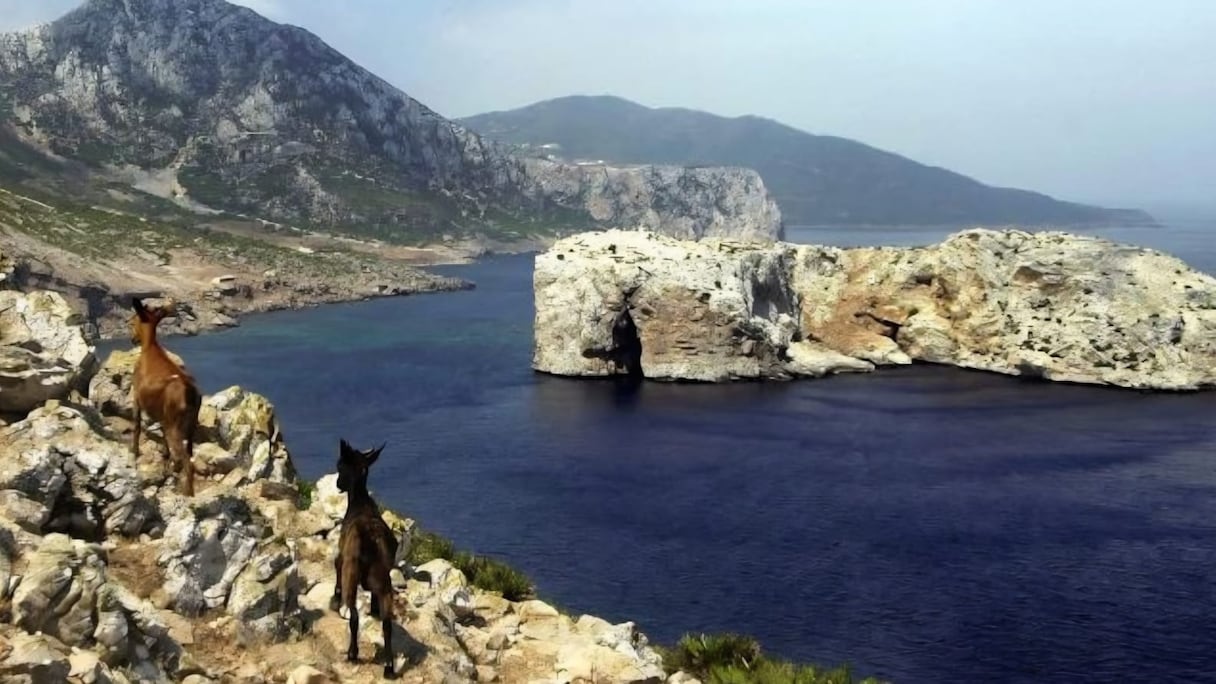
These rocks have another peculiarity: they have no inhabitants—garrisons, a scientific station, nothing resembling a people. Spain’s strongest argument, the will of the population, has no object here; and under the Montego Bay Convention, to which Spain is a party, rocks incapable of sustaining human habitation or economic life generate no maritime rights. As for Vélez de la Gomera, geography settled the matter before the jurists could: since the 1930 earthquake, an 85-meter isthmus, marked by a blue rope, has joined it to the continent—the world’s shortest land border. A rock is being guarded against which there is no longer any sea.
What these rocks are worth was demonstrated by one episode. In July 2002, a dozen Moroccan gendarmes landed on Leila—14 uninhabited hectares 200 meters off the coast—and planted two flags. Spain deployed all three branches of its armed forces and retook the islet on July 17: its first armed incident since the return of democracy. Washington had to mediate to restore, three days later, the previous situation: an unoccupied islet.
What was being defended there? Not a population, not a resource, not a strategic position. Not even an occupation, since the point was to occupy nothing. Both governments played a symbolic game, but the disproportionate response reveals what was at stake: not a place, but a principle. A diplomatic crisis and two armies facing one another over a rock on which no one remained.
The Gibraltar Mirror
One day, the asymmetry will have to be examined. In dealing with the United Kingdom, Spain invokes territorial integrity, colonial anomaly and geographical continuity, and argues that the wishes of Gibraltar’s inhabitants cannot legitimize an amputation. In dealing with Morocco, it argues the exact opposite, point by point: the antiquity of title, the wishes of the inhabitants, the rejection of any territorial reading.
Two opposing doctrines, separated by 20 kilometers of sea and by the direction in which one looks. Which is the right one is not the question. No court, no attentive reader, can hold both at once.
What the Thesis Really Erases
There is something more serious in this formula than an error of dates. To say that Morocco did not exist is not merely to deny sovereignty: it is to deny a society. It is to erase al-Qarawiyyīn—not the monument people imagine suddenly appearing in 859, but a modest rammed-earth oratory swallowed into stone by Almoravid construction, and given its present configuration by the Marinids. Four centuries of rebuilding, each enveloping what came before: that is how societies endure. It is to erase seven centuries of historiography written on the spot, from the Rawḍ al-Qirṭās to al-Nāṣirī’s Kitāb al-Istiqṣā: a country that continuously writes the history of its dynasties can hardly be described as having no history. It is to erase the fact that Europe came to know this country through Leo Africanus’s Description of Africa—born in Granada, raised in Fez, and through captivity made the protégé of a pope—in which he describes a governed kingdom. It is to erase the fact that the Castilian maravedí takes its name from the Almoravid dinar: for centuries, the very name of Castile’s currency carried the memory of a state now declared never to have existed.
Above all, it is to erase part of Spain itself. Tetouan was rebuilt at the end of the 15th century by exiles from Granada, and Salé received the Moriscos of Hornachos, expelled in 1609. The cities of northern Morocco still speak, through their patios, their music and their family names, the language of a lost Andalusia. By decreeing that this country did not exist, one does not merely erase a neighbor: one erases the place where Spain survived its own exile. Morocco is also what Spain expelled from itself and what continued to live across the water.
A border can be disputed. An existence should not have to be.
What Remains Open to Debate
Nothing is gained through omission. The UN does not include Ceuta and Melilla on its list of Non-Self-Governing Territories, unlike Gibraltar, and no resolution requires Spain to negotiate their sovereignty. That state of affairs may change; today, it is the one that prevails. International law gives real weight to prolonged effectivity. The inhabitants of these two cities are Spanish and European citizens, elect representatives to the Cortes, and nothing in their political behavior suggests that they wish to change that status: a social reality that no historical argument can dissolve. Finally, Ceuta came to Spain through Portugal in 1668, not through a cession wrested from Morocco.
And above all—this is Spain’s strongest argument, and it is better to state it than leave it to be raised in rebuttal—Morocco recognized these possessions by treaty: the 1799 treaty acknowledges the Spanish character of the presidios, the convention of August 24, 1859, extends the perimeter of Melilla, Al-Hoceima and Vélez, and Wad Ras, on April 26, 1860, ratifies it by recognizing Spanish sovereignty over the Zaffarines. Some of these texts were signed under the duress of defeat, and their scope can be debated. But they exist, they are binding, and they form the foundation of Spain’s position. That is precisely why the argument of non-existence is so strange: Spain has treaties; it does not need to erase its contracting party.
Indeed, Spain’s best jurists have moved away from the terrain of history: one of them advises arguing no longer from ancient titles, but from what he calls the defense of European democratic spaces against a neighbor that, in his view, is not democratic. The shift is tactically clever, and worth nothing. No legal order makes sovereignty depend on the nature of the regime exercising it, and Spain, less than anyone, could accept such a principle, having itself been a dictatorship until 1975 without its sovereignty over these cities being challenged on that basis. It is a political reason to prefer the status quo, not a title—the very fault for which the non-existence thesis is criticized: presenting a preference dressed up as a demonstration. The same jurist speaks of treaties concluded with the “pre-sovereign” Moroccan entity: the word concedes the essential point, for an entity that negotiates, signs and assumes obligations is not prior to sovereignty—it exercises it.
What I Believe
Everything above required no concession: only that dates be checked. What follows requires one, and I prefer to say so in advance. This is no longer the establishment of facts, but a judgment—but I write it in the hope that it will persuade, and that something will change.
The treaties will be raised against me: Morocco signed, recognized, committed itself. There are two levels here, which the controversy conflates. The existence of the contracting party is not a clause: it was neither negotiated nor conceded; it is presupposed by the act of negotiation itself. It precedes consent and lies beyond whatever may vitiate that consent. A state can be coerced into ceding; it cannot be coerced into existing. The substance is entirely different: clauses are provisions consented to, and consent is precisely what coercion affects. Hence the position I take: Wad Ras proves Morocco’s existence because it manifests Morocco’s defeat. One cannot make an absent entity capitulate. The document invoked against me as title is first, against the very person invoking it, the birth certificate he refuses me.
The real question remains: what is what Morocco was made to sign worth today?
A peace treaty imposed after defeat is commonplace. But read this one: 400 million reales in indemnity demanded from a sultanate incapable of paying it, Tetouan occupied as collateral until payment, a commercial treaty the following year granting Spain most-favored-nation treatment, and the indebtedness that followed, leading to financial tutelage, then to Algeciras and Fez. This is no longer a peace; it is a mechanism: the defeat of one season converted into the dependence of several generations. My grievance is not that Morocco lost a war—states lose wars, and mine is entitled to no exemption—but that this defeat was turned into the instrument of a century of dispossession.
This reasoning does not translate into positive law, and I do not claim that it does. A legal fact must be assessed according to the law in force at the time it occurred. The rule was laid down in 1928 by Max Huber, the Swiss judge arbitrating an American-Dutch dispute over an island in the Philippines, and it underpins all territorial stability: without it, every border would be retried under today’s law. Until the San Francisco Charter, conquest was lawful. On the question of validity, Spain wins, and that must be said.
It is not validity that I contest, but opposability: what one can decently continue to demand on the basis of a text a century and a half later. For there is a precedent no one disputes. The 20th century disqualified, wholesale, the unequal treaties of the 19th—Nanking, Tianjin, the Ottoman capitulations, the concessions wrested from Persia. No state today bases claims on those texts: they were not declared void; people stopped invoking them, an act of civilization performed by those who had benefited from them. Why should Wad Ras alone escape that judgment?
The answer will be that these treaties did not create the presidios, but ratified possessions three centuries old. That is true of Ceuta and Melilla. But ratification under duress does not cure a defect; it records it. And the objection collapses over the Zaffarines, occupied in 1848 and recognized in 1860: 12 years, not three centuries. There, the treaty does not consecrate a history; it regularizes a seizure.
What I Am Asking
I know what stands against me: there are Spanish women and men there, and nothing suggests that they wish to cease being Spanish. Their attachment is not a detail that a historical argument can dissolve.
I ask for two more modest things. First, that an argument which harms the very case it is meant to serve be abandoned. A case is only as strong as its weakest link; by resting Spanish legitimacy on the proposition that “Morocco did not exist,” one places a solid edifice on the one stone that cannot bear its weight.
And second, that Spain apply to the south the doctrine it argues to the north. On Gibraltar, it has maintained for 60 years that territorial integrity takes precedence, that the wishes of an implanted population cannot legitimize an amputation, that an enclave inherited from an old treaty is an anomaly destined to disappear. I am not asking Spain to adopt my doctrine, but to withstand its own once it is turned toward the Strait.
What Morocco has asked since 1956 is not unreasonable: that what is merely possession cease to be presented as legitimacy. Places taken by force from a country that existed, at a time when taking by force was lawful, and retained because nothing compelled their return. That is not a title; it is duration. And duration has never founded a right—it has made the right forgotten.
This will have to end one day—not through a victory, which would make no sense between neighbors, but through the weariness of two nations faced with a dispute that does neither of them credit. No court will settle Ceuta, and probably no court should. If it happens, it will happen through negotiation between two states that have ceased, one to deny the existence of its neighbor, the other to demand the immediate.
The precedent exists, and it comes from the two countries themselves. Spain returned Tarfaya in 1958 and Ifni in 1969: neither was wrested from it by a court nor imposed by war; they were negotiated agreements, and Morocco received them without turning them into new demands. These two countries have already shown that they can do this together, and those gestures cost Spanish honor nothing: they added to it.
I do not write to obtain a border, but because it is untenable, between two countries separated by 14 kilometers of water and bound by eight centuries of a history made together without ever intending to, that one should continue to tell the other that it was not there.
Morocco was there. It still is. And the day Spain ceases to deny it, it will discover that what stands opposite is not a territorial dispute but a neighbor—the only country in Africa with which it shares a border, a history, and a future it did not choose but cannot avoid.
On that day, this essay will no longer have a purpose. I hope it comes soon.
Select Bibliography
Al-Nāṣirī, Aḥmad ibn Khālid, Kitāb al-Istiqṣā li-akhbār duwal al-Maghrib al-Aqsā, French translation by E. Fumat, Paris, Ernest Leroux, 1906–1936.
Ibn Abī Zar‘, ‘Alī ibn ‘Abd Allāh, Rawḍ al-Qirṭās: Chronique des rois du Maroc, translated into French by Auguste Beaumier, Paris, Imprimerie impériale, 1860.
Laroui, Abdallah, Les Origines sociales et culturelles du nationalisme marocain (1830–1912), Paris, François Maspero, 1977.
Lourido Díaz, Ramón, Marruecos en la segunda mitad del siglo XVIII: Vida interna y relaciones con España bajo el sultán Sidi Mohamed ben Abdallah (1757–1790), Madrid, Ediciones de la Hispanidad, 1978.
Martin, Jean-Philippe, Histoire de Ceuta et Melilla: Les enclaves espagnoles au Maroc, Paris, L’Harmattan, 2002.
Métalsi, Mohamed, Le Temps de Fès, du mythe à la métropole, Casablanca / Paris, Malika Éditions / CCME, 2026.
Rezette, Robert, Les Enclaves espagnoles au Maroc, Paris, Nouvelles Éditions Latines, 1976.
Vitoria, Francisco de, Leçons sur les Indiens et sur le droit de guerre, translated into French by Maurice Barbier, Paris, Vrin, 1966.