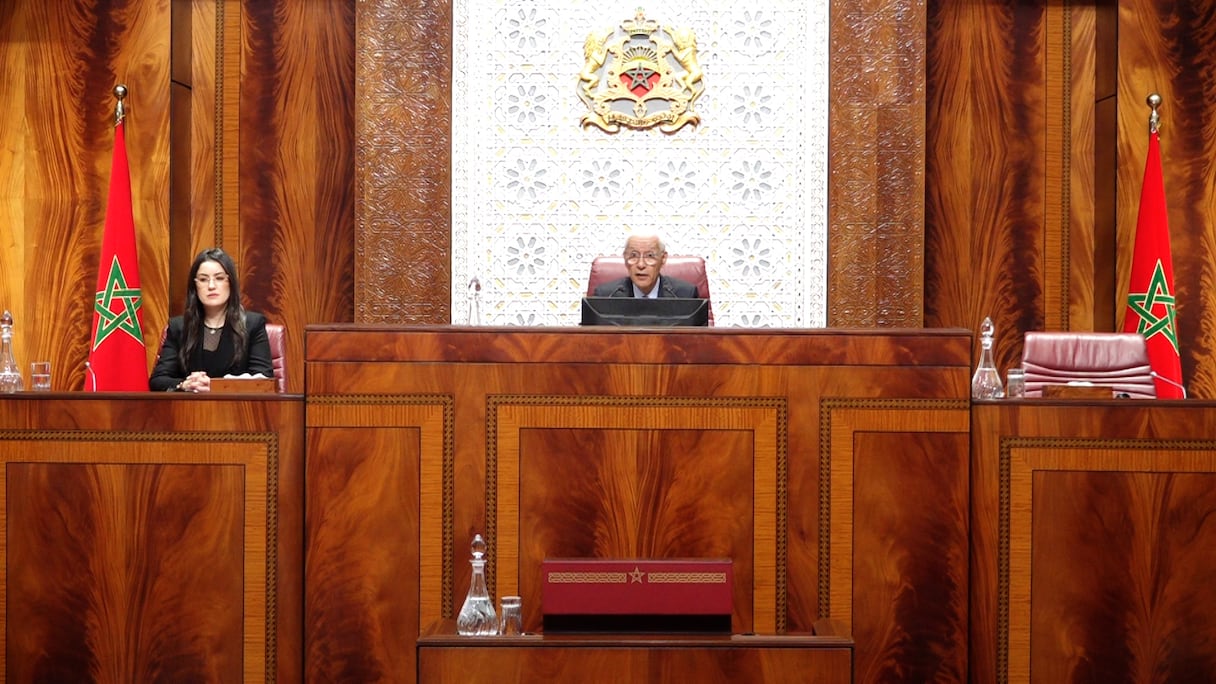
Morocco’s House of Representatives on Monday closed the second session of the 2025–2026 legislative year, marking the end of the fifth legislative year of the 11th parliamentary term (2021–2026).
Speaking at the closing session, Speaker Rachid Talbi Alami said the legislature had been marked by “legislative output, parliamentary oversight, public policy evaluation and institutional dialogue,” including the adoption of laws aimed at expanding social services.
Talbi Alami said the House approved 237 government bills during its term across 128 plenary sessions, covering a wide range of institutional, social, economic, and cultural issues.
He noted that more than 60% of the legislation was adopted by consensus, while over a quarter of the laws approved were considered foundational legislation.
Members of parliament submitted more than 14,000 amendments to draft laws during the term, with over 2,700 ultimately adopted. Lawmakers also introduced more than 400 private members’ bills, 65 of which entered the legislative process.
On parliamentary oversight, Talbi Alami said lawmakers discussed 3,991 oral questions during 125 sessions, while more than 32,000 written questions were submitted to the government. He said the government responded to 62% of those written questions, representing nearly 20,000 replies.
He said issues related to healthcare, social protection, public support programs, education, public finances, infrastructure, water, agriculture, investment, youth, and sports dominated parliamentary oversight activities.
The House’s standing committees also held more than 130 meetings to question government officials and heads of public institutions while authorizing 12 fact-finding missions.
On public policy evaluation, Talbi Alami said parliament completed five evaluations during the current term, including its first assessment of the implementation of Law 103.13 on combating violence against women. The evaluations resulted in more than 500 recommendations covering public policies affecting the economy, public services, and social development.
He also said the House received 45 annual reports and 68 advisory opinions from constitutional institutions and governance bodies during the legislative term, including 17 opinions requested directly by parliament.
Talbi Alami noted that the House revised its internal rules three times between 2023 and 2025, introducing changes related to the legislative process, parliamentary ethics, asset declarations, conflicts of interest, loss of parliamentary membership, and relations with constitutional institutions.
He added that parliament continued efforts to improve transparency and public engagement through initiatives under the Open Government Partnership (OGP); expanded its digital parliament program; and maintained outreach activities, including the Moroccan Children’s Parliament and annual awards for parliamentary research and journalism.