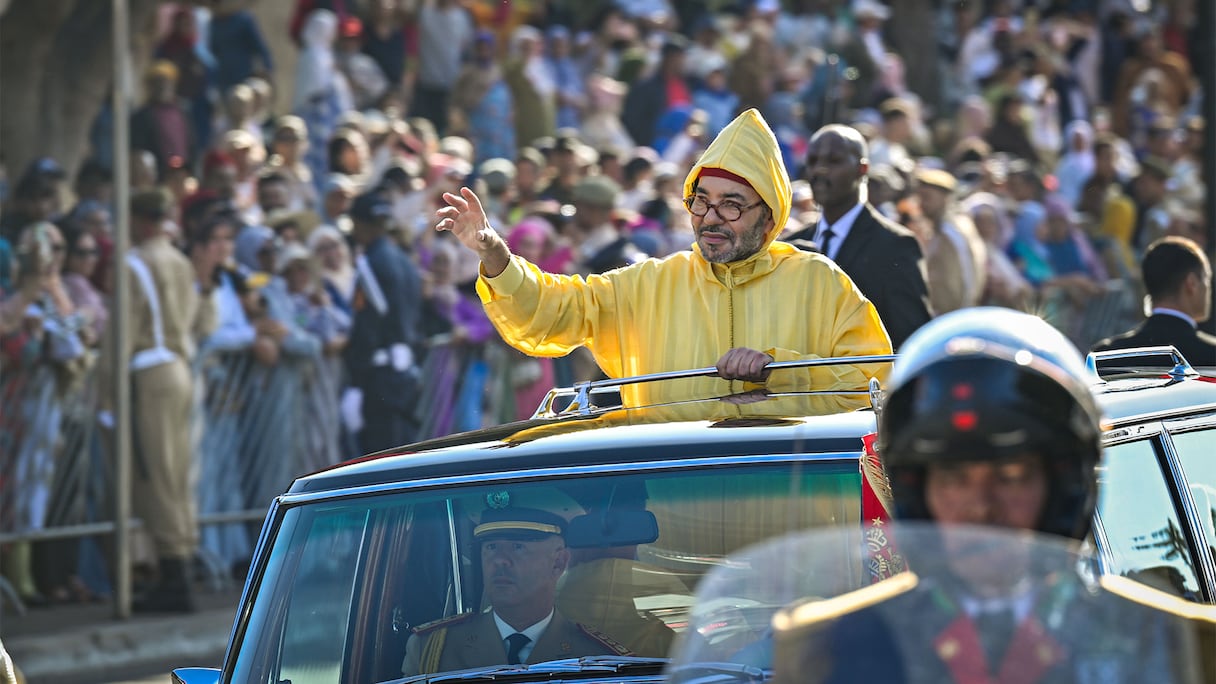
On the occasion of the 27th anniversary of his accession to the Throne, King Mohammed VI delivered an address to the Nation distinguished by remarkable vision and quiet confidence. At a time when the world is beset by geopolitical tensions, economic instability, and a retreat into protectionism, the Moroccan Sovereign offers a framework built on two unshakable pillars: institutional serenity rooted in the continuity of a millennia-old nation-state and methodical optimism grounded in tangible achievements.
The Humility of a King
From the very opening of the royal address, the tone is unmistakable. This is by no means a self-congratulatory inventory, but rather an exercise in accountability guided by duty and faith. Firmly rejecting any pursuit of personal prestige, the Sovereign reaffirms the philosophy that has guided his actions for more than a quarter of a century.
“I have never sought personal glory, or recognition of a leading role at the continental or international level. All that has ever mattered to me is to fulfil my duty and serve you, and to enable all Moroccans to live a free, dignified life.”
This expression of humility gives the King’s serenity a singular depth. The confidence displayed by the Sovereign is the mature fruit of sustained and methodical effort. As he explains:
“This is not so much a note of self-satisfaction as it is a positive feeling rooted in confidence and peacefulness - a feeling that gives me the strength and motivation to press ahead with my efforts.”
The Sovereign goes on to outline the method that ensures the durability of this development model: a clear strategic vision and a governing doctrine built on initiative, rigorous follow-up, constructive self-criticism, and a genuine determination to face the future with resolve and optimism.
Read also : Throne Day speech: Stability, industrialization, technology and social equity underpin Morocco’s success
By establishing “determination,” “entrepreneurship,” “meticulous follow-up,” and “self-criticism” as the foundations of governance, King Mohammed VI places the nation’s trajectory within a long-term horizon, shielded from impulsive reactions to external shocks.
Stability, the Strategic Asset
In an international landscape shaken by political crises and socio-economic upheavals, Morocco once again affirms the distinctiveness of its model. For the Sovereign, the political stability enjoyed by the Kingdom is not merely a given; it is the cornerstone of its emergence. The King stresses that Morocco is passing through a decisive chapter in its modern history.
“This is a pivotal moment in our nation’s development; a time when confidence and optimism should prevail over despair and frustration.”
This Moroccan resilience draws upon the historical depth of a “country with a millennia-old history,” capable of ensuring that its institutions function “in a spirit of harmony and integration.” The effectiveness of this governance has been demonstrated both in the proactive management of natural disasters, such as the recent floods in the Gharb region and northern Morocco, and in the successful organization of major international events, earning Morocco “the respect and admiration of the world, and, at times, aroused the envy of some.”
The Sovereign encapsulates this decisive advantage by recalling that “political and institutional stability is a rare, priceless commodity. Today, stability is the key element in the development equation; it is the strategic asset we cherish in Morocco.”
A Vanguard Momentum
The King’s optimism is expressed through remarkably precise figures. Far removed from wishful thinking, the speech presents the record of a country experiencing industrial acceleration while consolidating its sovereignty. By recording economic growth of 4.9% in 2025 and projecting equally ambitious prospects for 2026, Morocco confirms the soundness of its economic choices.
The automotive and aerospace industries stand as the most striking symbols of this transformation, now accounting for more than 40% of the country’s total exports, surpassing the historically dominant phosphate sector. This capacity for strategic anticipation now extends to cutting-edge technologies, notably through the development of an integrated electric battery industry and the operational launch of the Morocco Green Hydrogen Offer with the granting of the first approvals for a group of mega-projects.
Faced with the “resurgence of protectionist policies and the need to secure supply and production chains,” Morocco’s response is unequivocal: strengthening its strategic self-sufficiency. The Sovereign noted with satisfaction that the country’s agri-food and pharmaceutical industries now meet nearly 80% of national demand, while the establishment of a defense and cybersecurity industrial and technological base further reinforces Morocco’s status as a regional power.
This industrial momentum has been accompanied by a historic performance in tourism, with nearly 20 million visitors welcomed in 2025. Yet for King Mohammed VI, economic strength has meaning only if it benefits all citizens.
“In addition to economic development efforts, numerous initiatives and human development programs have been carried out, in addition to measures to ensure universal social protection with a view to improving the living conditions of Moroccans and achieving social and spatial justice.”
To support this ambition, the Sovereign calls on the financial sector to fully assume its role as a catalyst.
Co-Writing Tomorrow’s Partnerships
On the diplomatic front, the royal speech reflects renewed confidence and an assured sense of sovereignty. Morocco no longer merely adapts to global agendas—it helps shape the partnerships of tomorrow.
“This has enabled our country to deal effectively and confidently with all its partners, and to propose constructive partnerships and promising cooperation initiatives on key bilateral and international issues.”
The Sovereign rises above the electoral and political calendar ahead, emphasizing that Morocco’s progress is the product of a continuous collective endeavor that transcends both governmental and parliamentary mandates, sustained by the country’s strategic orientations and sound choices.
“Following the upcoming legislative elections and the formation of a new government, I will be looking forward to launching a new cycle in our country’s development process, the aim being to consolidate the gains made and continue to implement major projects and reforms.”
This message sets the roadmap for Morocco’s institutions and future leaders: to remain faithful to the path of reform and preserve this exemplary alliance between strategic vision, institutional serenity, and confident optimism.
