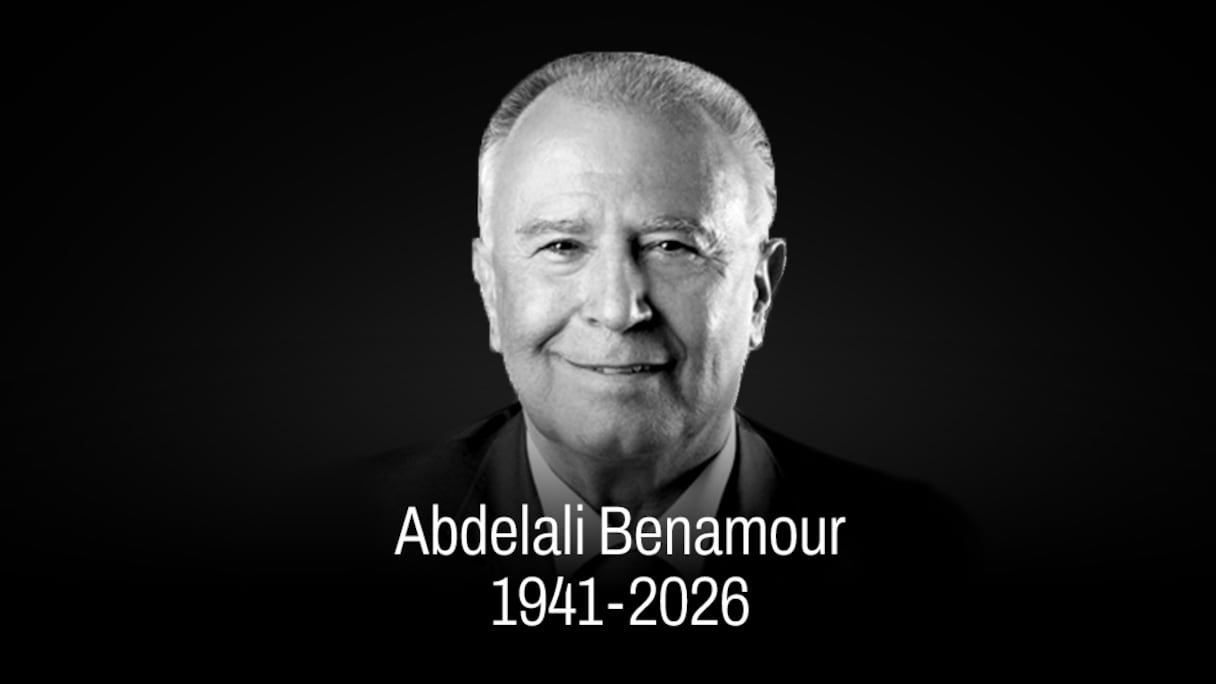
Morocco has lost a major figure in its economic and academic landscape. Abdelali Benamour died Thursday, September 24, at the age of 85, leaving behind the legacy of an engaged economist whose career was closely tied to teaching, economic thought and the push for stronger competition regulation.
A professor at the Faculty of Economic, Legal and Social Sciences in Casablanca, Benamour had a rare ability to draw students well beyond the university’s lecture halls.
Those who attended his classes remember an auditorium that would be full nearly an hour before the session began. He devoted the first part of his lectures to answering students’ questions, often placing them in the context of current economic, political and social developments.
His teaching, rooted in economics but also informed by debates over changes in society and the country, therefore attracted an audience well beyond his university students.
Born in 1941, Benamour earned a doctorate in economics from the Sorbonne in 1968. He taught at Mohammed V University in Rabat and Hassan II University in Casablanca from 1966 to 2001. He also headed ISCAE before founding HEM in 1988, one of Morocco’s leading business schools.
His career, however, extended well beyond academia and business. A former USFP member of Parliament for Casablanca and municipal councillor, Benamour was also active in civil society. From 1995 to 2002, he served as president of the association “Alternatives” and later remained its founding president.
Created as a forum for reflection on major political, economic and social issues, Alternatives sought to contribute to public debate and challenge policymakers. Under Benamour’s leadership, the association organized conferences and meetings on a wide range of issues, from judicial reform and democracy to institutions and economic development.
This period reflected a constant feature of Benamour’s career, namely his conviction that economists should not remain confined to their academic field. He regularly took part in debates on institutional reform, the modernization of the state and Morocco’s development. His involvement with Alternatives made him one of the civil society voices seeking to influence public debate through analysis and policy proposals.
His tenure at the head of the Competition Council also became an important chapter in the development of economic regulation in Morocco. Appointed president of the institution in 2008, he quickly encountered the limitations of a body that was largely consultative and lacked genuine powers of action.
Benamour then made strengthening the Council’s powers a major institutional campaign. He advocated for an authority capable not only of issuing opinions and conducting studies, but also of taking decisions and exercising sanctioning and enforcement powers.
This effort coincided with the first reform of Morocco’s competition law framework. Law 20-13, adopted in 2014, notably strengthened the institution’s powers and allowed it to take up cases on its own initiative. Benamour regarded this development as essential to transforming the Council from a primarily consultative body into a genuine regulatory authority.
With his death, Morocco loses a distinctive figure in its economic life and a voice that spent years advocating for a more regulated market and stronger protection of competition.
