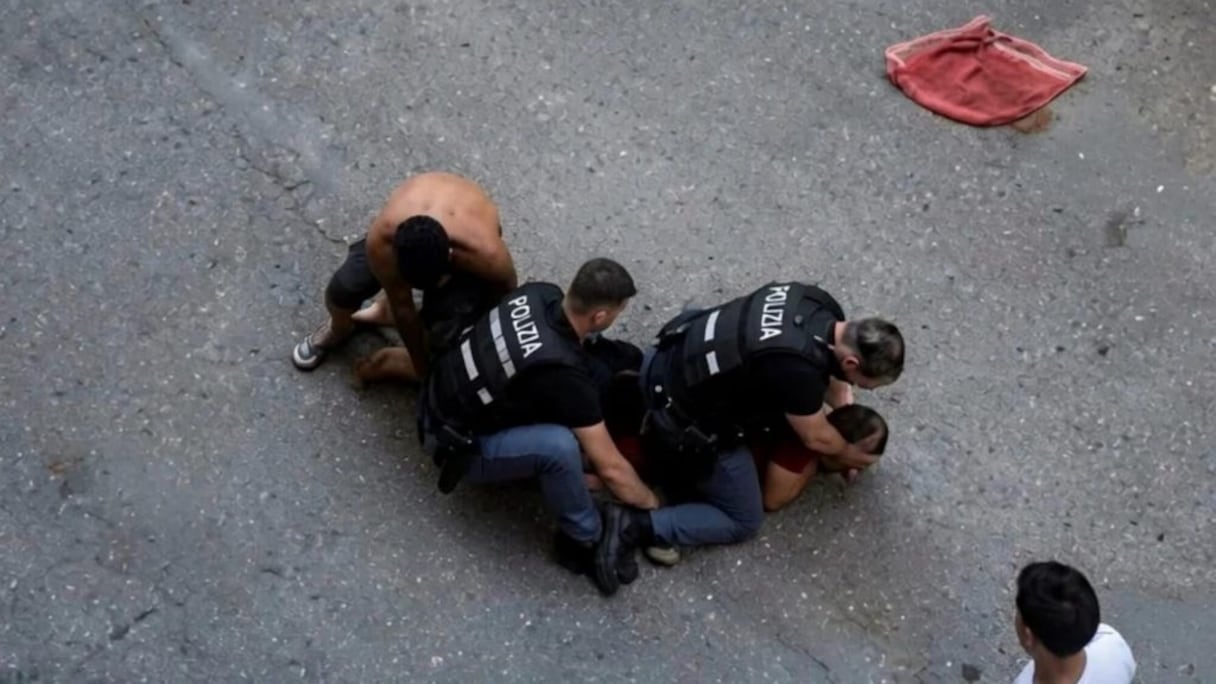
A demonstration involving several thousand people took place Monday in Bologna, according to local media images. Clashes broke out with law enforcement, leaving 64 officers injured, police said, while Sky TG24 reported that 11 protesters were also injured.
“Regarding the death of Abderrahim Fakir, it is imperative that any potential causes are thoroughly investigated with the utmost rigour,” Meloni wrote on social media.
“The truth must be pursued without prejudice or leniency for anyone,” she added, while condemning violence during the protest.
The Moroccan Embassy in Italy said Monday it had been following “from the very first moments and with the utmost attention and deep concern” developments surrounding the death of Moroccan national Abderrahim Fakir.
In a statement, Morocco’s ambassador to Italy said he had instructed the Moroccan Consulate General to provide Fakir’s family with all necessary moral support and consular assistance while maintaining ongoing contact with the Italian judicial authorities leading the investigation.
“It is in everyone’s interest that the full truth about this tragedy be established by determining, with rigor, impartiality, and transparency, all the circumstances surrounding the incident,” the ambassador said, reiterating the embassy’s “full confidence” in the Italian judicial system.
“We are confident that the ongoing investigation will establish the full truth about the circumstances of this tragedy,” he added.
The ambassador also expressed the embassy’s sincere condolences and solidarity with Fakir’s family.
Prosecutors in Bologna opened an investigation Monday into the death of Fakir, 42, a Moroccan who moved to Italy at the age of five.
He died Sunday after being restrained chest-first on the ground for several minutes by police officers.
A video filmed by a local resident and widely shared by Italian media shows Fakir repeatedly calling out “aiuto, aiuto, basta” (“help, help, that’s enough”) while two police officers hold him down as emergency medical workers stand nearby.
After he stops moving, the officers bind his ankles together before checking his vital signs, according to the footage.
The two police officers and four emergency responders are under investigation.
According to Italian media reports, police had been called by local residents concerned about Fakir’s erratic behaviour and told ambulance personnel he was experiencing a psychiatric episode.
His sister, Khadija Fakir, told Corriere della Sera that “you can’t die like this.”
“The police have to protect us. If someone is agitated, you have to calm them down... not kill them like a dog,” she said.
The incident has drawn comparisons from some activists with the killing of George Floyd in the United States in 2020.
Human rights groups and Italy’s opposition parties have demanded answers, while senior members of the government defended the police pending the outcome of the investigation.
Interior Minister Matteo Piantedosi urged patience, saying “no one is above the law” and calling on the public to await the results of the judicial inquiry.
Deputy Prime Minister Matteo Salvini also defended the police, while Galeazzo Bignami, head of Meloni’s Brothers of Italy party in the lower house of parliament, praised the officers’ “professional conduct.”
Opposition senator Ilaria Cucchi, whose brother died in police custody in 2009, condemned what she described as expressions of “solidarity and thanks” toward the officers after such an “inhumane act.”
Francesco Boccia, leader of the center-left Democratic Party in the Senate, warned against adopting policing models resembling those of U.S. immigration authorities.
Lawyer Barbara Spinelli, who assisted Fakir during the renewal of his residence permit last year, described him as “a very kind, well-educated, respectful person” who had been legally living in Italy but feared expulsion.
“I told him, ‘We are in Italy, a democratic country. Here the police respect the rules’,” she said.
“I don’t know how I will ever again manage to tell someone they don’t need to be afraid.”