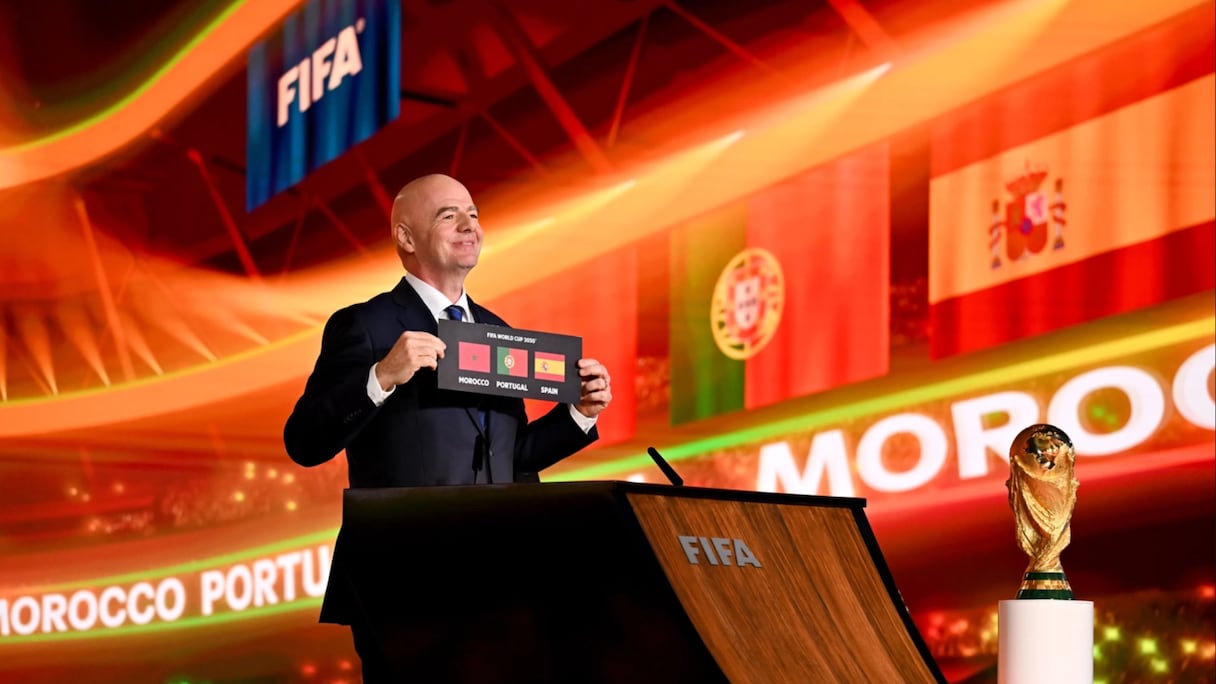
Following a month of competition across the United States, Canada and Mexico, capped by Spain’s World Cup triumph, attention is now turning to the 2030 edition, which will be jointly hosted by Morocco, Spain and Portugal.
With four years to go, the outlines of this historic tournament are gradually taking shape. Behind the scenes, FIFA and the organizing committees of the three host nations are already working through the many challenges posed by a competition that will span two continents.
Host cities, stadiums, the match schedule and the allocation of fixtures are among the first major questions beginning to emerge.
A Tournament Spanning Africa and Europe
Morocco, Spain and Portugal were officially confirmed as hosts during FIFA’s 74th Congress in 2023. After considering several bids, the governing body led by Gianni Infantino awarded the tournament to the three nations, marking the first World Cup in history to be jointly staged across two continents.
The 2030 edition will also carry special symbolic significance, with three opening matches set to be played in Uruguay, Argentina and Paraguay to commemorate the centenary of the inaugural FIFA World Cup, held in Montevideo in 1930.
Following several rounds of discussions, the tournament’s venue plan has taken shape around 20 stadiums across 17 cities: 11 stadiums in nine Spanish cities, six stadiums in six Moroccan cities and three stadiums across two Portuguese cities. The tournament is expected to begin in mid-June and conclude on July 19, 2030.
FIFA assessed a broad range of criteria before validating the proposed venues, including stadium capacity, surrounding infrastructure, transport links, security, hotel capacity and tourism offerings.
The planning has become even more meticulous as FIFA is already considering expanding the tournament to 64 teams, up from the 48-team format introduced in 2026. The proposal aligns with the joint vision promoted by the three host nations under the “YallaVamos 2030” banner.
The Final: The Tournament’s Biggest Prize
While the “YallaVamos 2030” bid is built on cooperation among three nations, requiring constant coordination and compromise, some issues remain especially sensitive.
Chief among them is the venue for the 2030 World Cup final—the tournament’s marquee match and its most-watched event. Three stadiums currently dominate the discussion: Casablanca’s Grand Stade Hassan II, Madrid’s Santiago Bernabéu and Barcelona’s Camp Nou.
The two Spanish venues enjoy immense symbolic status thanks to their association with football giants Real Madrid and FC Barcelona. Meanwhile, the Grand Stade Hassan II, currently under construction, is designed to become a lasting landmark of world football. All three venues present compelling cases to host the final.
Ultimately, however, the decision rests with FIFA and its president, Gianni Infantino. While the choice will be made in close consultation with Morocco, Spain and Portugal, the final word belongs to world football’s governing body. After reviewing each bid, consulting the three organizing nations and evaluating all technical criteria, FIFA will designate the stadium that will host the tournament’s most prestigious match. Logically, that decision is not expected until much closer to the competition.
Grand Stade Hassan II: The Cornerstone of Morocco’s Bid
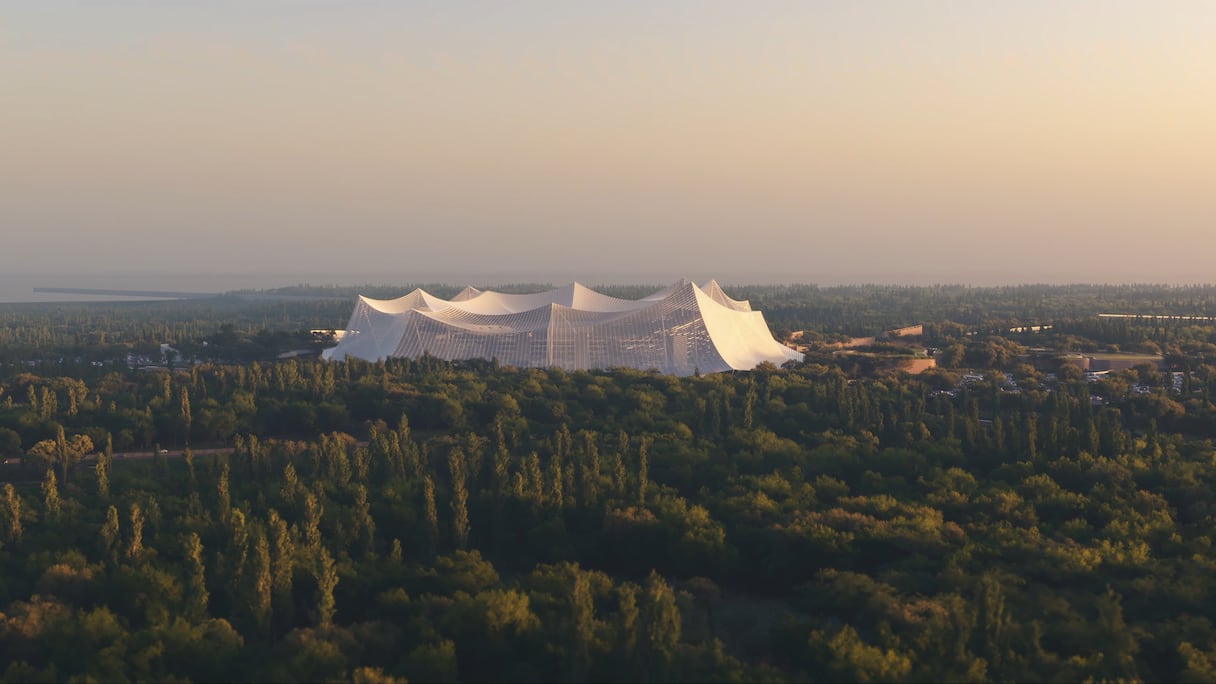
Scheduled for completion by the end of 2027, the Grand Stade Hassan II is expected to become one of the world’s most iconic football venues, both in scale and ambition. Rising in Benslimane, in the Casablanca-Settat region, the stadium is at the heart of a broader development project intended to establish it as an international benchmark. It has emerged as the Santiago Bernabéu’s principal rival, despite the strong backing the Spanish Football Federation has given Madrid’s bid to host the final.
The Moroccan stadium aligns with FIFA’s increasingly ambitious standards as the tournament continues to grow. Morocco also holds one notable advantage over Spain: its premium hospitality capacity.
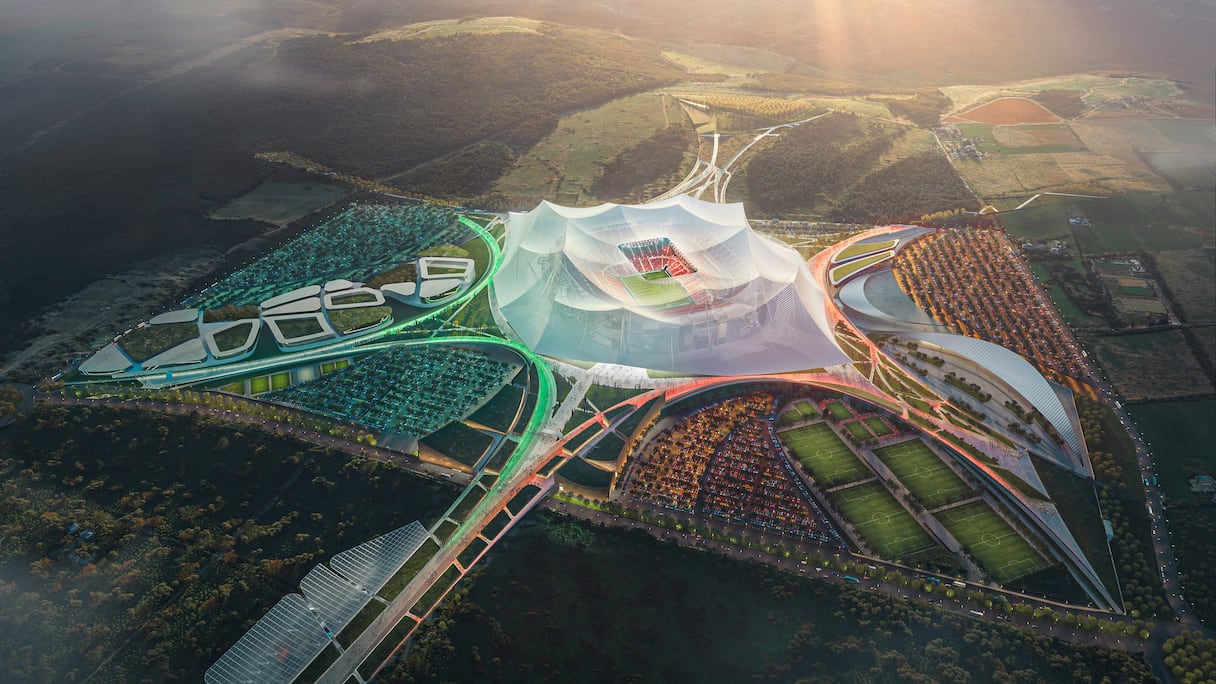
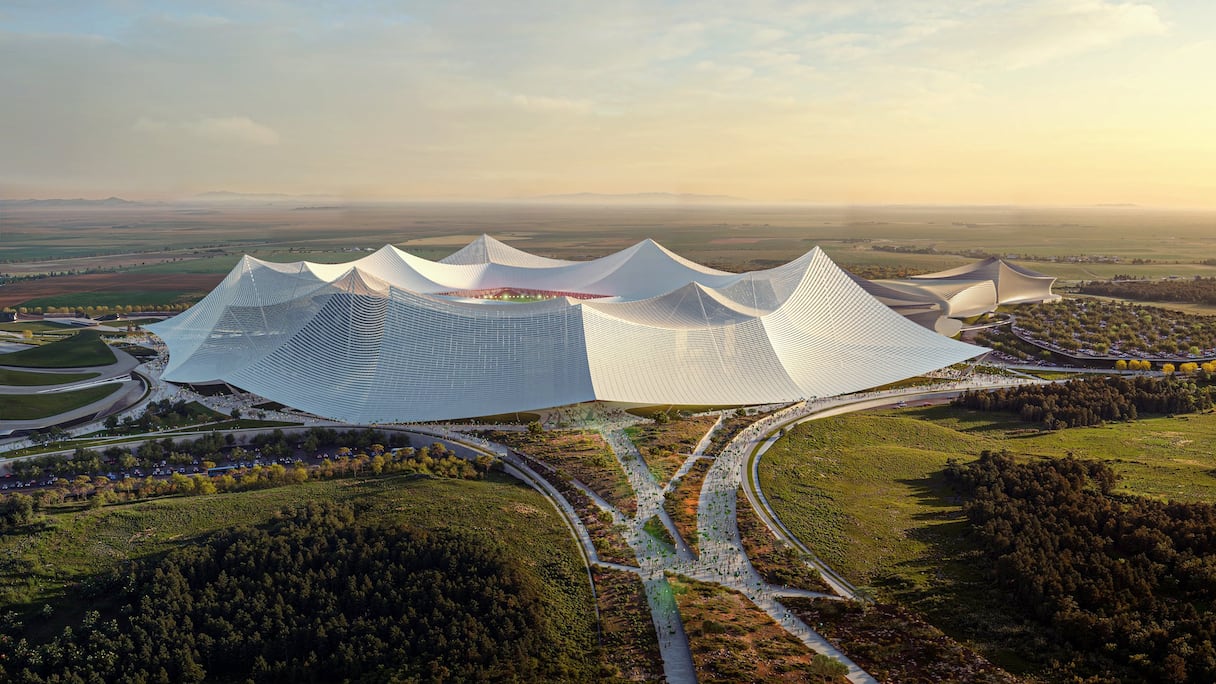
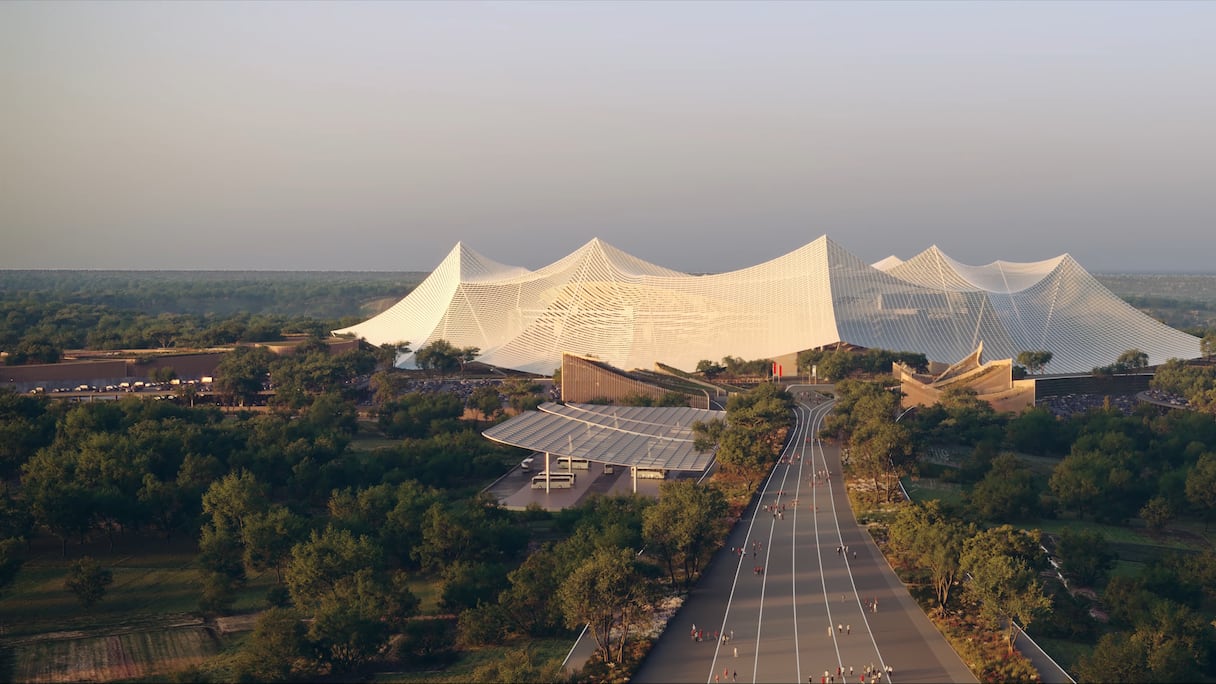
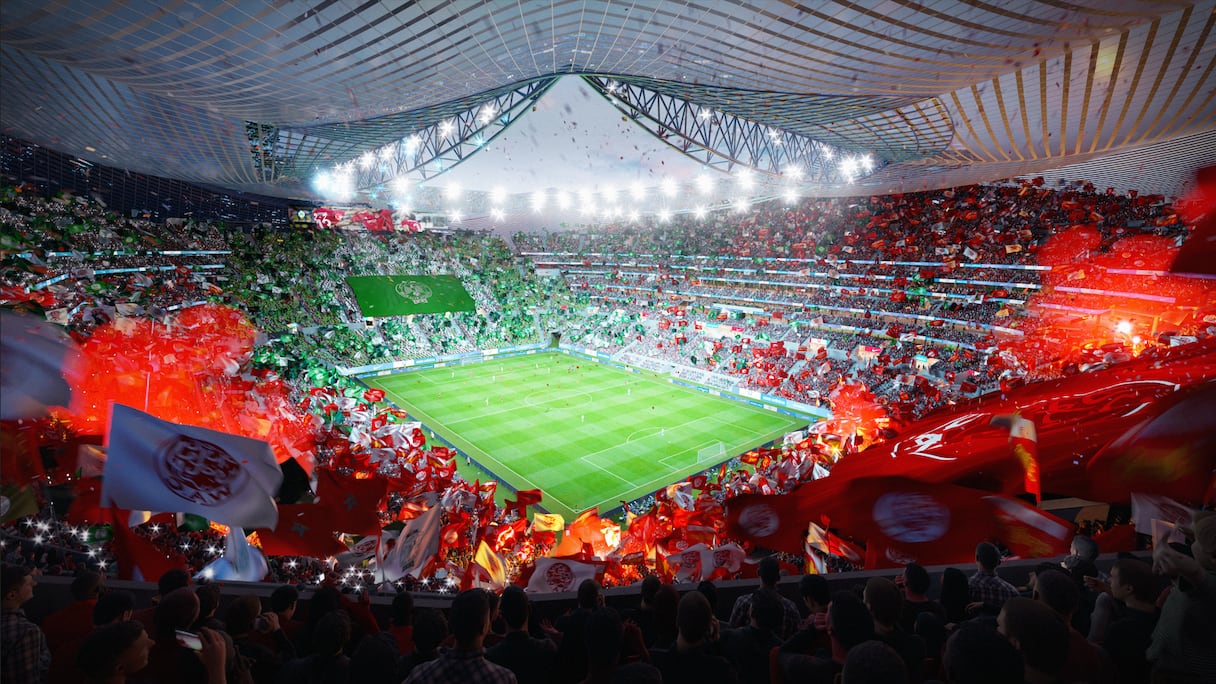
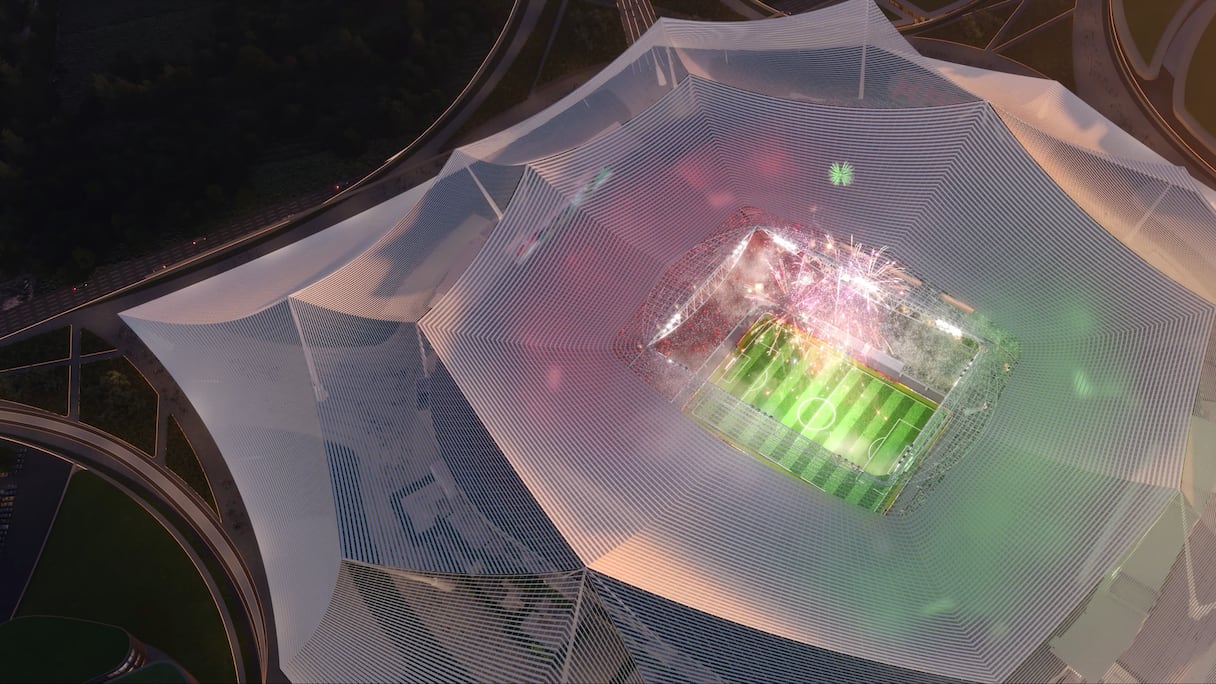
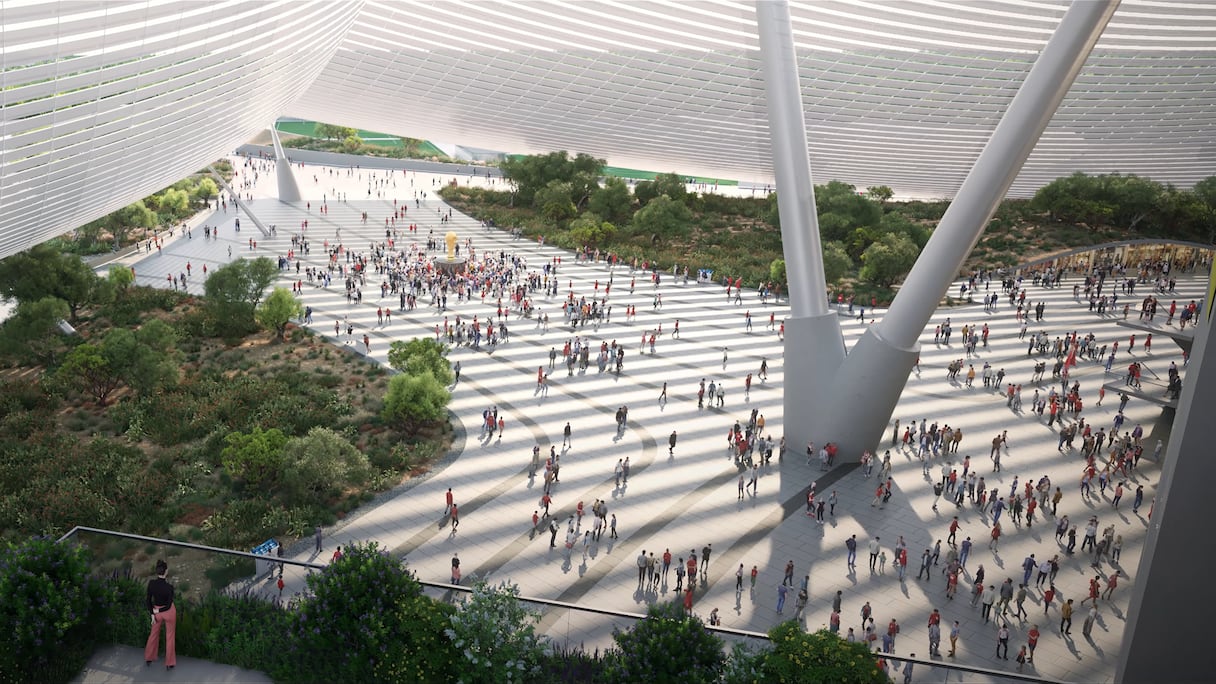
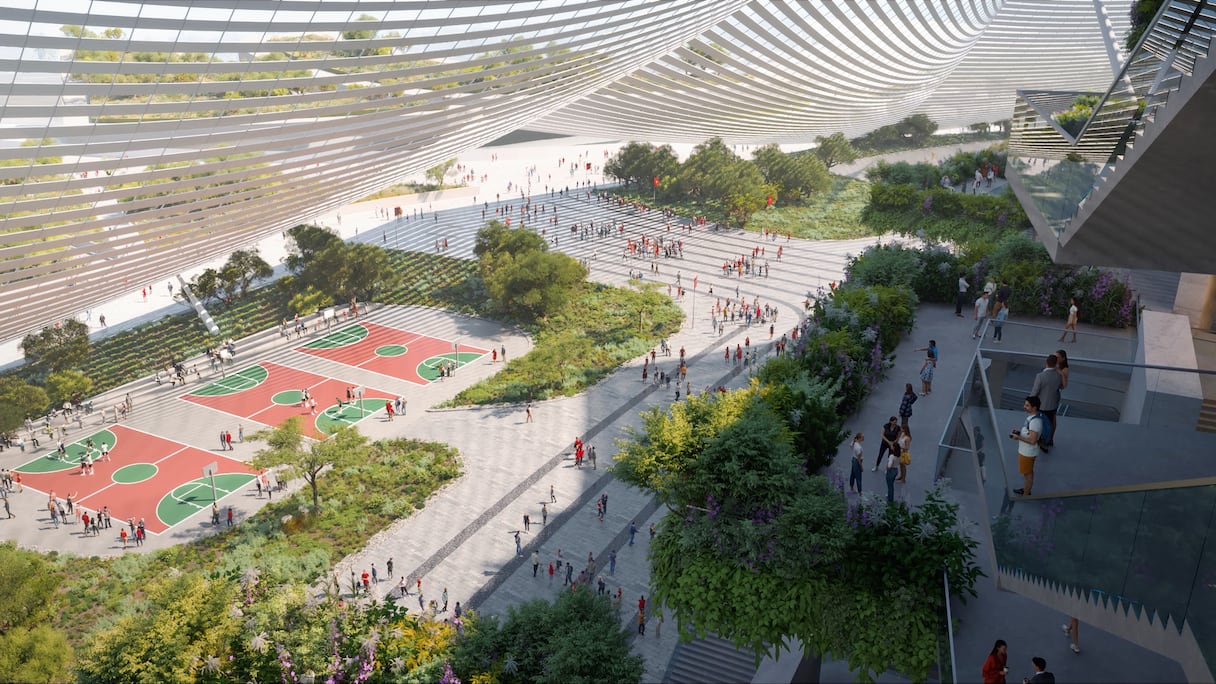
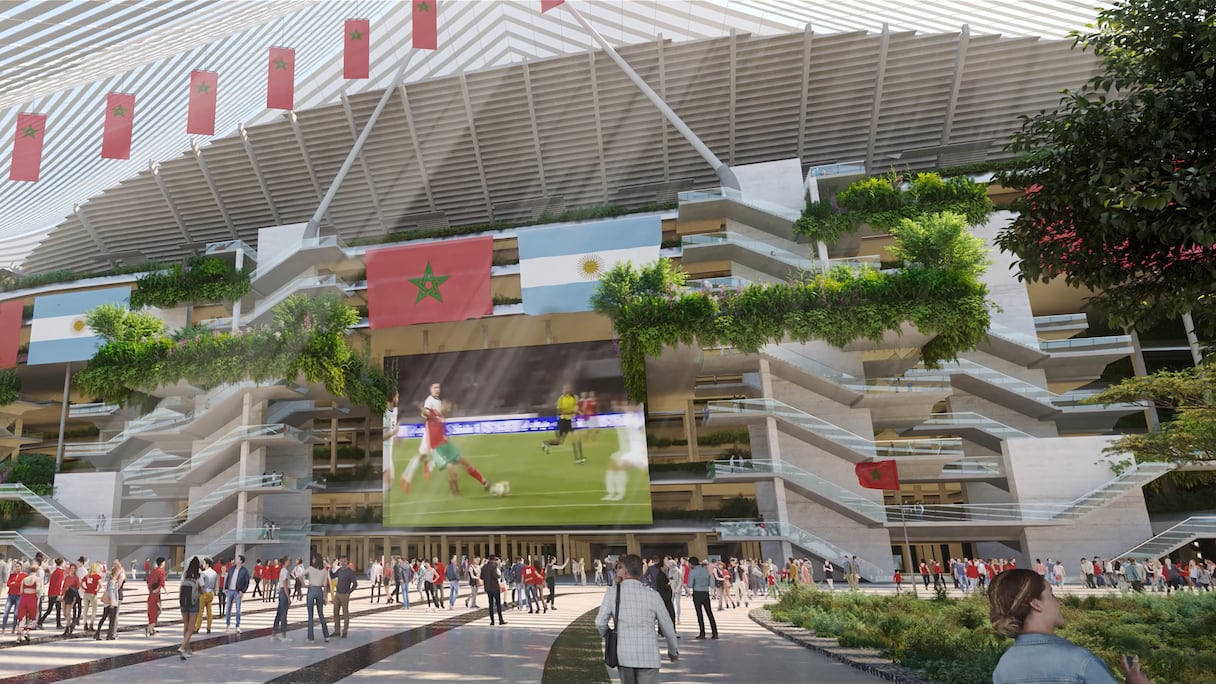
When comparing facilities for premium guests, the Grand Stade Hassan II will offer a significantly larger VVIP area than the Santiago Bernabéu—2,228 square meters compared with 1,297 square meters. The same applies to its Skyboxes, with 2,533 premium seats planned versus 2,371 at Madrid’s stadium.
The Bernabéu retains a slight edge only in overall VIP space, with 6,123 square meters compared with 6,091 square meters for the Moroccan venue.
On other fronts, however, the Grand Stade Hassan II pulls ahead once again. It will feature 99 accessible restroom access points for people with reduced mobility, compared with just 20 at the Bernabéu.
The stadium has also been designed to withstand adverse weather conditions during the tournament. That stands in contrast to the Santiago Bernabéu, whose waterproofing problems have repeatedly attracted attention after widely circulated images showed parts of the stadium flooded during heavy rainfall.
Spain’s Weak Spots: Politics and Club Interests
Although the final decision will rest with FIFA and its president, Gianni Infantino, in consultation with the three host nations, one thing has become increasingly clear: in recent months, the question of the 2030 World Cup final appears to have become a far greater concern in Spain than in Morocco.
Across Spain, public statements in support of staging the final at Madrid’s Santiago Bernabéu rather than Casablanca have multiplied. That sense of unease has at times been openly acknowledged, including by Spanish Football Federation (RFEF) President Rafael Louzán.
“Sometimes I feel frustrated when I see that Spain is hosting this centenary World Cup and yet doubts continue to emerge. There should be no doubt whatsoever about Spain’s role.”
Ironically, those doubts have largely originated within Spain itself, where the debate has increasingly been shaped by concern—and at times even irritation. Nor do they concern only the final.
In Bilbao, one of the host cities selected for the tournament, the provincial president of Biscay, Elixabete Etxanobe, voiced reservations about staging an event of such magnitude.
“Not every situation is the same, and each case must be assessed individually (...) Some people simply do not want this type of event, and that’s the reality.”
Other Spanish cities have also scaled back their ambitions. La Coruña withdrew its bid in favor of the long-term modernization of the Riazor Stadium, while Málaga, despite initially being considered, ultimately chose to prioritize its football club.
“Between the club and the World Cup, we choose the club,” the city’s mayor said, referring to the impact that renovations to La Rosaleda would have on Málaga CF and its supporters.
Indeed, the interests of domestic clubs could prove to be one of Spain’s biggest challenges.
La Liga, one of Europe’s most prestigious football competitions, inevitably depends on the availability of its stadiums.
FIFA requires host venues to be free of all commercial activities unrelated to the tournament at least 30 days before the opening match and until seven days after the last game played there. That requirement could disrupt numerous events, including festivals, while affecting a broader economic, cultural and sporting ecosystem. If stadiums must remain unavailable for several weeks, league fixtures, promotion playoffs and other competitions could also be affected.
The withdrawal of several Spanish host cities, the growing momentum behind the Grand Stade Hassan II and Morocco’s organizational success—most notably during the 2025 Africa Cup of Nations (AFCON)—have reshaped the debate. Facing an increasingly credible rival, Spain has intensified its campaign to make the Santiago Bernabéu the venue for the 2030 World Cup final, ahead of Casablanca—and even Barcelona.
The debate over the venue has now extended well beyond football into the political arena.
Alberto Núñez Feijóo, leader of Spain’s Popular Party (PP), addressed a message to Prime Minister Pedro Sánchez. Arguing that the final should remain in Spain because of the country’s “footballing tradition”, its “status as a major football nation,” and its logistical capabilities, he warned the Spanish prime minister:
“I hope he is not negotiating away the right to host the final.”
Africa Deserves a Second World Cup Final
While Spanish officials have openly voiced their frustration—and have even floated the possibility of withdrawing Madrid’s bid to host the International Broadcast Centre (IBC) should the final be awarded elsewhere—the Moroccan side has adopted a different strategy, limiting public statements and consistently emphasizing the spirit of a “joint organization.”
One argument, however, remains difficult to ignore: Africa deserves to host a second FIFA World Cup final.
Apart from the 2010 final in Johannesburg, South Africa, no other World Cup final has ever been staged on the African continent. In line with FIFA’s objective of expanding football’s global reach, awarding the showcase match to Morocco would reinforce the governing body’s broader ambition of strengthening the game’s presence across every region of the world.
Spain, by contrast, has already hosted a World Cup final. In 1982, Madrid’s Santiago Bernabéu staged the championship match between Italy and West Germany, won 3–1 by the Azzurri.
Whatever the outcome, the debate over the host of the 2030 World Cup final is likely to continue for years to come. But despite the media campaigns, political pressure and increasingly explicit messages coming from Spain, the final decision will rest with FIFA, in agreement with Morocco, Spain and Portugal.
