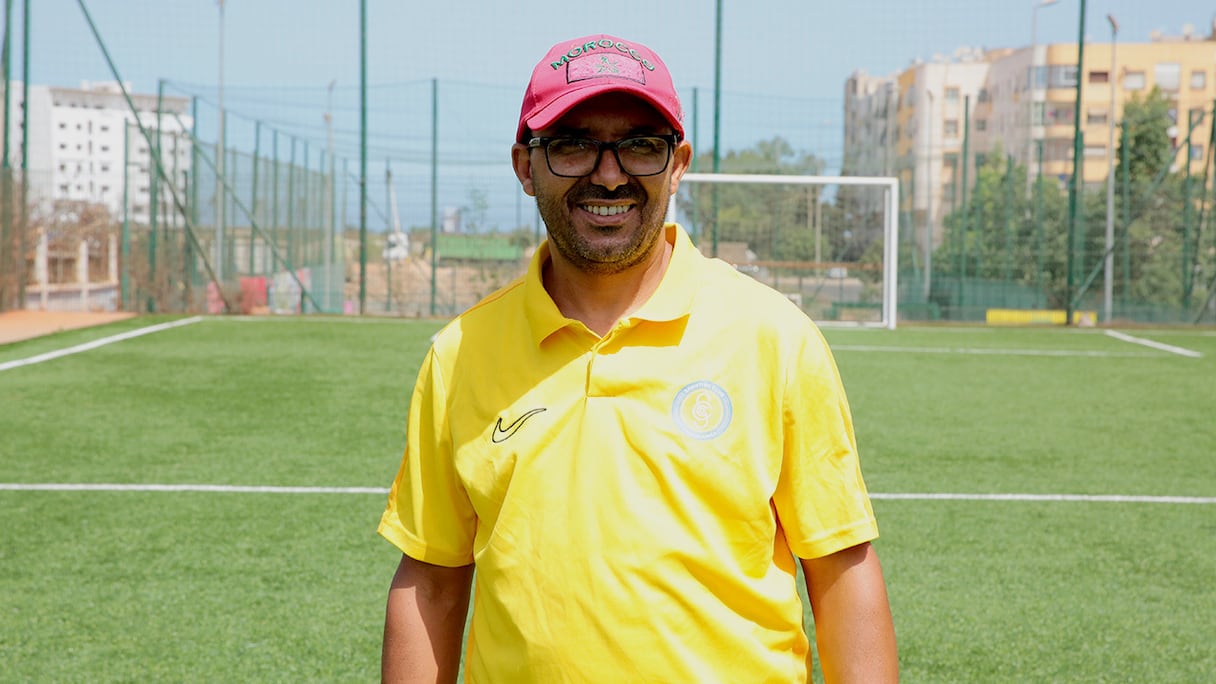
Adil Faras, who has helped develop several Moroccan women’s internationals, shared his assessment of the evolution of women’s football in Morocco in an exclusive interview with Le360 Sport.
The Sporting Casablanca technical supervisor discussed the Atlas Lionesses’ performances at the 2026 Women’s Africa Cup of Nations, the challenges awaiting Jorge Vilda’s side in the knockout stages, and the decisive role of youth development in producing Morocco’s next generation of talent.
Reflecting on Morocco’s group-stage campaign, Faras offered a largely positive assessment. He welcomed the Atlas Lionesses’ first-place finish in Group A with seven points and praised the team for completing the group stage without conceding a goal.
He nevertheless stressed that the toughest tests still lie ahead.
“I expect to see a team with a strong personality, both defensively and in the way it builds play and attacks,” he said, adding that the knockout rounds will provide the clearest measure of the team’s true level under Jorge Vilda.
Having worked with several clubs across Morocco and contributed to the development of numerous international players, Faras also reflected on the early years of Atlas Lionesses captain Ghizlane Chebbak.
“Ghizlane Chebbak’s performances are no coincidence,” he said, recalling that she first played alongside boys “at a time when women’s football barely existed.”
He also spoke about the development of other Moroccan internationals who came through under his guidance, including striker Ibtissam Jraidi, defender Nouhaila Benzina, full-back Zineb Redouani and midfielder Najat Badri.
Faras also highlighted the growing standard of this year’s Women’s Africa Cup of Nations, noting that the competition has expanded from 12 to 16 teams for the first time, significantly raising the overall level of the tournament.
“The quarterfinals will be a real test for Morocco,” he said of Saturday’s meeting with South Africa, the 2022 African champions, describing the match as an opportunity for the Atlas Lionesses to confirm their progress while gaining a measure of revenge.
Looking beyond the current tournament, the Sporting Casablanca technical supervisor emphasized the importance of preparing for the future.
According to Faras, the Atlas Lionesses’ recent success can only be sustained through long-term investment in youth development.
He called for stronger youth academies, greater support for Moroccan coaches and youth trainers, and early planning to prepare the next generation of internationals.
Morocco finished top of Group A with seven points after recording two wins and one draw. Jorge Vilda’s side faces South Africa in the quarterfinals on Saturday, with a place at the 2027 FIFA Women’s World Cup in Brazil at stake for the semifinalists.
