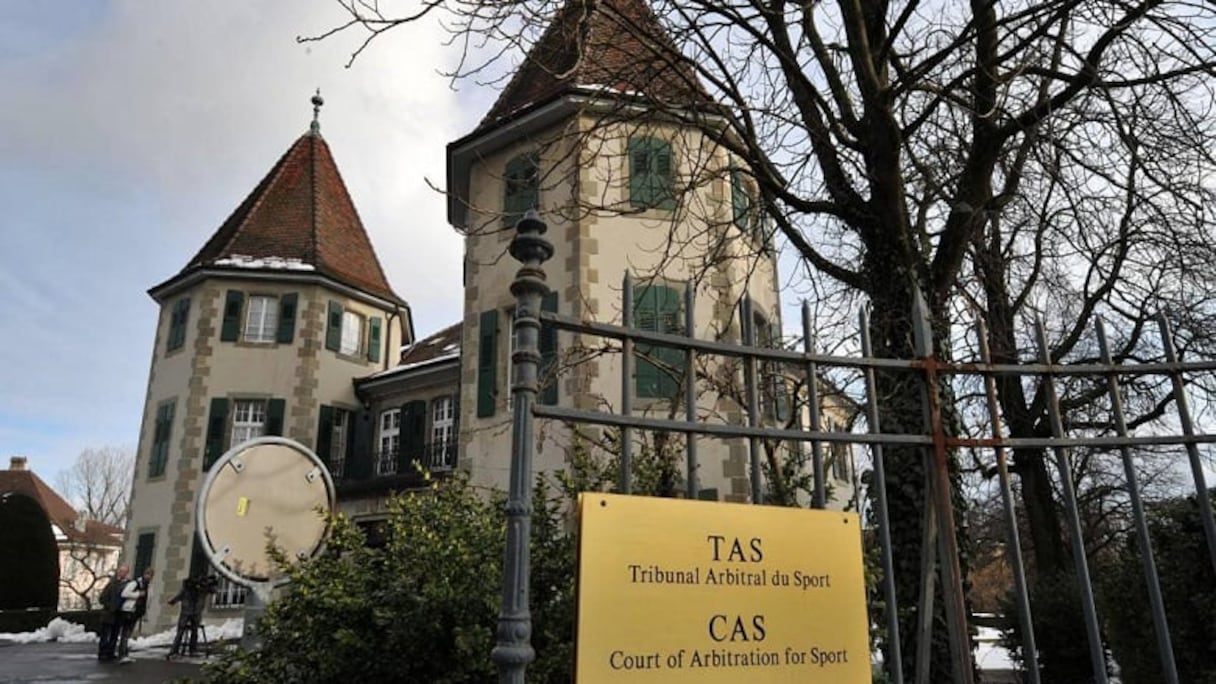
Over the past 24 hours, an image presented as an official decision from the Court of Arbitration for Sport (CAS) has circulated extensively across social media platforms. The document claims CAS upheld an appeal filed by the Senegalese Football Federation (FSF), annulled the Confederation of African Football’s decision awarding Morocco the title by default, and officially crowned Senegal the 2025 Africa Cup of Nations.
However, a fact-check has uncovered several inconsistencies, both in form and substance, confirming that the document is not an authentic CAS ruling.
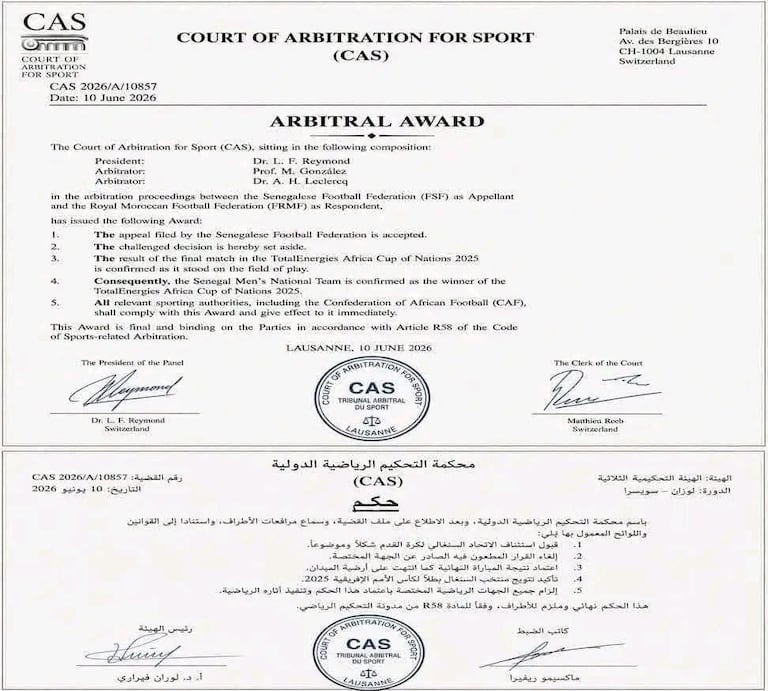
The first red flag concerns the case number. The viral document bears the reference CAS 2026/A/10857, whereas the appeal lodged by the Senegalese Football Federation was officially registered under case number CAS 2026/A/12295, according to the statement released by the arbitration court.
Another major inconsistency is the suggestion that CAS has already issued a final ruling in the case. Had the court indeed overturned CAF’s decision and stripped Morocco of the continental title, such a verdict would have been announced through official channels before being relayed by CAF and the federations involved. No such statement has been issued.
The content of the alleged ruling also raises questions. CAS decisions are typically far more detailed, laying out the facts of the case, the arguments presented by all parties, the arbitrators’ analysis, and the legal reasoning behind the verdict. The document circulating online consists of a single page and contains no explanation whatsoever—a format that bears little resemblance to the court’s official rulings.
The English and Arabic versions appear on the same page, and the formatting differs significantly from that of genuine CAS decisions. While the document reproduces the court’s logo, stamp, and signatures, such visual elements can easily be copied and do not, on their own, guarantee authenticity.
As things stand, the Court of Arbitration for Sport has not published any decision regarding the appeal filed by the FSF. In the absence of any official communication from the institution, the document circulating on social media is fake.
