“Spain must host the World Cup final. And if it doesn’t, then, in my opinion, it should not take part in organizing the tournament.” Those recent remarks by Alberto Núñez Feijóo, leader of the People’s Party (PP) and a leading figure on the Spanish right, exposed a certain nervousness, even mounting tension, over the venue for the 2030 World Cup final, coveted by Madrid, Barcelona and Casablanca, with its Grand Stade Hassan II. The Spanish politician went so far as to raise the prospect of his country withdrawing from hosting the competition altogether.
Read also : Spain should pull out of 2030 World Cup if it does not host final, says PP leader Alberto Núñez Feijóo
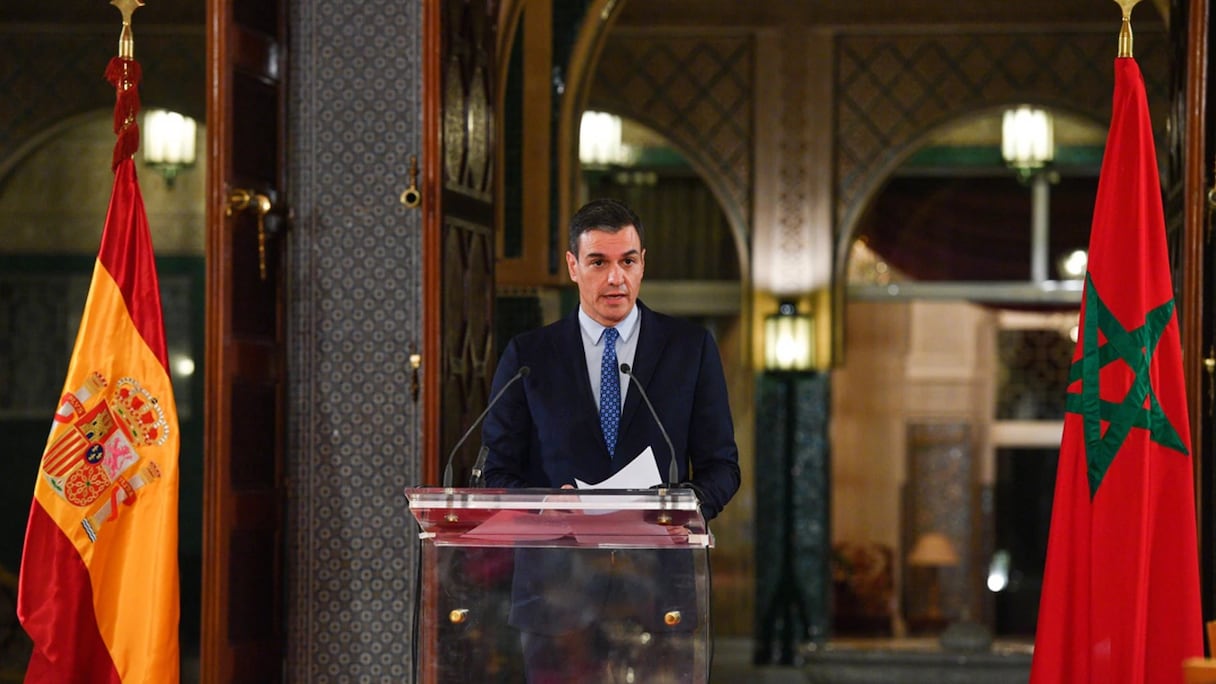
The remarks caused quite a stir across the Strait of Gibraltar. They were widely discussed on television, in the media and across social networks. Eventually, they reached Spanish Prime Minister Pedro Sánchez, who addressed his political rival’s comments during an extended interview with La Séptima.
Sánchez was keen to put matters into perspective: neither Spain, Morocco nor Portugal has the final say over who hosts the showpiece match. FIFA remains the sole authority empowered to make that decision. Asked about Feijóo’s remarks, the Spanish prime minister responded: “FIFA makes the decision.”
The Socialist leader nevertheless made a point of defending the prospect of a final in Spain. But another aspect of his remarks stands out: the way he presented the joint bid with Morocco, in contrast to Feijóo’s rhetoric, which tends to portray the Kingdom as a partner brought into the original bid at a later stage.
“What is certain is that two countries launched the idea, Spain and Portugal. Under the geographical rotation system, Europe was the next continent, and we added a brotherly country, Morocco, and we are delighted that we did,” Sánchez continued.
This approach contrasts with that of Feijóo, who speaks of “Morocco being invited” to join subsequently. Although both politicians agree that they want the final to be played in Spain, they differ in how they approach the joint bid and, above all, in what consequences should follow if the decision goes against their country.
Read also : 2030 World Cup inspection tour opens in Spain with visit to Bilbao’s San Mamés
Sánchez went on to bolster his argument by recalling that Spain had proposed hosting the largest number of matches, while also invoking La Roja’s status as a former world champion: “We won in South Africa, we won in New York. In 2030, it’s our turn to win in Spain.”
Beyond this political exchange, Pedro Sánchez has above all reminded his rival of a reality that some in Spain seem reluctant to accept: the venue for the 2030 World Cup final will not be decided in Madrid or on Spanish television talk shows. The final word belongs to FIFA.
