Tous les articles correspondant à #Nigéria

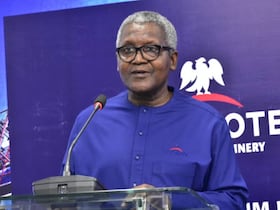
Africa’s richest man Aliko Dangote to leave one-third of fortune to charity
Africa’s richest man, Aliko Dangote, has formalized his will. In line with Islamic inheritance law, the document—already signed by his heirs—stipulates that one-third of his estate will be transferred to the Aliko Dangote Foundation after his death to support charitable initiatives. Currently estimated at more than $35 billion, Dangote’s fortune could increase substantially in the coming years, driven by the group’s expanding industrial projects, including the potential stock market listing of its flagship refinery.
Bloomberg: Morocco taps US Exim Bank, World Bank for African Atlantic gas pipeline financing
Morocco is seeking financing from the Export-Import Bank of the United States and the World Bank for the African Atlantic Gas Pipeline (AAGP), according to Bloomberg, as the project gains momentum following a landmark agreement signed by West African leaders.
Why Air Algérie? The curious detail in Nigeria’s regulatory offensive against Royal Air Maroc
A strongly worded social media post by a senior official at Nigeria’s Civil Aviation Authority (NCAA) threatening to recommend the suspension of Royal Air Maroc’s operations has drawn attention not only for its criticism of the Moroccan airline, but also for its unexpected reference to Air Algérie as an alternative. A new analysis by the Moroccan think tank Institut Géopolitique Horizons examines the regulatory dispute and the broader geopolitical questions raised by that choice.
Atlantic Africa Gas Pipeline: how West Africa is anchoring its energy future to Morocco
By securing the collective endorsement of ECOWAS member states in Freetown on July 19, 2026, the African Atlantic Gas Pipeline has transcended its status as a mere infrastructure project to become a cornerstone of contemporary African geopolitics. Driven by the Morocco-Nigeria partnership, this $25 billion megaproject, spanning 6,800 kilometers across 13 countries, is transforming the region’s gas potential into an instrument of energy sovereignty for 400 million people, while establishing an irreversible model of South-South integration. Here is how.