Ben Schlappig has seen just about everything. The founder of One Mile at a Time makes a living reviewing airlines, from the Gulf’s luxurious suites to some of the world’s most unlikely aircraft cabins. Nothing had prepared him for Air Algérie. His review of business-class flight AH2701 from Montreal to Algiers on October 3, published on November 8, bears a headline that says it all: “Utterly Awful.”
“Pretty much everything was bad,” he writes, before floating a telling theory: “It’s almost as if they’re intentionally offering a bad experience!” Neglect alone, it seems, cannot account for a performance quite this dismal. The flight even made him nostalgic for his recent journey with Turkmenistan Airlines, “which was at least fun.” Coming from a man who has flown with the national carrier of one of the world’s most closed-off regimes, the comparison stings.
USD 1,171 and not a mile to show for it
Air Algérie has no useful partnerships for earning or redeeming miles, the blogger observes. He sees this as a reflection of a country that “just isn’t interested in visitors” and whose visa requirements amount to an obstacle course. He therefore paid USD 1,171 for a one-way ticket, which included an onward flight from Algiers to Tunis on an A320 leased, crew included, from Lithuania’s Avion Express. In other words, the national airline outsources its service to Tunis, barely an hour’s flight from home.
For that price, the list of missing amenities is lengthy: no menu, no choice of main course, no alcohol, no sugar-free soft drinks, no amenity kit and no Wi-Fi, even though the aircraft is equipped for it. The A330neos acquired second-hand from Air Belgium arrived with the system already installed. Air Algérie simply chose not to offer the service.
Read also : Air Express Algeria banned from European airspace over safety concerns
The warning signs appear at check-in. There is just one business-class counter, half a dozen passengers ahead of him and a 30-minute wait. The agent asks for an Algerian visa. Schlappig explains that he is in transit, apparently catching the agent off guard. Air Algérie, he concludes, cannot be accustomed to handling many international connecting passengers.
The National Bank lounge, operated under contract at the airport, turns out to be “pretty pleasant”: bright, quiet, with a decent buffet. The blogger nevertheless decides to save his appetite for the flight. He will regret that decision.
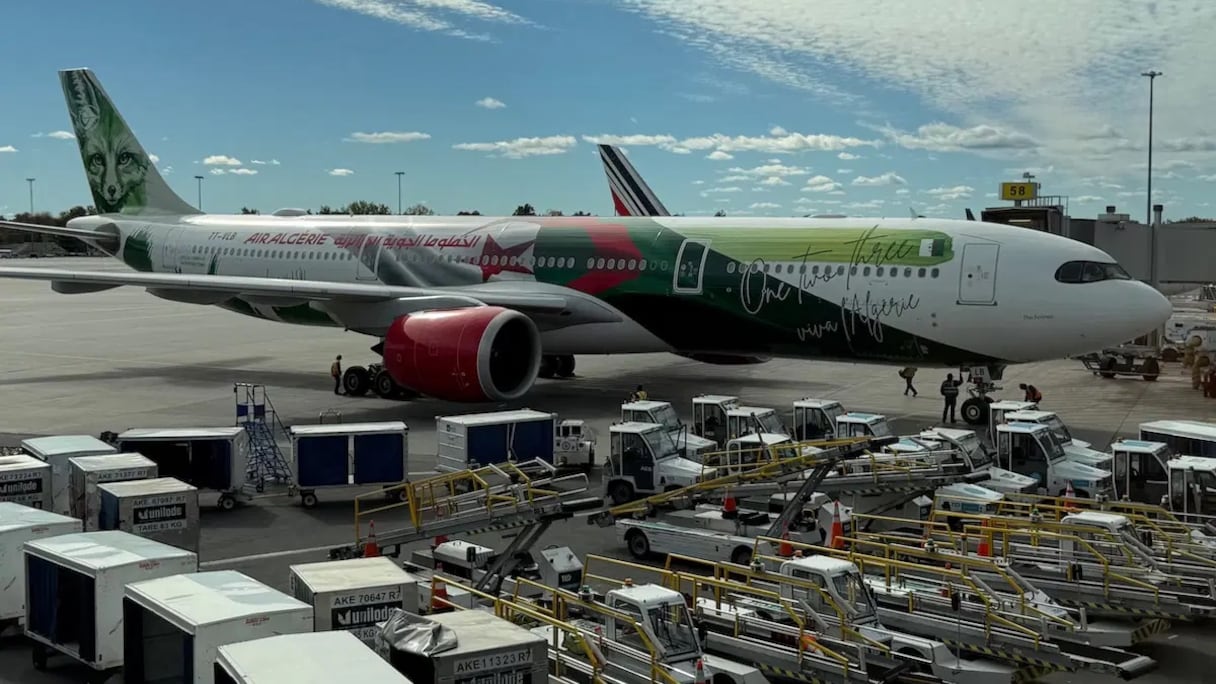
At gate A58, the A330neo registered 7T-VLB awaits, looking magnificent in its special livery celebrating Algeria’s national football team. “Looking at the plane was honestly the best part of the flight experience, unfortunately,” he concludes.
“Wait”
On board, the cabin feels like a sauna: the auxiliary power unit appears to be out of service. The crew is nowhere to be seen for almost the entire boarding process, except when chatting with acquaintances seated in the cabin. Business class seems full of upgraded passengers, friends and relatives of staff. The blogger asks to use the lavatory, which is unoccupied. “Wait.” He tries again later. “Wait.” He never gets to use it.
The welcome drink arrives at 4:10 p.m., the scheduled departure time: orange juice or water, offered on a tray without a word. “No hello, no welcome onboard,” he notes. Twenty minutes after the scheduled departure, he asks whether the flight is delayed. The answer: no. The doors close at 4:35 p.m., making it a 25-minute delay that apparently does not officially exist.
The safety instructions are delivered in French and Arabic, without a word of English, on a flight departing from Canada. No cabin checks follow: seatbacks remain reclined, passengers are still holding their drinks, and the passenger opposite has not fastened his seatbelt. The captain delivers his welcome announcement while the aircraft is already taxiing, then turns onto runway 24R without really slowing down, making a 90-degree turn at more than 15 knots. An incredulous Schlappig directs readers to the Flightradar24 data. He does, however, acknowledge a powerful takeoff and beautiful views of Montreal at sunset.
A good seat, provided you clean it first
The seat, the sole survivor of this disaster, deserves a closer look. The business-class cabin has 30 Stelia Solstys seats arranged in a 1-2-1 configuration across eight rows, inherited from Air Belgium: 112 cm of seat pitch, 53 cm of width and a 196 cm bed. Generous foot space, an adjustable tray table and open storage. Perfectly respectable, then.
Maintenance is another matter. The seat was not “well maintained” or “clean” and could have used “a good wiping-down.” There is a power outlet and a USB-A port, but no USB-C, and no individual air vents in an overheated cabin. Photographing Air Algérie’s cabins is astonishingly easy, he adds, since the crew are nowhere to be seen.
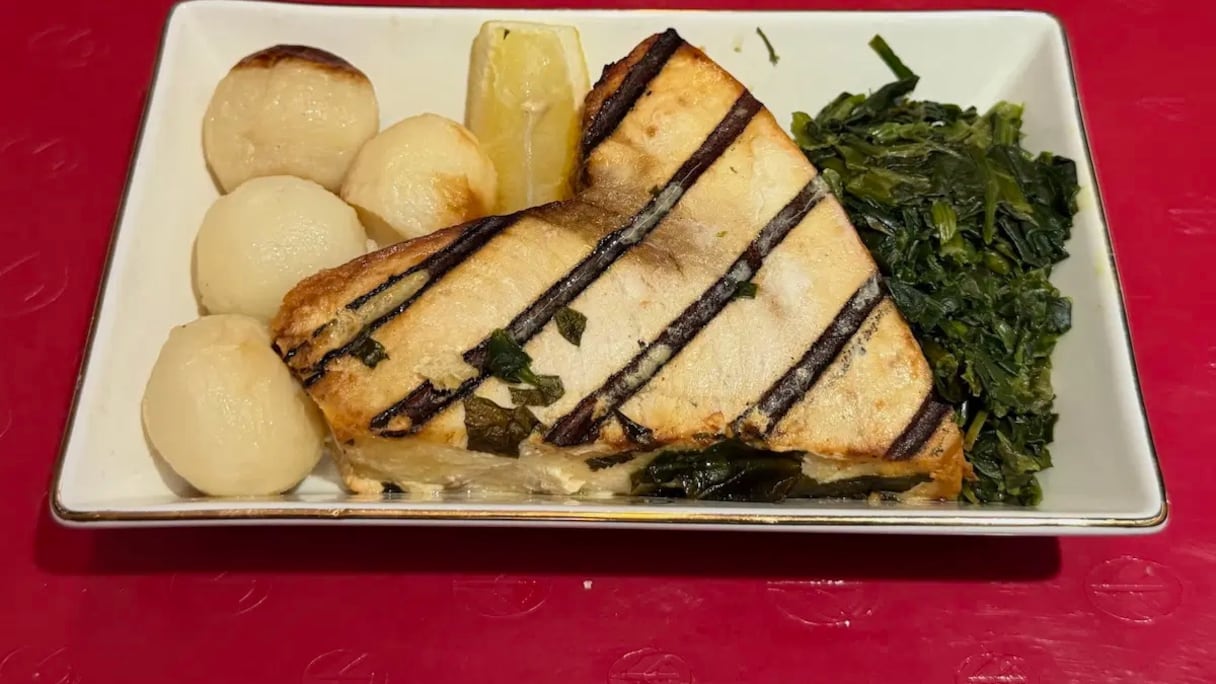
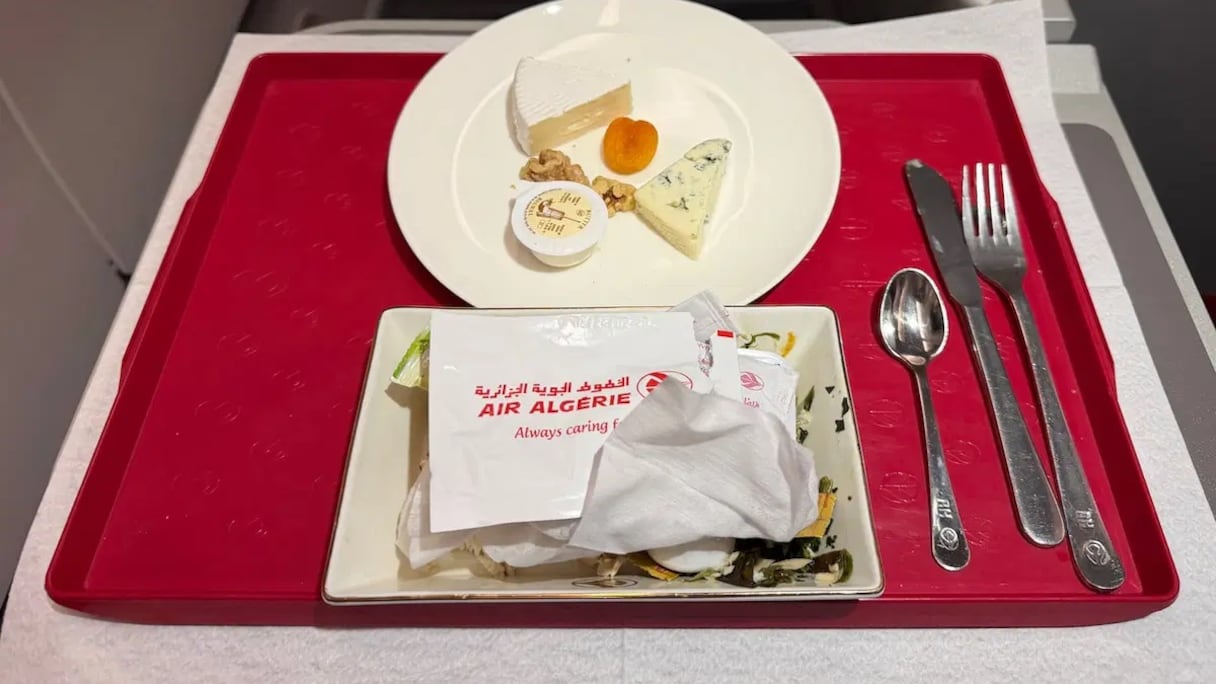
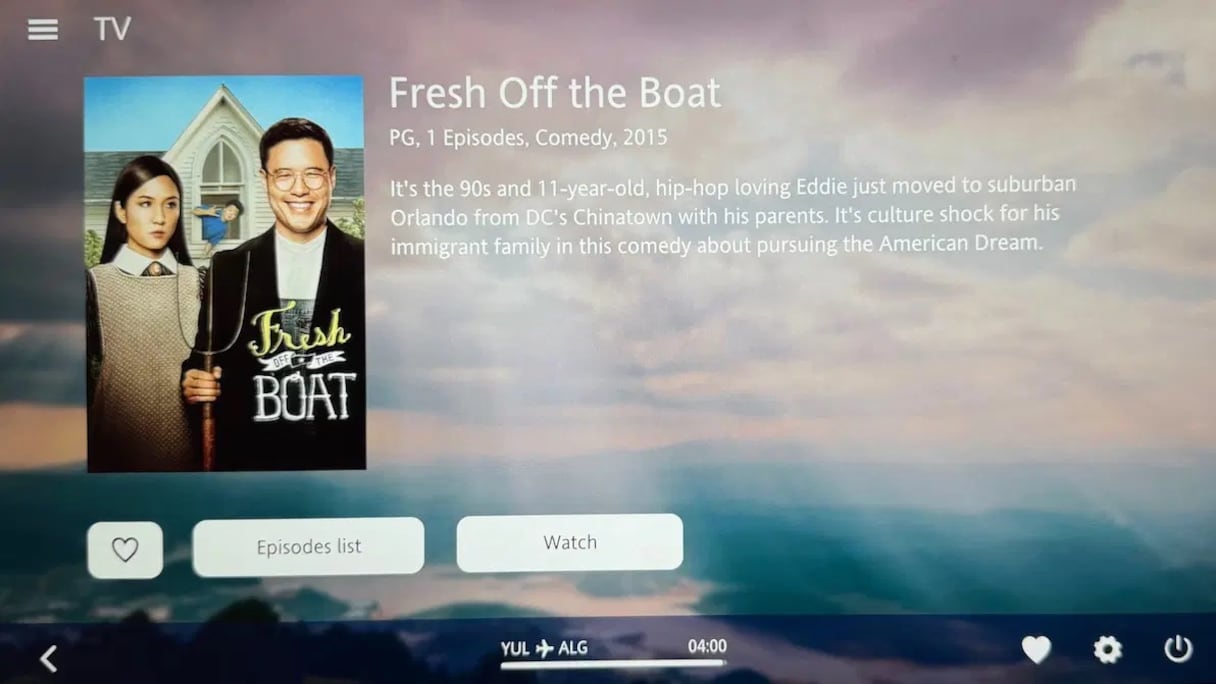
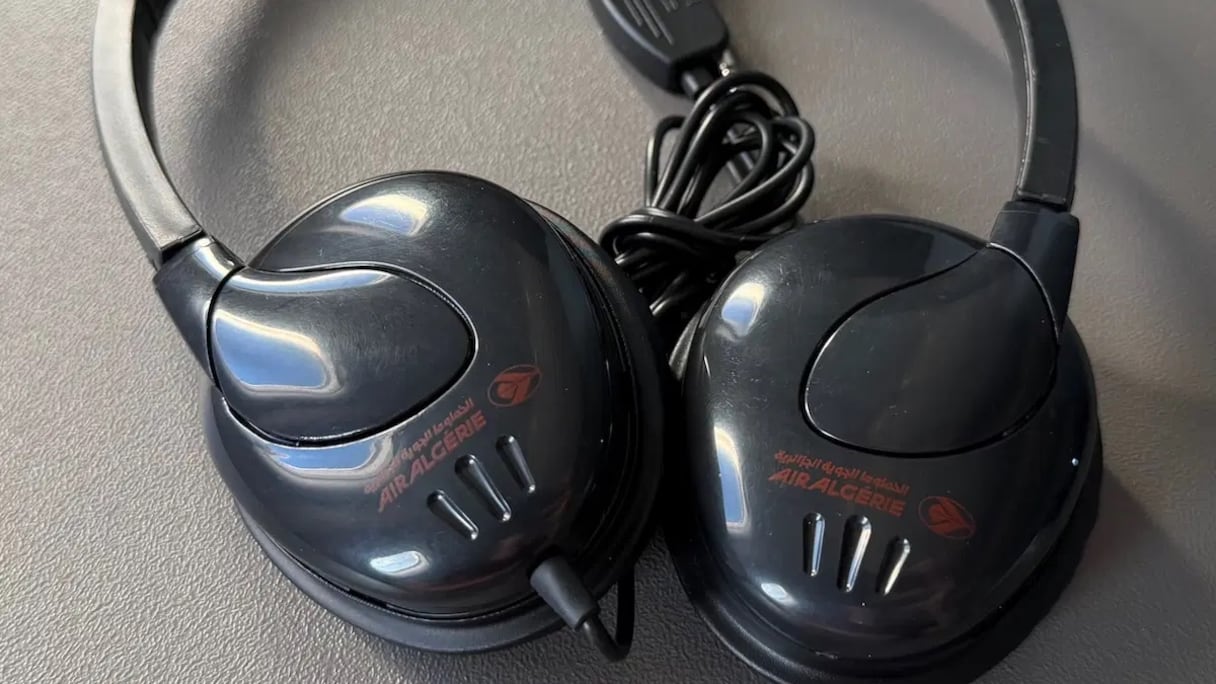
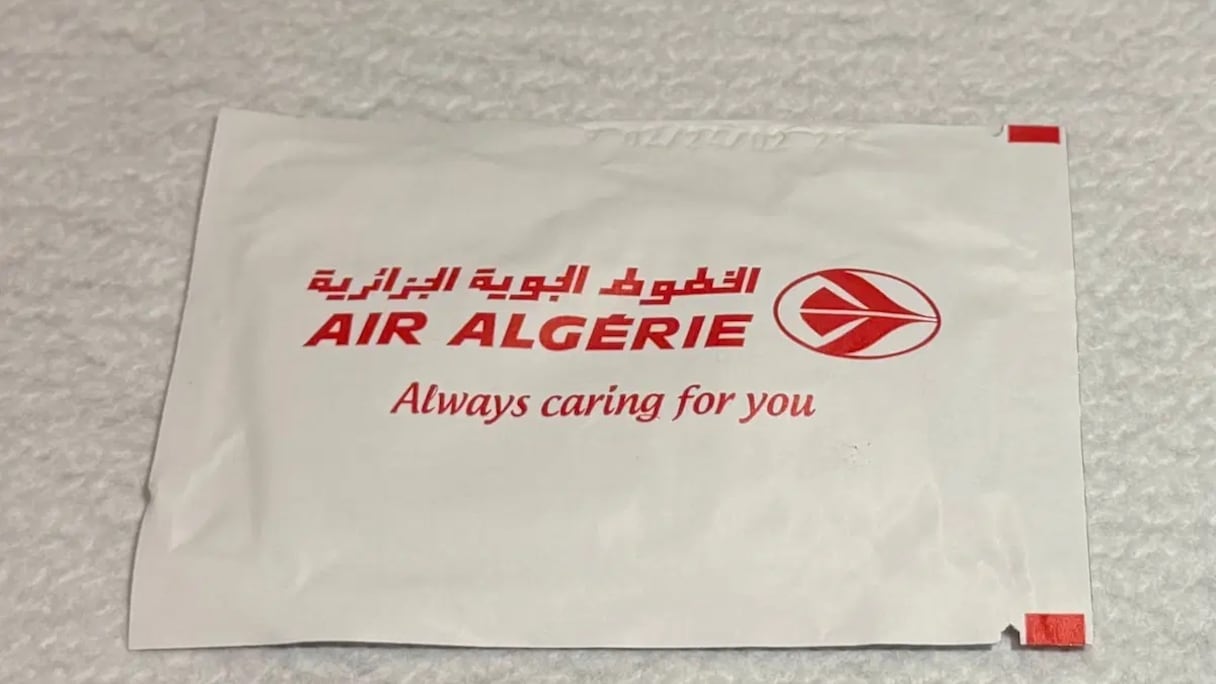
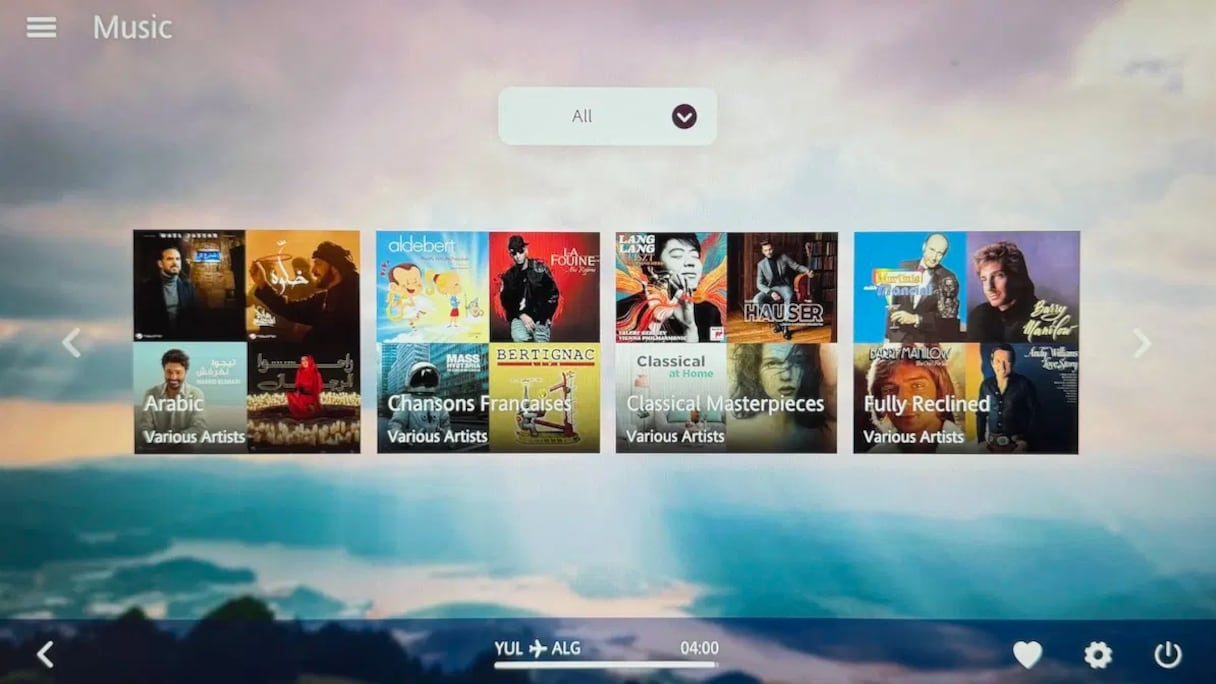
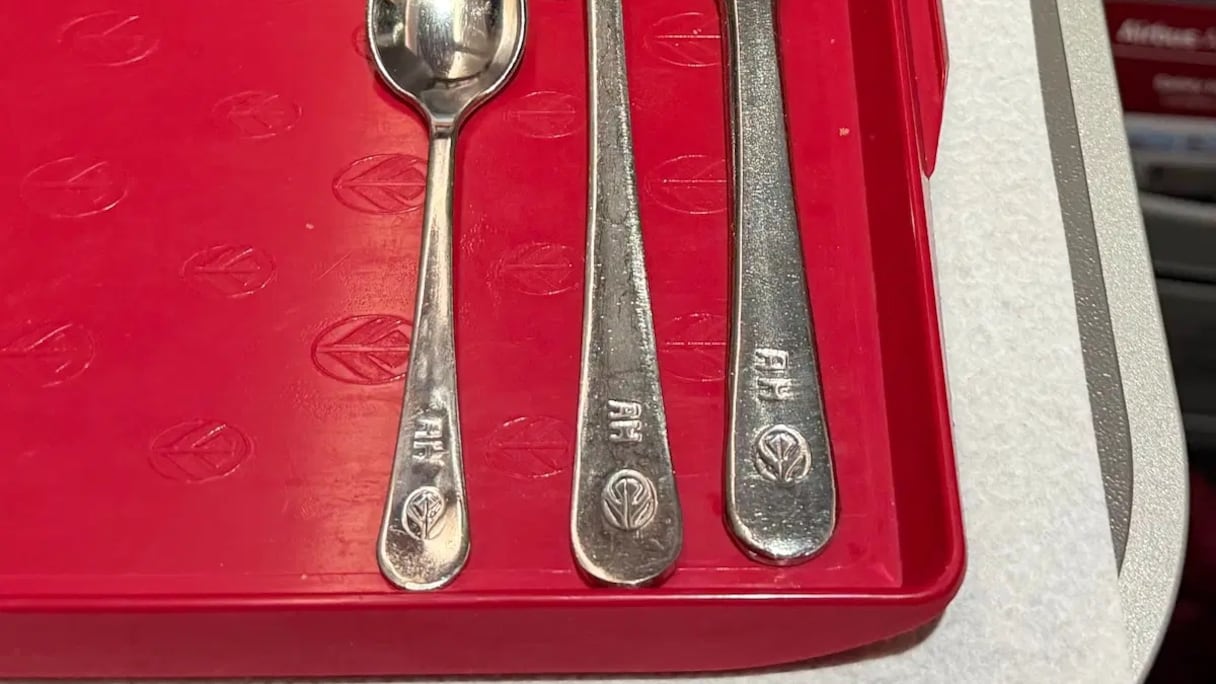
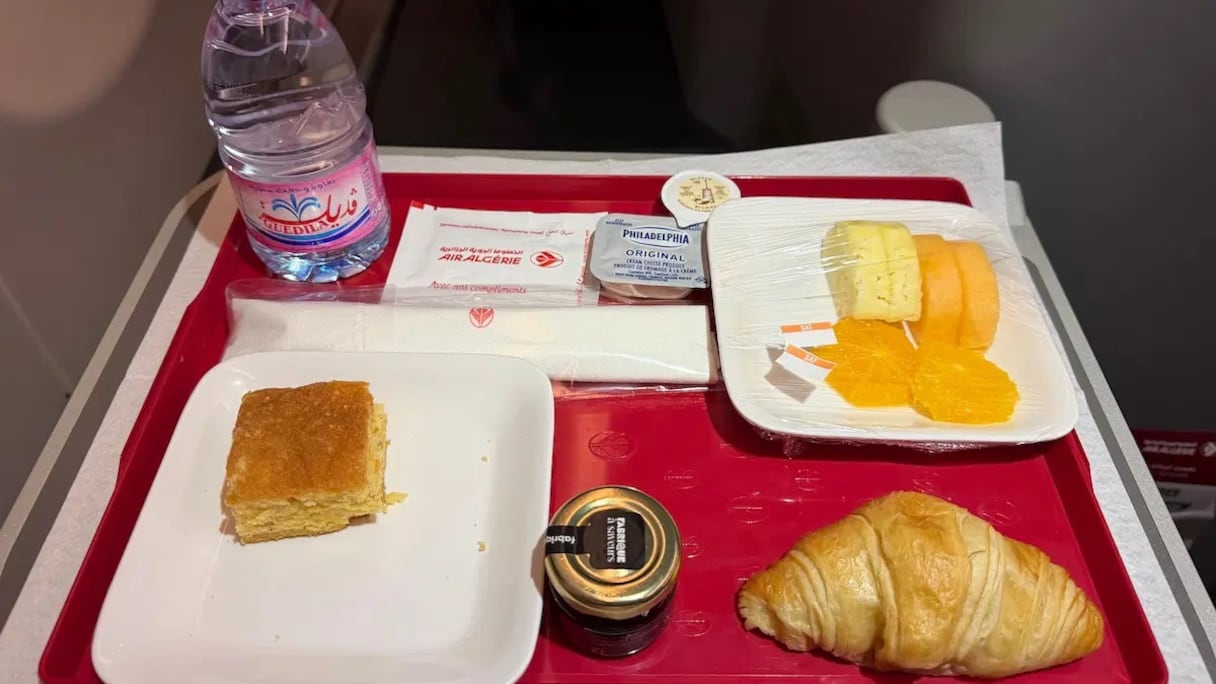
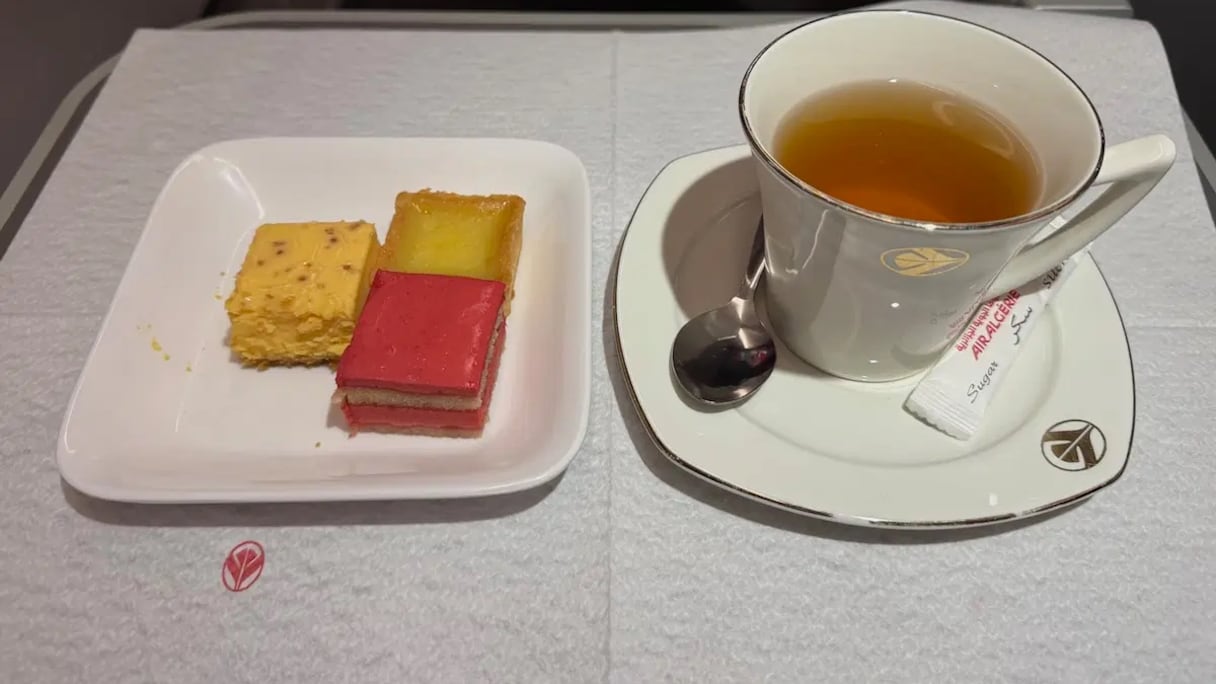
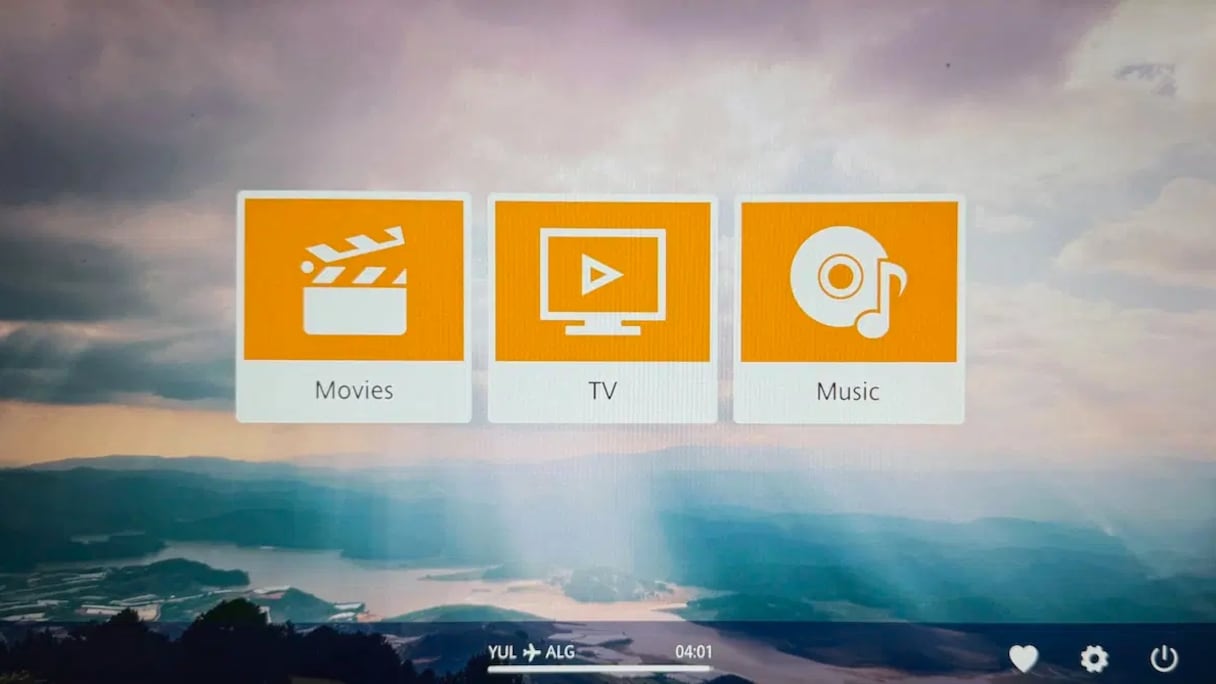
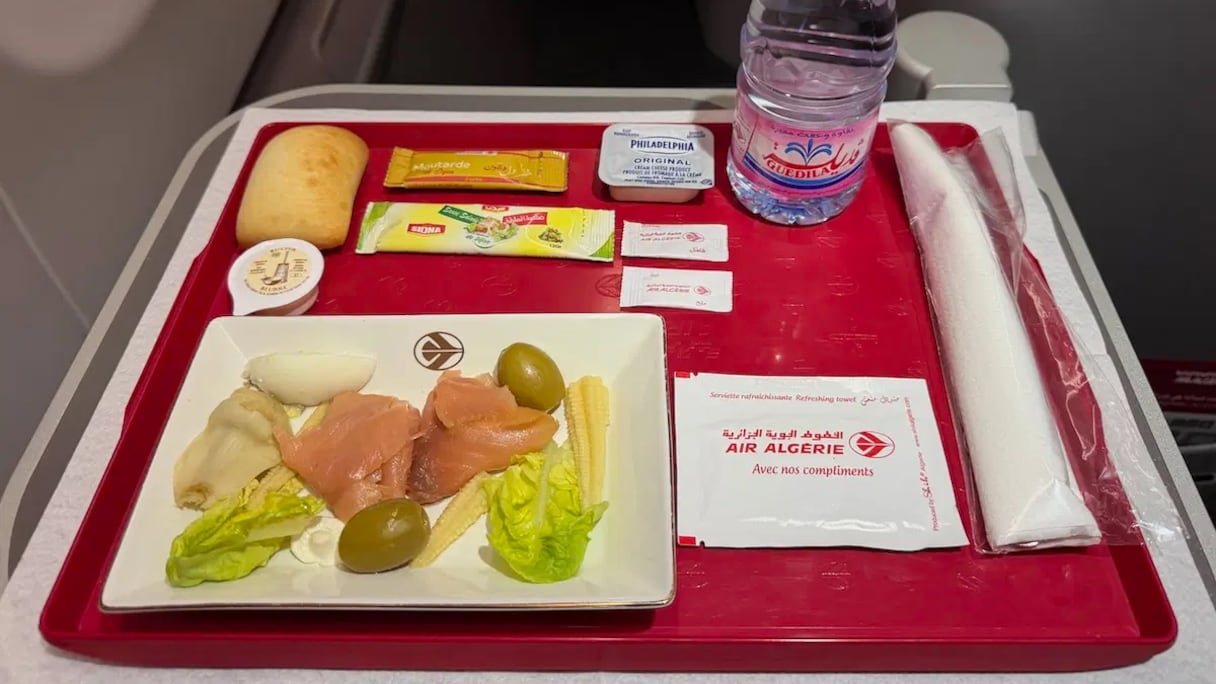

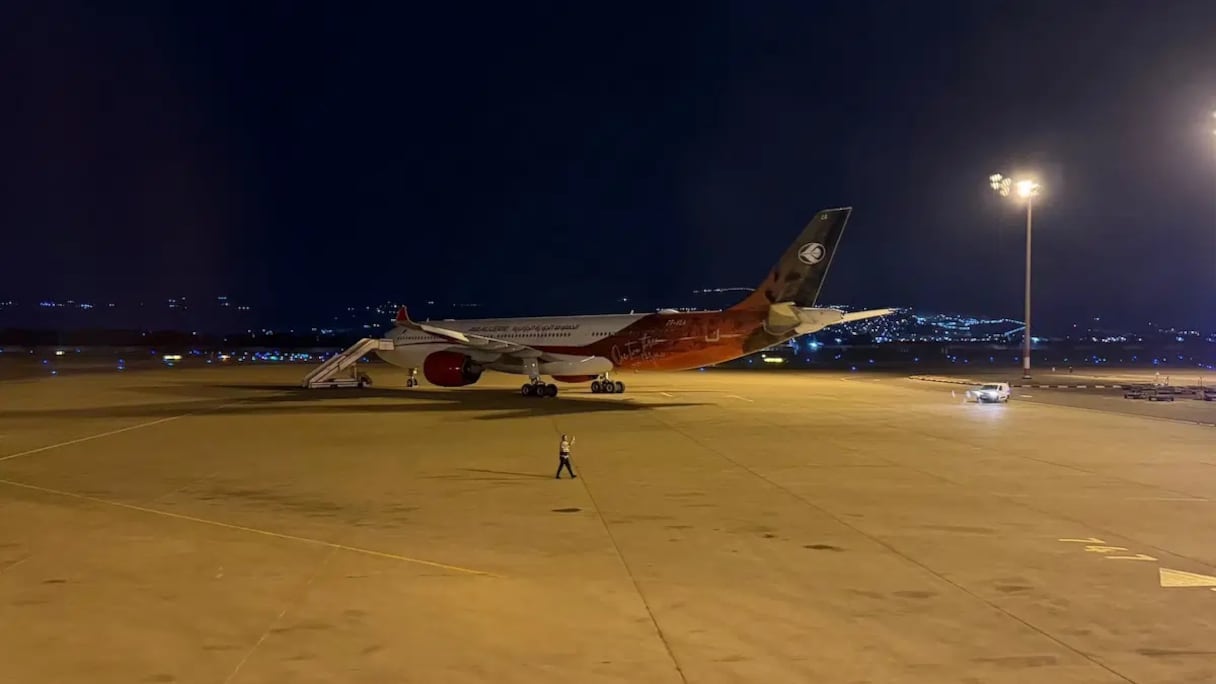
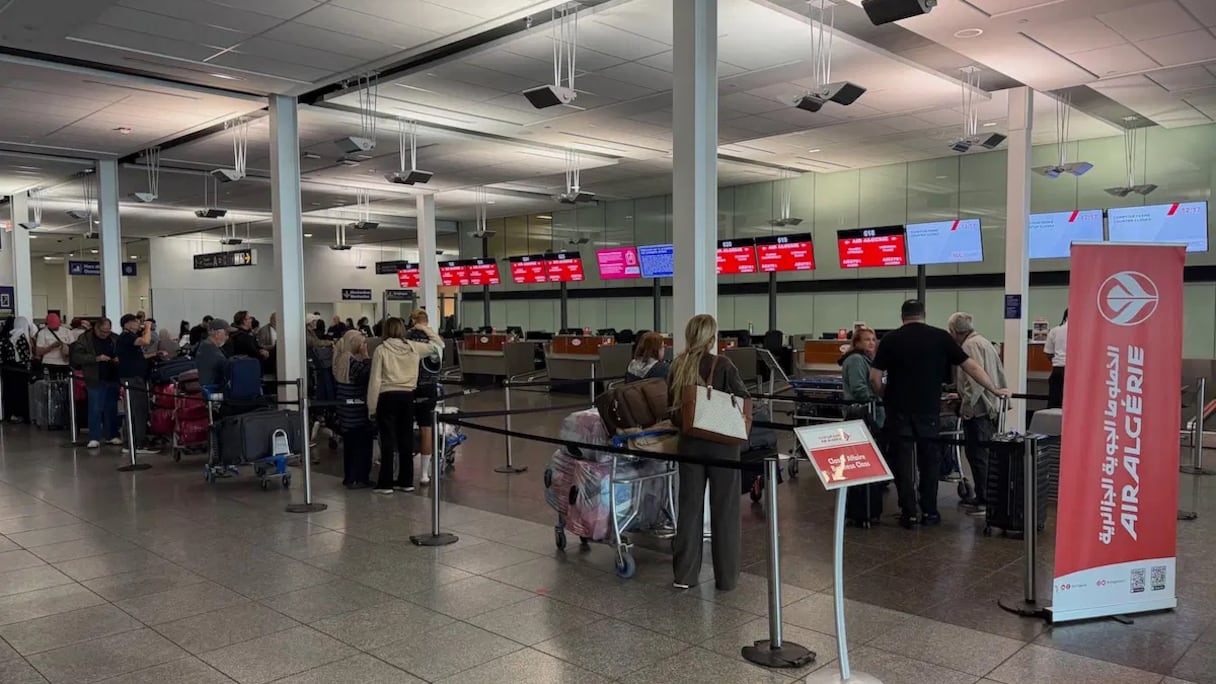
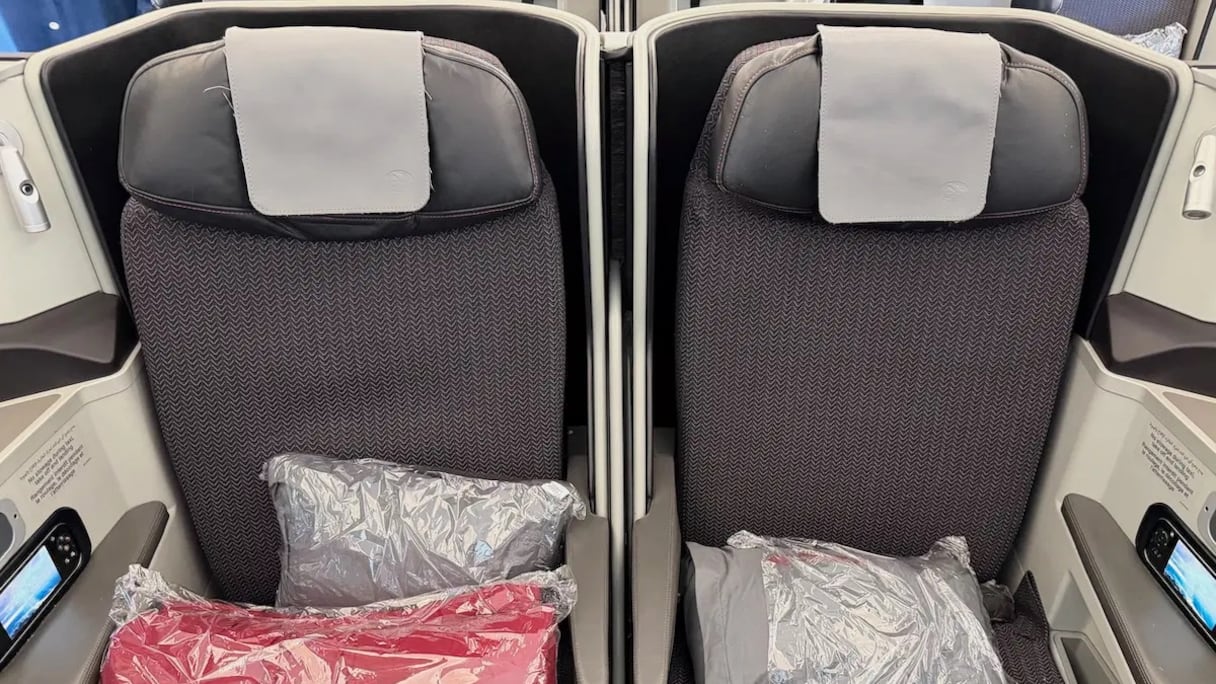
Lors du vol AH2701 Montréal-Alger du 3 octobre. (PHOTO: Ben Schlappig)
The 16-inch touchscreen offers 100 films and 36 television series, but no map feature. “I’m not sure the last time I flew an airline with seat back entertainment that didn’t have a map feature,” he marvels. The sitcom section contains just one episode of an American series: the pilot of Fresh Off the Boat, released in 2015. The headphones, handed out long after takeoff, are economy-class quality. There is no amenity kit, a first for him on an overnight business-class flight.
A three-hour dinner: Take it or leave it
Dinner lies at the heart of the indictment. “If the crew were any more indifferent, they would’ve been invisible,” writes Ben Schlappig. The service drags on for almost three hours, without passengers ever being offered a choice.
Hot towels arrive 50 minutes after takeoff. Then comes the starter: smoked salmon, egg and olives, with the packaging strewn across the tray. The passenger rearranges the presentation himself, finding it “embarrassing.” Bread is handed out directly from the basket, without tongs. The cutlery, stamped with the airline’s logo, feels sticky.
Then comes the drinks episode. He asks for wine: the airline does not serve alcohol. He asks for Diet Coke: only sugary soft drinks and juice are available. He tries Coke Zero, Pepsi Max: blank stares. He settles for water. He is served Sprite.
The main course, with no alternative offered, is fish, probably swordfish, overcooked and dry. Next come cheeses, small tarts and two whole apples, which he wonders whether anyone has washed, given that this is an airline that serves bread by hand. Nothing is cleared away, and the trays are overflowing. Getting another glass of water takes 15 minutes and several reminders.
On this 6-hour, 50-minute overnight flight, the cabin lights remain dimmed for only about an hour and 50 minutes. They are switched back on at full brightness two hours before arrival in Algiers for a breakfast consisting of a single tray. Between the heat and the lack of ventilation, the blogger is “not sure I actually slept for a minute.”
In this desert, one oasis: drip coffee with milk, “drinkable” and elevated to the status of the flight’s “culinary highlight.” He manages to get just one cup. “Getting a refill was beyond my abilities, but I sure did savor that one cup!,” he writes.
Finally, the lavatories: just one at the front for all 30 business-class seats and the crew, with the other two shared with economy class. By the end of the flight, they are not clean.
“Always caring for you”
When describing the crew, the passenger stops short of calling them “rude.” Indeed, the flight attendants seem perfectly charming towards their friends in the cabin. Paying customers, however, receive no warmth whatsoever, and the service is “incredibly disorganized.” He suggests turning the flight into a training exercise for cabin crew: make trainees experience it, “then have them do exactly the opposite.”
In a final twist of irony, the refreshing towel bears the airline’s slogan, “Always caring for you.” The blogger relishes the contradiction: “If this is what care looks like, I’d love to see what not being cared for looks like!”
The touchdown in Algiers at 4:50 a.m. is “one of the smoothest” of his life, he concedes. The aircraft is directed to a remote stand at an airport he describes as largely underutilized. There is no priority deplaning and no dedicated business-class bus: just a long ride on a shared bus to the terminal, reached at 5:15 a.m.
The seat, he repeats, is “the least of Air Algérie’s problems.” Everything else brought the experience crashing down: indifference, sluggishness and an endless catalogue of missing services. His final verdict is one for the record: “Truly, no service would’ve been better than this.” He even enthusiastically recommends the experience, in his own way: I highly recommend flying Air Algerie business class… if you want to be reminded how every other airline doesn’t actually suck that much, by comparison.” Would he fly with Air Algérie again? “I think I’m good for the time being.”
For the national airline of a country that dreams of becoming a tourist destination, and which has painted this aircraft in its national football team’s colors, the publicity could hardly be worse. The aircraft is new, the seat is decent. All that was missing was the service… and the competence.
