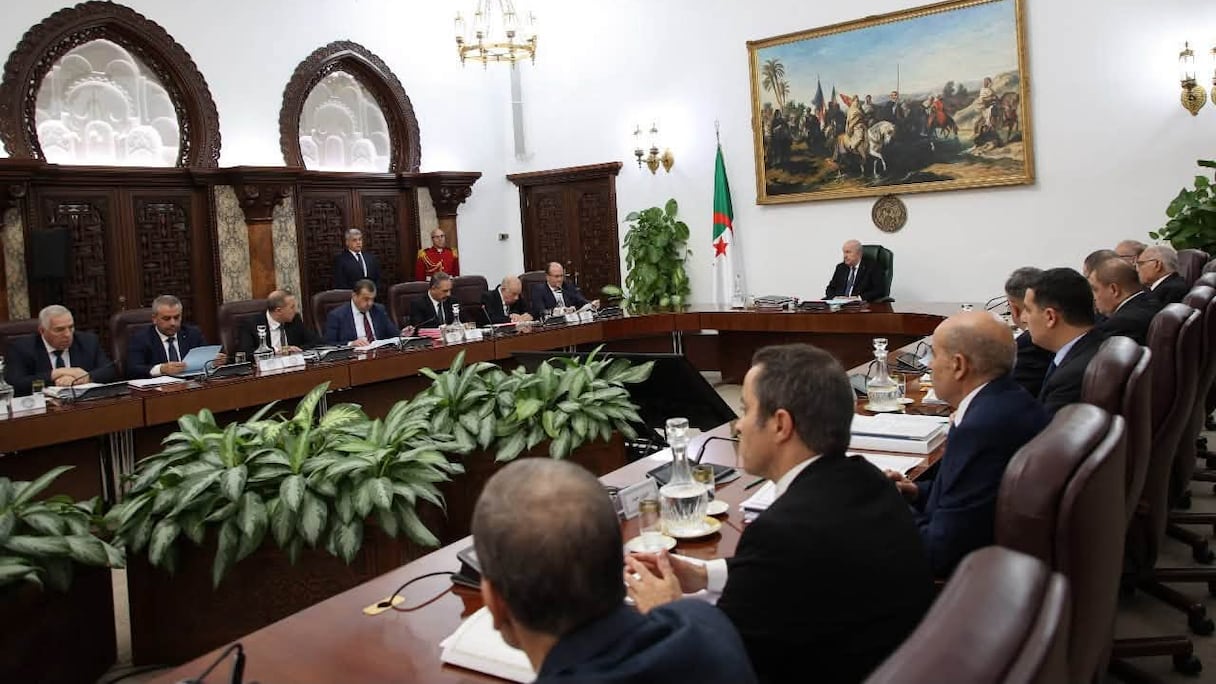
On Sunday, November 8, a cabinet meeting was held in Algiers under the chairmanship of Abdelmadjid Tebboune. The agenda covered agriculture, rural development and fisheries. The timing was no coincidence. In several provinces, potatoes have disappeared from market stalls. On November 6, they were selling for as much as 250 dinars a kilogram in some markets. That is three times the price ceiling of 80 to 90 dinars set by the Ministry of Domestic Trade on October 1.
The country was therefore expecting measures to tackle the potato shortage. Instead, it got eleven presidential directives, reported among others by the official APS news agency. It got a pulses agency, a statistics department to be established “immediately,” a minister delegate for fisheries and a secretary of state for forests. The humble tuber, meanwhile, is nowhere to be found in the statement, as though it were an embarrassing relative whose name the family dare not mention. Faced with a crisis, the regime has opened another administrative office and added two more posts to the government.
Read also : Algeria’s potato crisis becomes a matter of state and a measure of the regime’s incompetence
Still, someone had to be blamed, and the cabinet found three culprits.
The first is the land itself. Tebboune ordered a “complete prevention” of leaving fields fallow. Since antiquity, farmers have allowed their fields to rest so that they will yield better crops the following year. In Algiers, that rest is now considered suspicious. Land that takes a break is land engaged in sabotage.
The second is the farmer. The statement calls for action against “all forms” of withholding agricultural produce. Farmers would rather keep their harvests than sell them at prices imposed by the state. The regime sees this as betrayal when it is simply a matter of arithmetic. When the fixed price no longer covers costs, you do not sell. On November 7, in Boumerdès, the authorities seized 100 quintals of potatoes over violations. That is just about all the price-cap policy has managed to extract from the warehouses.
The third culprit, and the day’s real discovery, is the cow. The president ordered a “total ban” on using maize as green fodder. According to the statement, the practice has had “no positive impact whatsoever” on meat production and has caused a severe shortage of grain maize. An agricultural policy decision that elsewhere would be settled by technical specialists in a ministry has thus made its way to the very summit of the state. This is where things stand: the head of state now decides what cattle are allowed to eat.
The cabinet also ordered the number of inspection laboratories at ports and airports to be doubled. It instructed the justice minister to impose the harshest possible penalties on those who “knowingly” bring dangerous products into the country. The government has been told to remain mobilized “at all hours.” What is missing is the one thing the statement never explains: where to find a potato.
The regime is hardly discovering the problem. As early as October 18, a previous cabinet meeting had ordered the creation of a local mechanism to purchase surpluses, store them and release them as soon as prices began to fluctuate. On November 5, the government launched a digital price-monitoring platform. Three weeks, two cabinet meetings and one platform later, the national average price had risen from 91 dinars on October 29 to 101 dinars on November 4. As Le360 observed on November 6, the regime terrorizes traders but remains powerless in the face of rising prices.
Then came the lesson in patriotism. It was delivered by a man from the regime’s own inner circle. El Hadj Belghouthi sits on the Council of the Nation as a member of the presidential third, meaning he was appointed by Tebboune. In a video released on November 7, beneath the official portrait of the head of state, he responded to those calling for imports: “ناكل حشيش بلادي وما يذلونيش الأجانب”. In other words: “I would rather eat the grass of my own country than let foreigners humiliate me.” The room applauded.
The division of responsibilities is now clear. The president takes green fodder away from the cows, and his senator offers it to the citizens. The animals lose their maize; the people gain grass. Perhaps this is the only coherent agricultural policy of the moment: instead of increasing supply, it makes demand disappear.
The cabinet met, eleven orders were issued, and the potatoes did not return. The government is now pinning its hopes on the harvest from El Oued, expected around November 20. The regime does not govern the markets; it waits for the seasons. And if the harvest is late, there will always be the grass recommended by the senator.
