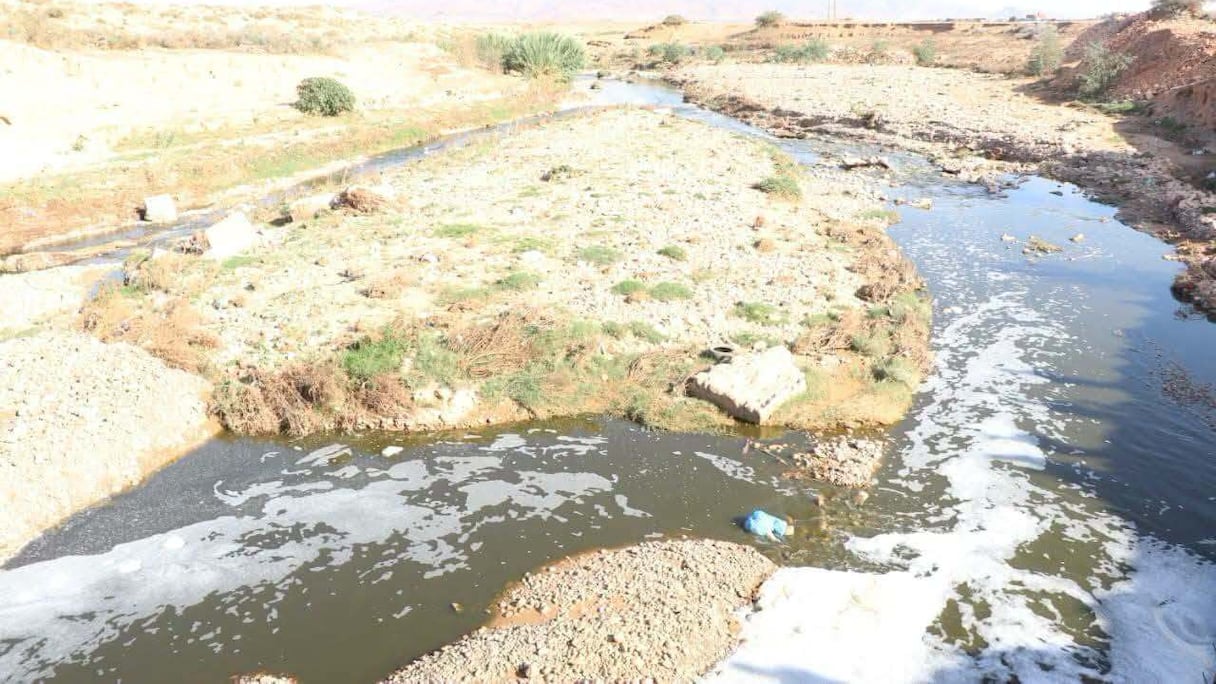
On Tuesday, November 10, acting on instructions from Abdelmadjid Tebboune, five ministers descended on the province of Tlemcen, led by Brahim Merad, Minister of State and Minister of the Interior. The reason: pollution in the Mouilah River, which feeds the Hammam Boughrara Dam near Maghnia. According to a dispatch by the official APS news agency, published on its channel, the purpose was to inspect pollution caused by “wastewater, rubbish and pollutants coming from Morocco.”
At the scene, the minister spoke of “criminal acts,” a “blatant act of aggression” and a “deliberate act,” promising that “the case will be brought before international bodies,” according to Awras. According to TSA, he denounced a “hostile act,” described the pollution as “premeditated,” accused Morocco of seeking to “exterminate nature” and declared, “We will confront this aggression to protect the environment.” Pollution limits had been exceeded “dozens of times, sometimes hundreds of times,” he added, without releasing a single figure. The newspaper El Khabar summed up the official line: “The Moroccan authorities are deliberately polluting the river.”
Read also : Troops abroad, mass mobilization, state of war: Algeria’s temptation to invoke emergency powers
The accusation is no isolated incident. It belongs to a long list. In August 2021, as wildfires devastated Kabylie, the Algerian presidency blamed groups allegedly supported by “Morocco and the Zionist entity.” A few days later, Algiers severed diplomatic relations with Rabat. In May 2024, amid water cuts affecting 200,000 households in western Algeria, the Minister of Water Resources accused a “neighboring state” of deliberately draining reservoirs along the western border, as Le360 reported. That same year, forest fires and even damaged lawns in Algiers were blamed on the neighbor. Fire, water shortages and now dirty water: sooner or later, everything that goes wrong in Algeria turns out to have come from Morocco.
A documentary built around an accusation
This time, the regime has enlisted its television network. On the very day of the ministerial visit, state television broadcast a report lasting nearly three minutes, with a headline that left no room for nuance: “Cross-border water pollution… a crime against the environment and humanity.”
Drone footage above the river, an animated map, farmers’ testimonies, images of flooding—everything is there, except evidence.
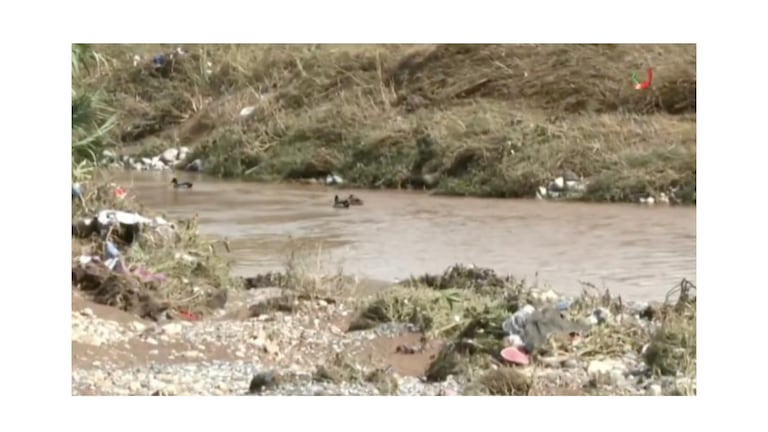
Several sequences, at around 0:26, 1:38 and 1:41, show a torrent of muddy floodwater surging over a weir, followed by a riverbank littered with plastic bottles and bags. The footage bears a logo different from the broadcaster’s, suggesting that it is archival material. Muddy floodwater is not evidence of industrial pollution, and plastic bags on a riverbank are household rubbish.
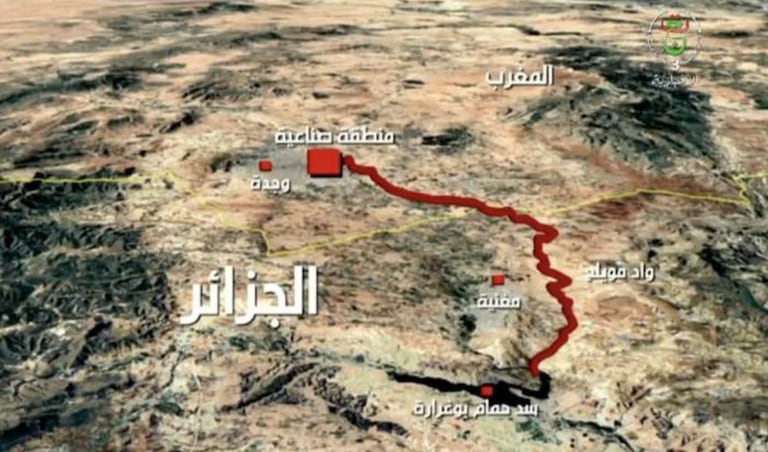
The animated map shown at around 1:28 traces the supposed path of the pollution in red, from an “industrial zone” in Oujda to the dam. But it also places the Algerian town of Maghnia along that same route, which the river follows before reaching the reservoir. Wastewater from an Algerian urban area therefore also flows into the dam. The television report shows this without saying so.
The report that says otherwise
Most importantly, at around 1:48, the camera lingers on the conclusion of a water analysis report. The text, in French, is perfectly legible: “The water in the Hammam Boughrara Dam is of poor physicochemical quality and can only be used to produce drinking water after the complete removal of algae, reduction of organic matter, conventional treatment, activated carbon filtration and disinfection.” The preceding paragraph specifies that the excessive readings concern “the lower layer” of the reservoir: dissolved oxygen, ammonium and phosphates.
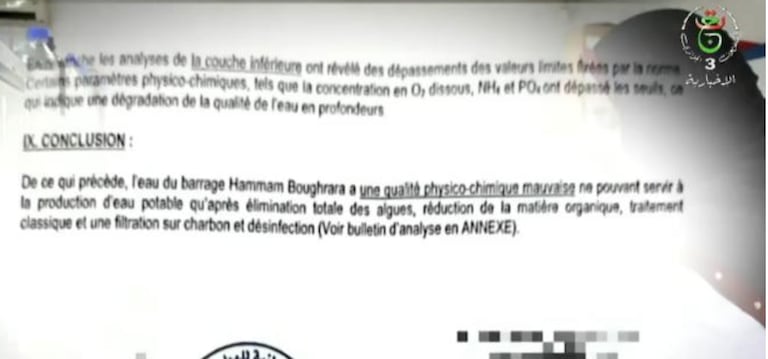
There is a name for this diagnosis: eutrophication. When a reservoir’s water level falls too low and it becomes saturated with nutrients, algae proliferate and the water at the bottom becomes depleted of oxygen. It is a familiar problem in poorly maintained reservoirs and where wastewater is inadequately treated. The document filmed by state television mentions neither Morocco, nor industrial discharges, nor heavy metals, nor the cadmium invoked by El Khabar. It says the reservoir’s water is of poor quality and needs treatment, a responsibility that falls first and foremost on the Algerian operator. At around 2:02, the same report also shows a reservoir with a visibly low water level and large stretches of exposed shoreline.
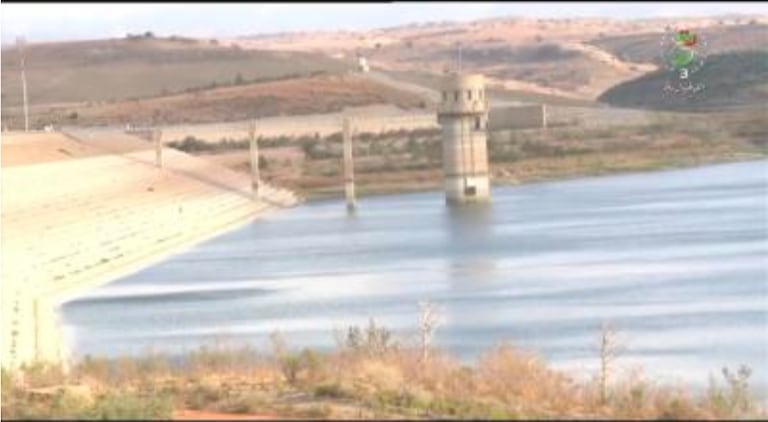
Even the figures change to suit the narrative. The Algerian press speaks of “two million” people at risk. A 2021 study cited by AFP and reported by Quartz describes a reservoir with a capacity of 177 million cubic meters serving more than 1.2 million people.
The real issue lies elsewhere. Algeria lives with water cuts and water tankers despite Tebboune’s repeated promises of desalination. Failing wastewater treatment plants, leaking distribution networks, silted-up reservoirs—all of this is the regime’s responsibility alone. It is easier to dispatch five ministers and a television crew to point the finger at Morocco than to explain why, in 2026, water from a reservoir in western Algeria can no longer be made drinkable without extensive treatment.
The regime promises to take the matter before international bodies. It will then have to produce something more substantial than a television report and publish its analyses. The one filmed by its own broadcaster says nothing about Moroccan aggression. It talks about algae. But the real point lies elsewhere. Unable to guarantee its citizens safe drinking water, treat its wastewater, maintain its reservoirs or extinguish its wildfires, the Algerian regime now knows only how to do one thing: point to an external enemy. Yesterday it was fire, then drought, today tap water. Tomorrow, something else. As long as Morocco plays the role of the guilty party, nobody in Algiers will have to answer for anything.
