On November 6, Saïd Bensedira devoted nearly two hours of a live broadcast on his YouTube channel to the potato. The title of the program summed up its message: “Seven Years of Lean Times: No Potatoes, No Milk, No Tires, No Oil.” An exile considered the mouthpiece of former generals who played leading roles during the Black Decade, Bensedira is not an opposition figure like any other. When a voice from this circle turns the potato into an indictment of the regime, it means the issue has gone far beyond market stalls.
His case against the authorities can be summed up in a few sentences. “We have not been able to solve the milk problem, we have not been able to solve the potato problem, nor the oil problem,” he says, before taking aim at officials who boast of Algeria as a “regional power” and a “pivotal state.” “The people are fighting over potatoes,” he observes. He traces the beginning of these “seven years of lean times” back to 2020, the year Abdelmadjid Tebboune came to power. He also gives voice to a fear that haunts the inner circle of power: “The Hirak was peaceful and civilized, the people had full stomachs. But what will happen if they take to the streets hungry?”
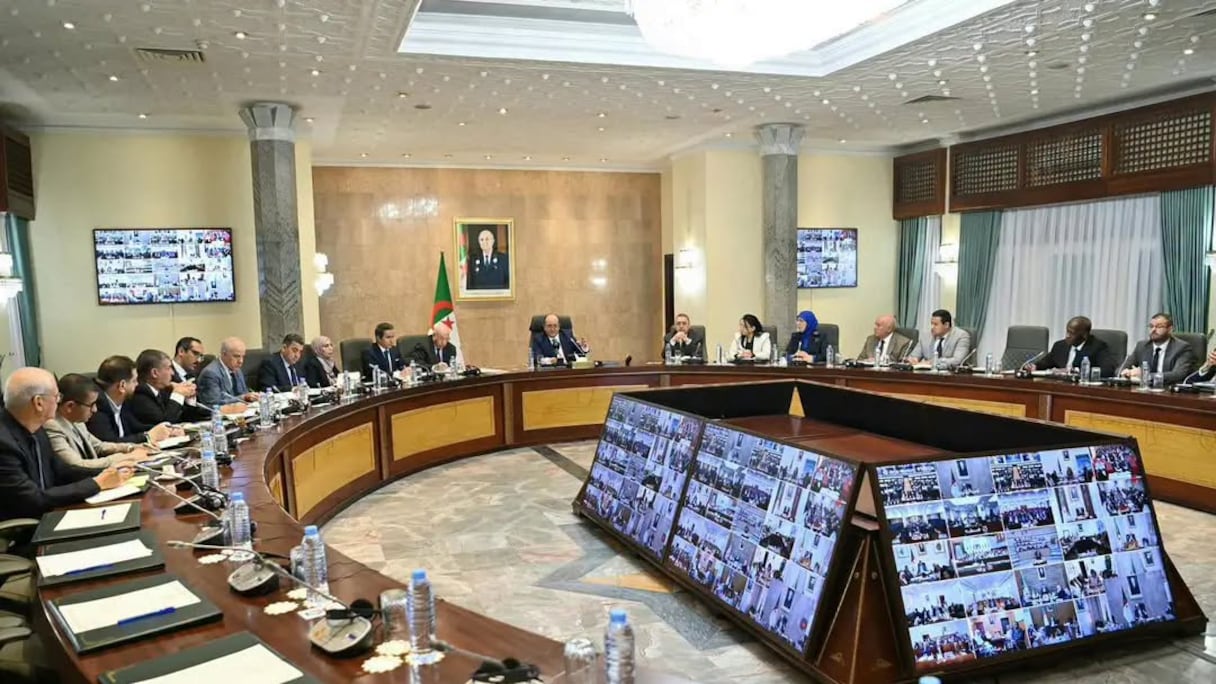
The rest requires no commentary from Bensedira. The regime’s own statements are enough. On November 5, Prime Minister Sifi Ghrieb convened his ministers and governors by videoconference to launch a digital platform for monitoring prices and ordered “immediate legal and deterrent measures” against speculators, according to the Algerian press. In March, the president had already ordered at a Council of Ministers meeting that speculators be placed on “blacklists” and banned from trading for life, according to the government daily Horizons. In October 2021, he had threatened them with the death penalty, as Le360 reported at the time. Since then, a law has provided for prison sentences of up to 30 years for speculation involving vegetables, and life imprisonment when carried out by an organized group.
Read also : Troops abroad, mass mobilization, state of war: Algeria’s temptation to invoke emergency powers
No serious state mobilizes its presidency, prime minister’s office, justice system and governors over a tuber. When that happens, the potato has become something more than food: a political barometer. In Algeria, it measures the distance between the authorities’ rhetoric and people’s daily lives. The regime speaks of a “New Algeria,” regional power status and the conquest of 57 foreign markets. Algerians, meanwhile, count their dinars in front of empty market stalls.
And the barometer keeps giving the same reading. On October 31, 2021, Echorouk ran the headline: “Potatoes at 150 dinars… and citizens in shock!” On November 6, 2026, Le Matin d’Algérie reported that potatoes were selling for 140 to 150 dinars, when they could be found at all.
Time has passed, but nothing has changed. Five years later, the price is the same, the excuse is the same and so is the promise. Yet the regime has had neither a shortage of tools nor a lack of time to prepare. The public storage program, Syrpalac, has been in place since 2008. Eighteen years later, authorities are announcing releases from storage only after shortages have already taken hold: 120 tons in Médéa and 6,700 tons promised for Boumerdès, according to Maghreb Emergent. The state does not anticipate the crisis. It waits for it to happen, then looks for someone to blame.
This is where the potato becomes a measure of the regime’s incompetence. It requires neither cutting-edge technology nor foreign capital. It requires planning for a harvest, filling cold-storage facilities on time and allowing traders to do their jobs. A country that cannot manage this over five years, despite its laws, threats and prisons, is revealing something more than a market disruption. It is exposing a leadership that knows neither how to anticipate nor how to manage, and that compensates for its powerlessness with fear.
The Algerian regime has turned the potato into a matter of state. Above all, it has made it an indictment of its own failure. A government that threatens its traders with death, imprisons its farmers and still cannot keep market stalls stocked has nothing left to promise Algerians. Even those who once served it are now saying so openly.
