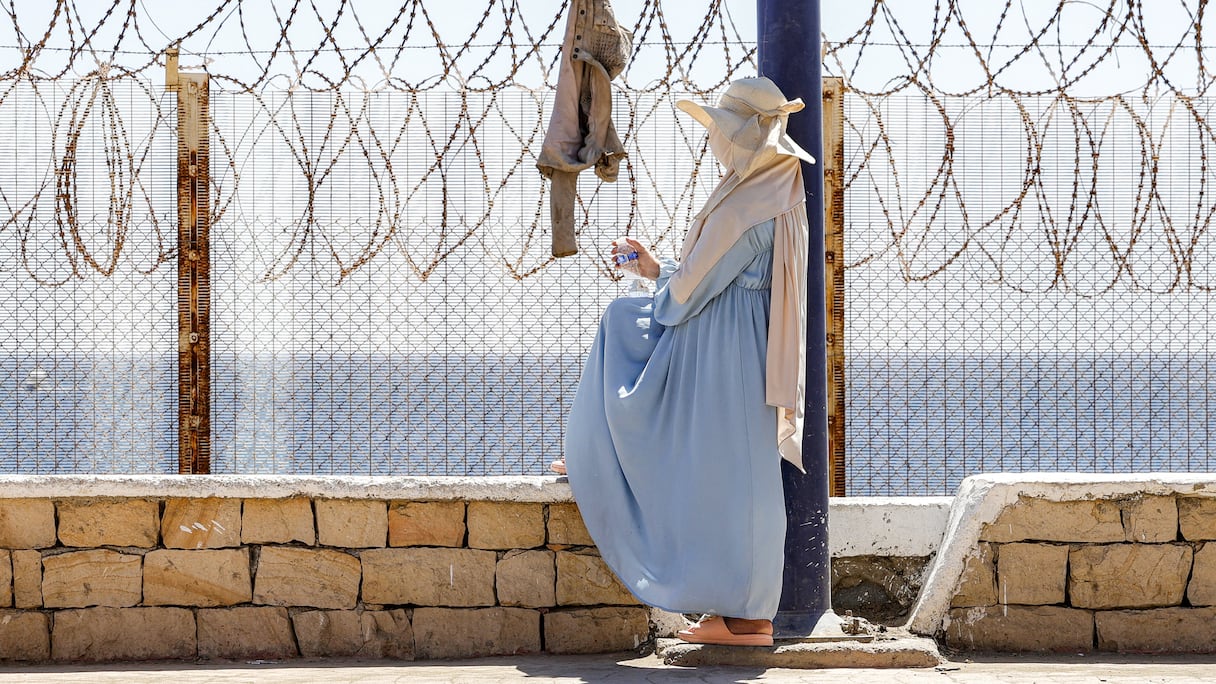
The arrival of tens of thousands of people in the enclave on North Africa’s Mediterranean coast over the course of several days exposed weaknesses in the EU’s migration cooperation. Images of migrants crossing the Spanish-Moroccan border on foot, by swimming or by bypassing security barriers circulated worldwide, triggering a political dispute within the bloc.
Two opposing camps quickly emerged. Spain has defended its handling of the crisis and called for greater European solidarity, while several governments advocating a tougher approach to migration, notably Italy and Denmark, accused Madrid of sending a message of leniency.
As footage of the crossings spread, those countries denounced “uncontrolled immigration,” arguing it posed “a threat to Europe.” Some officials even called for Spain to be suspended from the Schengen area.
That proposal, however, has no straightforward legal basis under EU law. It is also disputed because Ceuta operates under a special regime: travelers leaving the enclave for mainland Spain remain subject to identity and document checks.
A war of letters
Spanish Prime Minister Pedro Sánchez, whose government has defended a more open approach to migration, responded by sending a letter to the heads of the European institutions. In it, he sharply criticized what he described as the “selfish” attitude of some partners and called for an emergency meeting of the bloc’s 27 member states.
Hours later, 22 countries, led by Italy and Denmark, submitted their own letter requesting a videoconference. Their objective, however, differed significantly: maintaining pressure for stricter border controls, faster migrant returns, and stronger protection of the EU’s external borders.
France did not join the initiative, arguing it risked politicizing the situation in Ceuta. Paris also stressed that most migrants who crossed into the enclave had already been returned to Morocco and that no large-scale movement toward mainland Europe had been observed.
The videoconference between interior ministers, scheduled for 10 a.m. Tuesday, could therefore prove contentious. During a meeting of EU ambassadors on Monday, Spain had already “expressed its frustration over the lack of solidarity” shown by some member states, according to a diplomatic source.
Several countries, in turn, questioned Madrid over the message sent by its recent migration policies. Some argued that Spain’s regularization measures may have created the impression that “the doors were open,” an interpretation the Spanish government strongly rejects.
Calls for stronger border measures
European Commission President Ursula von der Leyen welcomed the ministerial meeting and called for a “common European response.” She urged member states to strengthen the bloc’s external borders, deepen cooperation with countries of origin and transit, and improve early warning systems.
Among the measures under discussion are expanded border surveillance, increased use of physical barriers, and stronger action against migrant smuggling networks. Brussels also believes it could increase its support for Morocco in border management and return operations.
The meeting comes just weeks after the European Union implemented a tougher migration framework. The Pact on Migration and Asylum entered into force in June, introducing faster border procedures, a solidarity mechanism among member states and stricter return rules.
A political agreement reached in June also provides for the possibility of establishing “return hubs” in third countries that respect fundamental rights.
EU interior ministers must now decide whether the Ceuta crisis will become a demonstration of European unity or the latest chapter in the bloc’s long-running divisions over migration.
