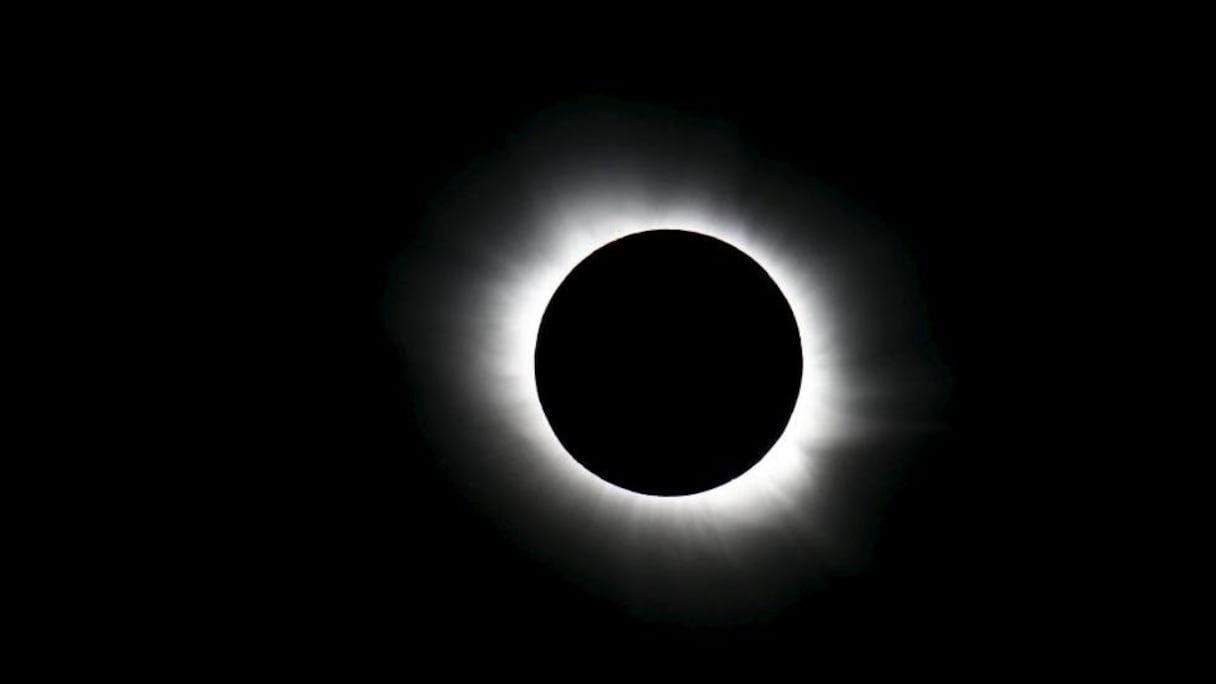
A rare total solar eclipse will cross parts of Europe and the Arctic on August 12, offering millions of people the chance to witness one of astronomy’s most spectacular events.
The path of totality—the narrow area where the Moon completely blocks the Sun—will stretch across Greenland, Iceland, and northern Spain. This marks the first total solar eclipse visible from mainland Spain in more than a century, according to the Spanish National Astronomical Observatory (Observatorio Astronómico Nacional).
The eclipse will begin near the North Pole before sweeping south across the Atlantic Ocean. According to astronomical calculations, the Moon’s shadow will travel more than 8,200 kilometers in about 90 minutes. The longest period of totality, lasting up to two minutes and 18 seconds, will occur off Iceland’s west coast.
By the time the eclipse reaches Spain close to sunset, totality will last for just over one minute before ending over the Mediterranean Sea.
Outside the path of totality, a partial solar eclipse will be visible across a much wider region, including most of Europe, parts of North America, Greenland, Iceland, and West Africa. The amount of the Sun obscured will vary depending on location.
NASA advised skywatchers planning to observe the eclipse to use certified solar viewing glasses throughout the event, except during the brief period of totality experienced only within the eclipse’s narrow path. Looking directly at the Sun without proper eye protection can cause permanent eye damage.
A total solar eclipse occurs when the Moon passes directly between the Earth and the Sun, completely blocking the Sun’s disk and casting its shadow on a narrow strip of Earth’s surface. During totality, daylight briefly turns to twilight, temperatures can drop slightly, and the Sun’s outer atmosphere, known as the corona, becomes visible.
Although solar eclipses occur somewhere on Earth every 18 months on average, total eclipses are much rarer at any single location. According to NASA, most places on Earth experience a total solar eclipse only once every 300 to 400 years on average. The narrow path of totality means that each eclipse is visible in full from only a small portion of the planet.