CEO Elon Musk announced the decision on November 6, saying the company would use the production capacity at its Texas factory to build more Cybercabs, Tesla’s self-driving robotaxis.
The announcement comes after years of disappointing sales for the stainless-steel truck, which Musk once predicted would sell 250,000 units annually.
Tesla sold 20,237 Cybertrucks in the United States in 2025, down 48% from 38,965 the previous year, according to figures from automotive data firm Kelley Blue Book cited by Reuters. The company began delivering the vehicles in late 2023.
Former Aston Martin CEO Andy Palmer told Reuters that continuing production made little sense when the vehicle was falling short of its targets.
It remains unclear whether Tesla will transfer production to another facility or phase out the model entirely. The company’s Texas factory is currently the only known Tesla site equipped to manufacture the Cybertruck’s specialized components.
A troubled run for Tesla’s futuristic pickup
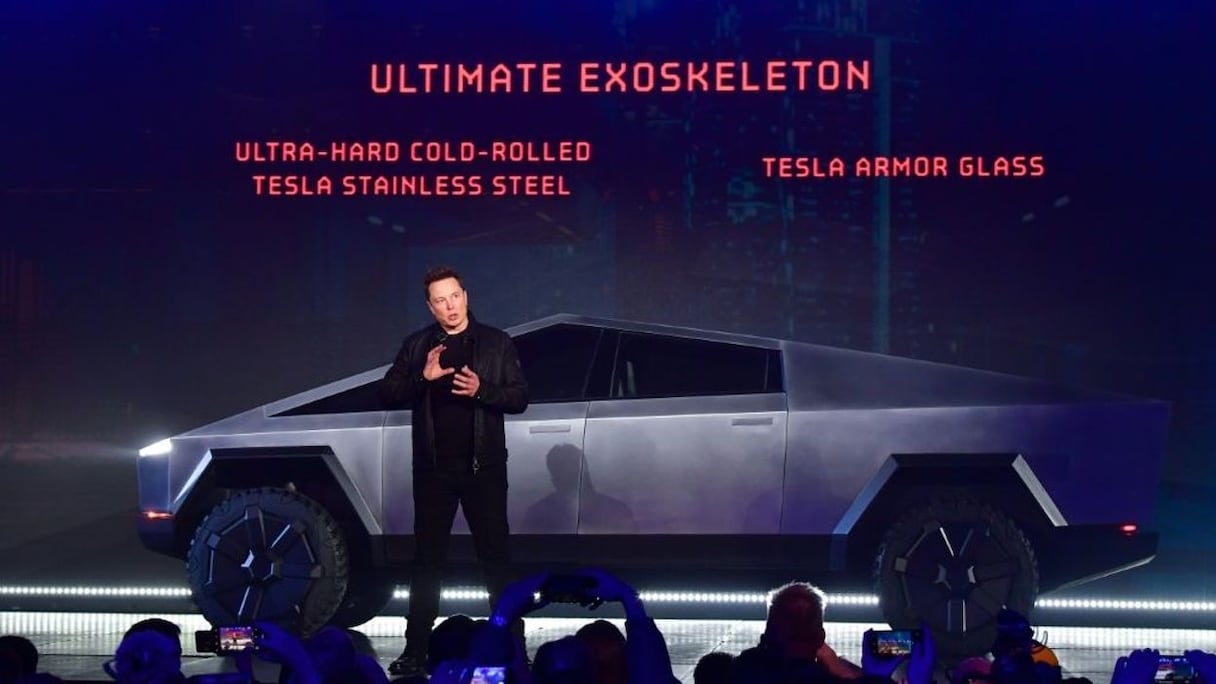
Unveiled in 2019, the Cybertruck stood out for its angular shape and stainless-steel body. Musk presented it as a futuristic alternative to conventional pickups from manufacturers such as Ford and General Motors.
Read also : SpaceX reaches 100 Falcon launches in 2026 with 27 more Starlink satellites
But the vehicle’s unusual design was controversial from the start. Its unveiling event drew attention when a demonstration intended to show the strength of its windows ended with metal balls cracking two of them.
The Cybertruck also encountered repeated quality and reliability problems after reaching customers. According to the US National Highway Traffic Safety Administration, Tesla issued 11 recalls for the model since its launch. Some required physical repairs, while others were addressed through software updates.
Price changes and missed promises over the vehicle’s specifications also added to the difficulties. Tesla initially indicated that the pickup would cost less than $40,000, but its starting price was around $61,000 when deliveries began in 2023.
Its design also limited its potential in overseas markets. Reuters reported that the sharp-edged stainless-steel structure made European approval difficult because of regulations governing pedestrian safety in the event of a collision.
Automotive analyst Felipe Munoz told Reuters that electric pickups have struggled more generally in the US, with models from Ford and other manufacturers also failing to gain significant traction.
Tesla shifts focus to robotaxis
The decision to wind down Cybertruck production reflects Tesla’s growing focus on autonomous driving and robotics, with the Cybercab among Musk’s central bets.
Read also : Royal Air Maroc to become Africa’s first airline to offer Starlink Wi-Fi
The two-seat vehicle has no steering wheel, pedals or mirrors and is designed to operate as part of a network of self-driving taxis. Tesla began producing it at its Texas factory in April 2026 and started offering paid rides with a small fleet in Austin in September.
However, the robotaxi project still faces regulatory scrutiny. The National Highway Traffic Safety Administration opened an audit in September to examine the basis for Tesla’s self-certification of the Cybercab under federal vehicle safety standards.
The new model is also unlikely to replace Cybertruck production volumes in the near term. Reuters reported that around 570 of the more than 1,200 Tesla robotaxis operating in Texas were Cybercabs, with the rest consisting mainly of Model Y vehicles.
Musk described the Cybertruck as “the best vehicle Tesla has ever made” in a post on X, calling the production wind-down “the end of an era.”
