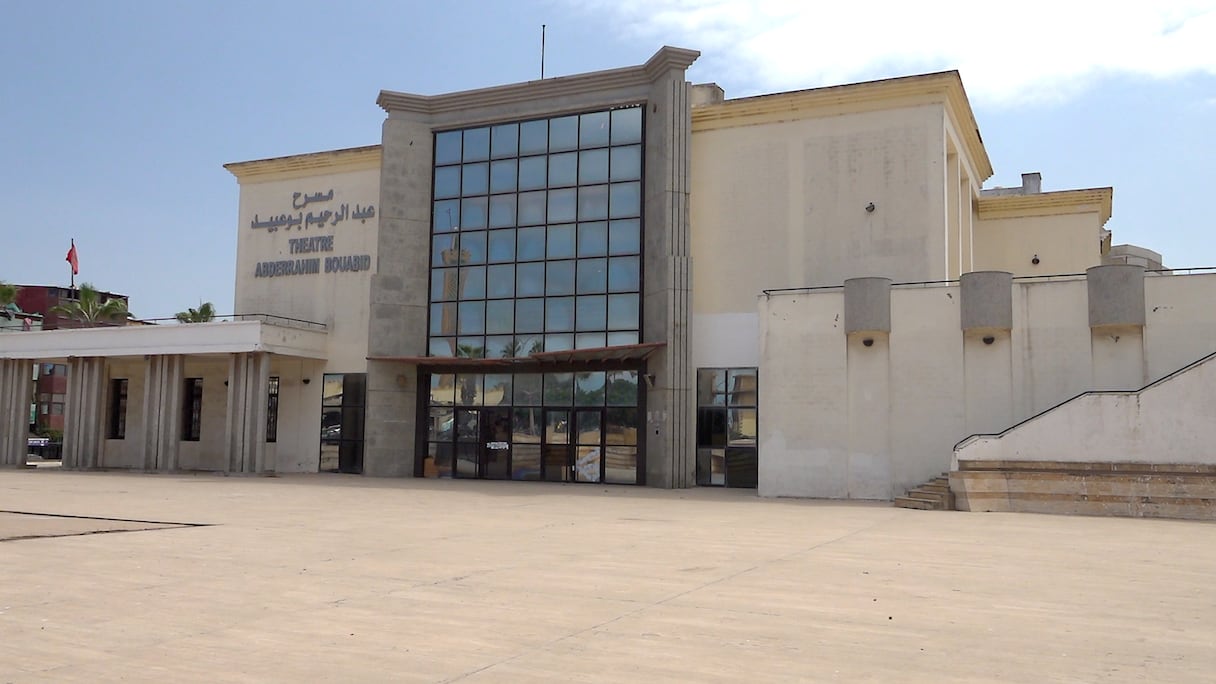
For a long time, the Abderrahim Bouabid Theatre was a significant cultural venue in Mohammedia. Inaugurated in 2001, it hosted theatre performances, university events, and various artistic gatherings. For the city’s cultural community, the venue was a rare and valuable resource: a fully equipped stage capable of hosting both shows and major events.
Today, it is a mere shadow of its former self. Closed since 2019, the roughly 900-seat venue has deteriorated over the years, with no major rehabilitation project initiated. Behind its closed doors, curtains, sanitary facilities, and stage equipment are decaying, forcing local artists to seek alternative spaces for rehearsals and performances.
Mohammed Bassalah, artistic director of the Hawass cultural association, spoke with regret about the theatre’s exceptional features. “It is a theatre with around 900 seats, boasting interior architecture and acoustics that are unique in Morocco,” he stated. According to Bassalah, the auditorium’s design even allowed actors to perform effectively without systematically relying on artificial sound amplification. The project, which cost nearly 7 billion centimes, featured equipment and technical specifications comparable to those of the Paris Opera, with the same specialized sound and lighting contractors having worked on both.
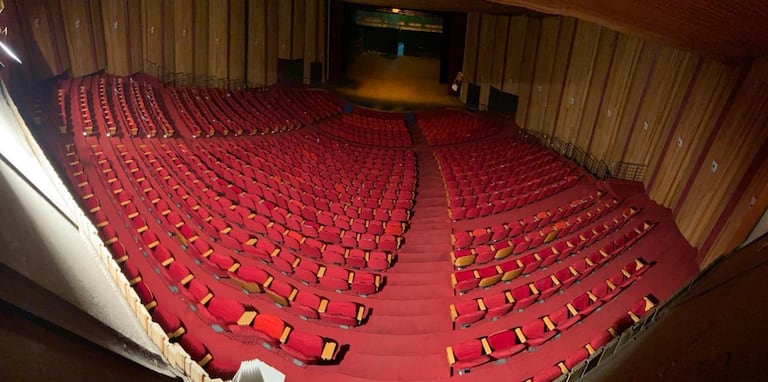
However, this architectural quality has not withstood the lack of maintenance. “The interior curtains are now badly damaged, part of the stage machinery is in a worrying condition, and the sanitary facilities are no longer functional. The venue is therefore no longer truly able to host an artistic production under normal conditions,” he explained.
The theatre has been closed since 2019, when rehabilitation work was initially announced. Since then, the project appears to have stalled, despite a partnership agreement signed in 2022 between the Ministry of Culture and the Mohammedia Municipal Council, which entrusted Casablanca Aménagement with its execution. “A committee visited the site to assess the condition of the theatre and determine the needs at the time, but nothing has really been done on the ground,” Bassalah noted.
While the cultural community awaits the theatre’s reopening, the building has been repurposed. During the health crisis, it was notably converted into a vaccination center. Since then, it has mainly been used occasionally for meetings or gatherings, a far cry from its original purpose.
For Mohammedia’s artists, this change of use encapsulates the problem. “To organize rehearsals or put on a show, there is no dedicated contact person or real policy framework,” the cultural association representative lamented. As a result, artists and groups from the city have had to turn to Casablanca or Rabat to find suitable spaces for their activities – a paradox for a city that possesses a cultural venue of this capacity.
Beyond the condition of the theatre itself, cultural stakeholders primarily want to raise questions about the cultural policy in Mohammedia. They criticize what they perceive as an excessive focus on one-off events at the expense of infrastructure and local artistic creation. Some budgets allocated to festivals can reach several million dirhams, while permanent cultural facilities remain closed or deteriorate.
The issue, therefore, is not solely about renovating a building; more broadly, it is about rebuilding a cultural vision. For cultural associations, including Hawass, and artists, restoring the Abderrahim Bouabid Theatre should be just the first step. They are calling for regular programming, accessible rehearsal spaces, support for local artists, and, crucially, a long-term cultural policy.
As the Abderrahim Bouabid Theatre awaits its rehabilitation, a significant part of the city’s cultural life continues to seek refuge in neighboring cities.
