Home to some of the world’s oldest dinosaurs, thermal springs and a unique ghassoul deposit, the Boulemane-Missour region is the focus of the first scientific inventory of its geological heritage published by a team of researchers from Sidi Mohamed Ben Abdellah University in Fez. The study identifies 42 sites, warns of the risks of degradation and looting, and proposes practical tools for sustainable geotourism.
The study, published online on August 25, covers the Central Folded Middle Atlas and part of the Middle Moulouya Plain. It was authored by Kawtar Ech-Charay, Khadija Boumir, Ahmed Oussou, Mustapha Ouaskou and Driss Ouarhache, researchers at the Laboratory of Geosciences, Environment and Associated Resources at Sidi Mohamed Ben Abdellah University.
Read also : The battle against fossil trafficking: How Morocco is protecting its geological heritage
According to the study, the region is home to geological and paleontological heritage of global significance, yet remains marginalized, under-researched and without any legal protection framework.
Forty-two sites identified, 21 assessed in detail
The research was carried out in three stages. A preliminary assessment first identified 42 sites of geological and geomorphological interest along the road connecting Boulemane, Imouzzer Marmoucha and Missour.
A more detailed assessment then classified the sites into two categories: 29 geosites documenting the geological history of the region and 13 geomorphosites showcasing landforms and the processes that shaped them.
The final quantitative stage focused on the 21 most representative sites, including 15 geosites and six geomorphosites. Each was assessed according to its scientific, educational, geotourism, ecological, cultural and aesthetic value, as well as its risk of degradation.
The results showed very high scientific and educational values, often exceeding 80%, while the overall risk of degradation remained moderate.
The landscape itself is well suited to such a study. The area illustrates the geological history of the Middle Atlas from the Triassic to the Quaternary period and features four major northeast-to-southwest-oriented anticlines. Jbel Bou Naceur rises to 3,326 meters, making it Morocco’s second-highest peak after Mount Toubkal, while Bou Iblane reaches 3,172 meters and Tichoukt 2,793 meters.
Boulahfa, a dinosaur site of global significance
Among the sites listed, the Boulahfa vertebrate site stands out. Located on the eastern flank of the Oudiksou syncline, south of Boulemane, it has produced a series of major discoveries in recent years.
Researchers discovered Adratiklit boulahfa, the first stegosaur found in North Africa and one of the oldest in the world, as well as Spicomellus afer, Africa’s first ankylosaur and the oldest known to date.
The site has also yielded the world’s oldest fossil of a cerapodan dinosaur and three teeth belonging to some of Africa’s oldest turiasaurian sauropods.
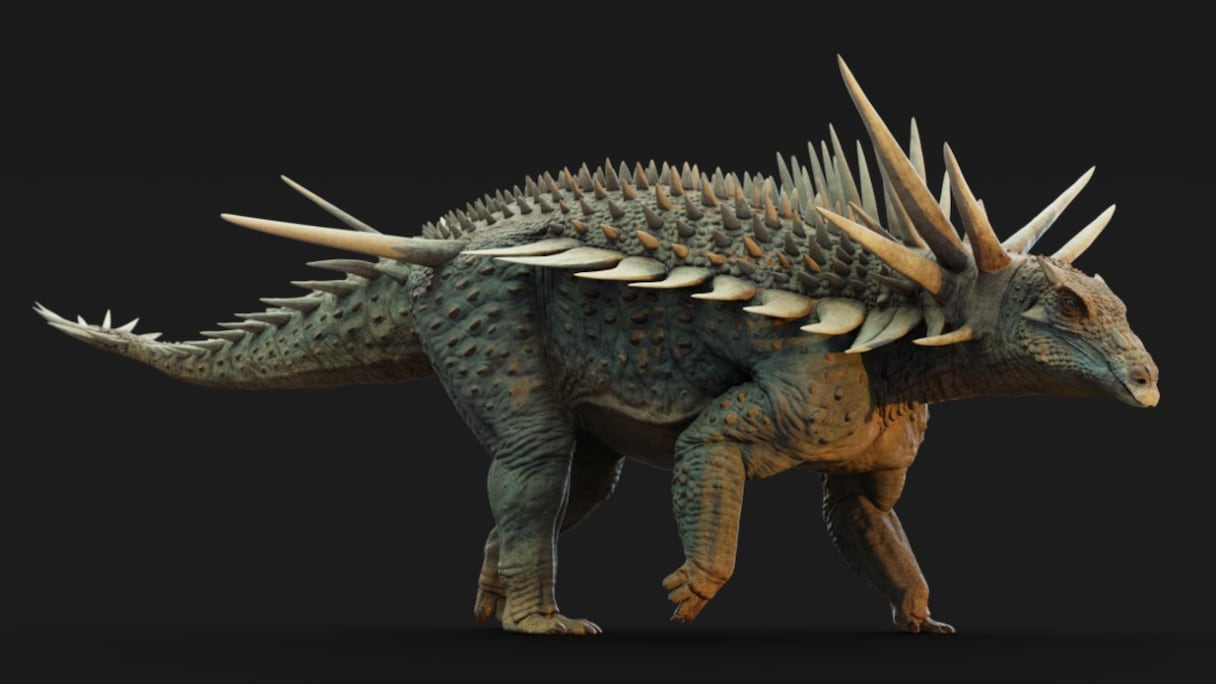
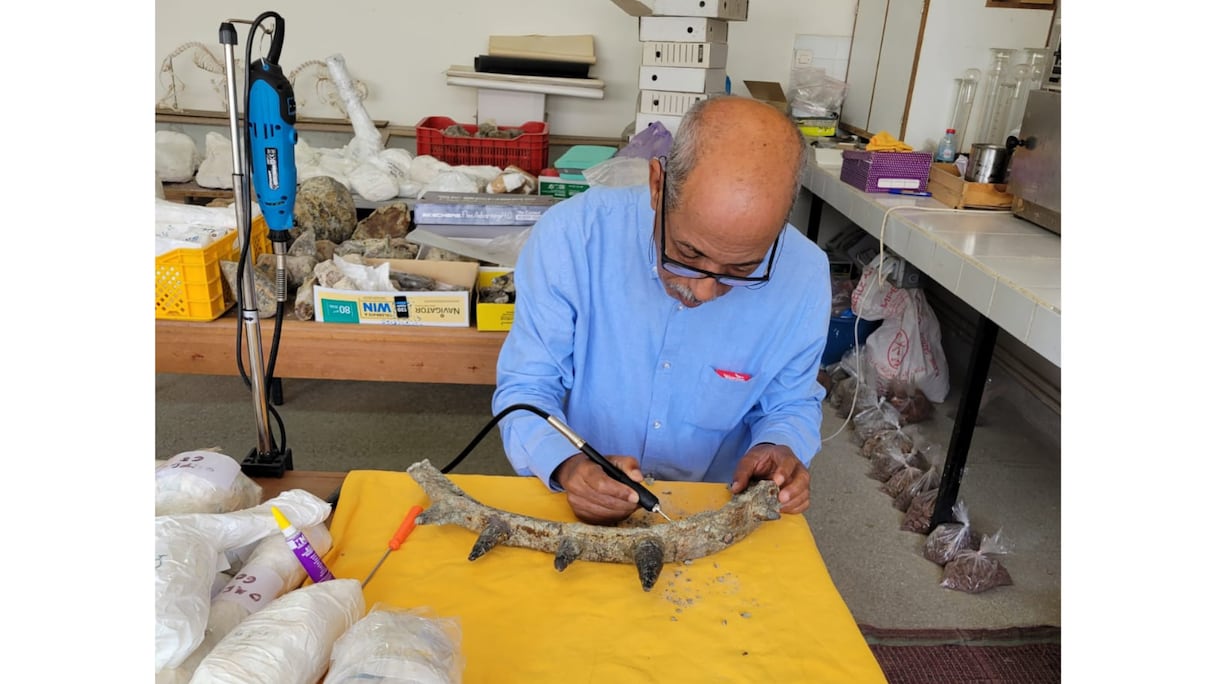
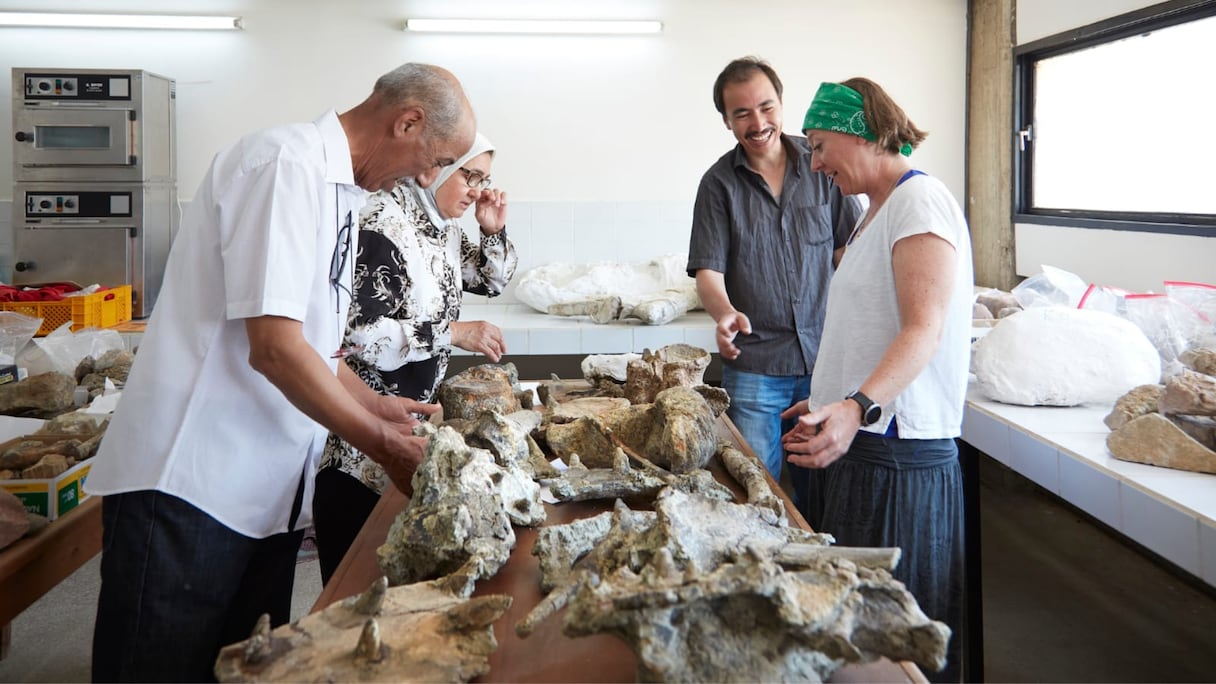
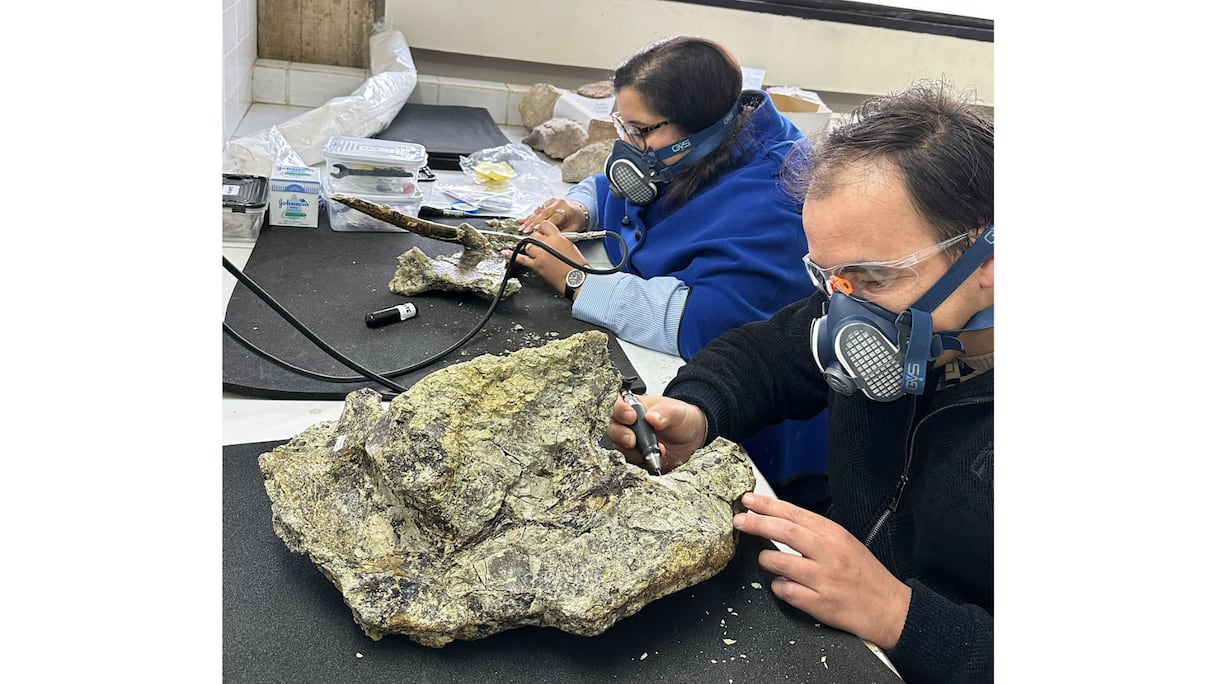
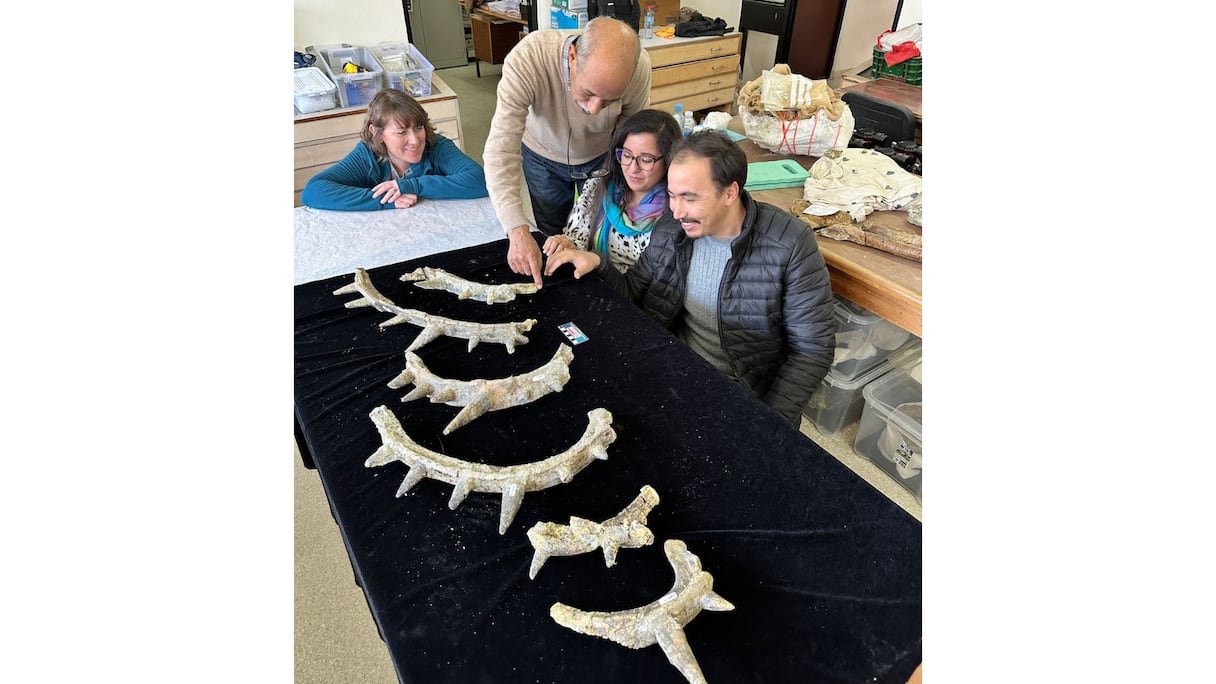
New Spicomellus remains have provided further insight into the original description of the animal. (Image: Matthew Dempsey)
Excavations are continuing at the site to fully explore its paleontological wealth. However, the authors sound the alarm over the threats facing some fossil sites, including looting and illicit trafficking. Such degradation undermines their scientific, educational and geotourism value.
The study calls for an urgent geoconservation strategy, particularly for areas containing fossilized dinosaur remains.
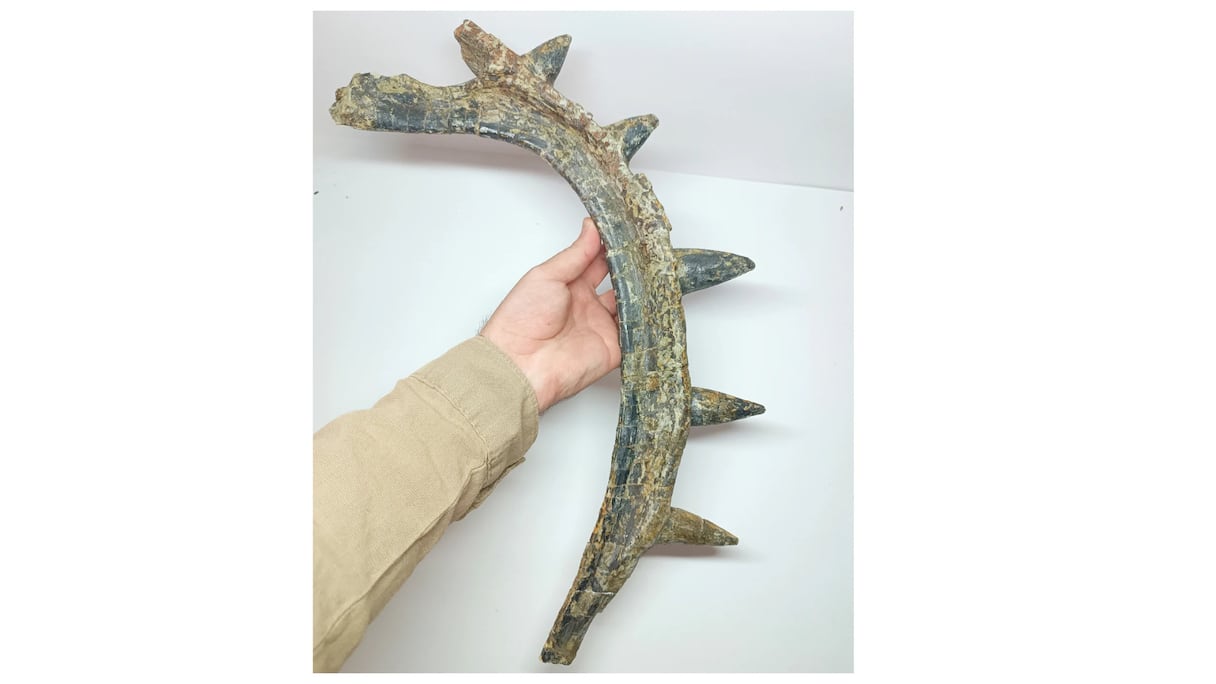
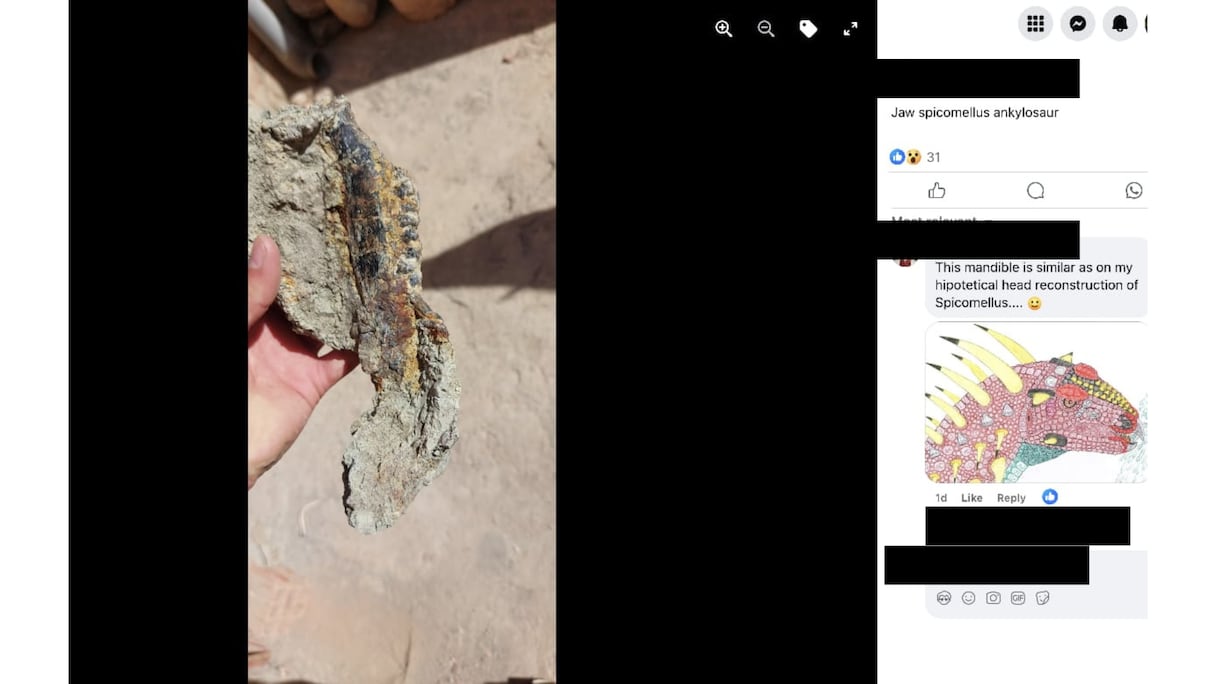
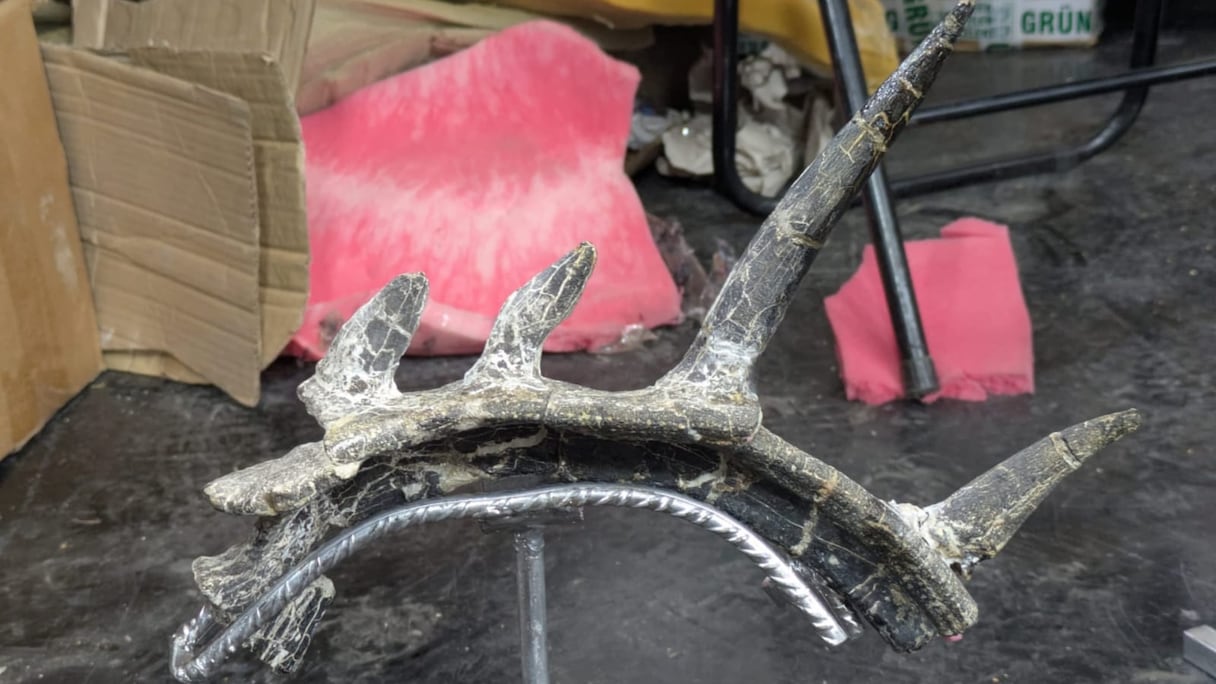
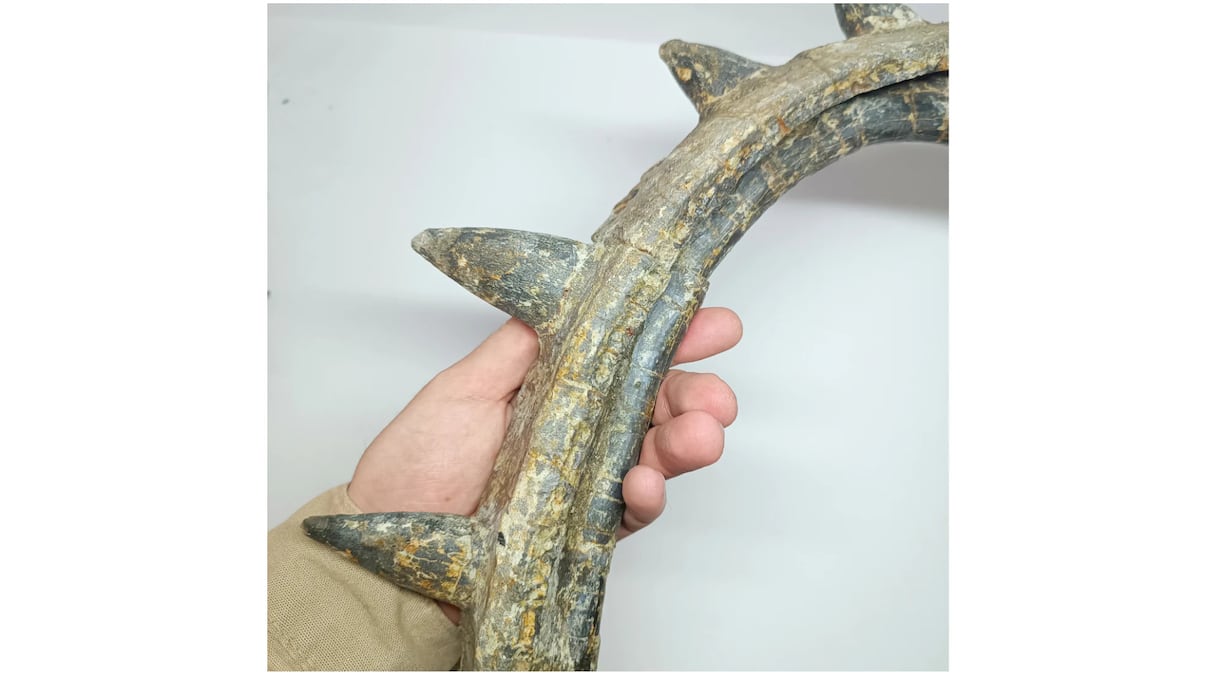
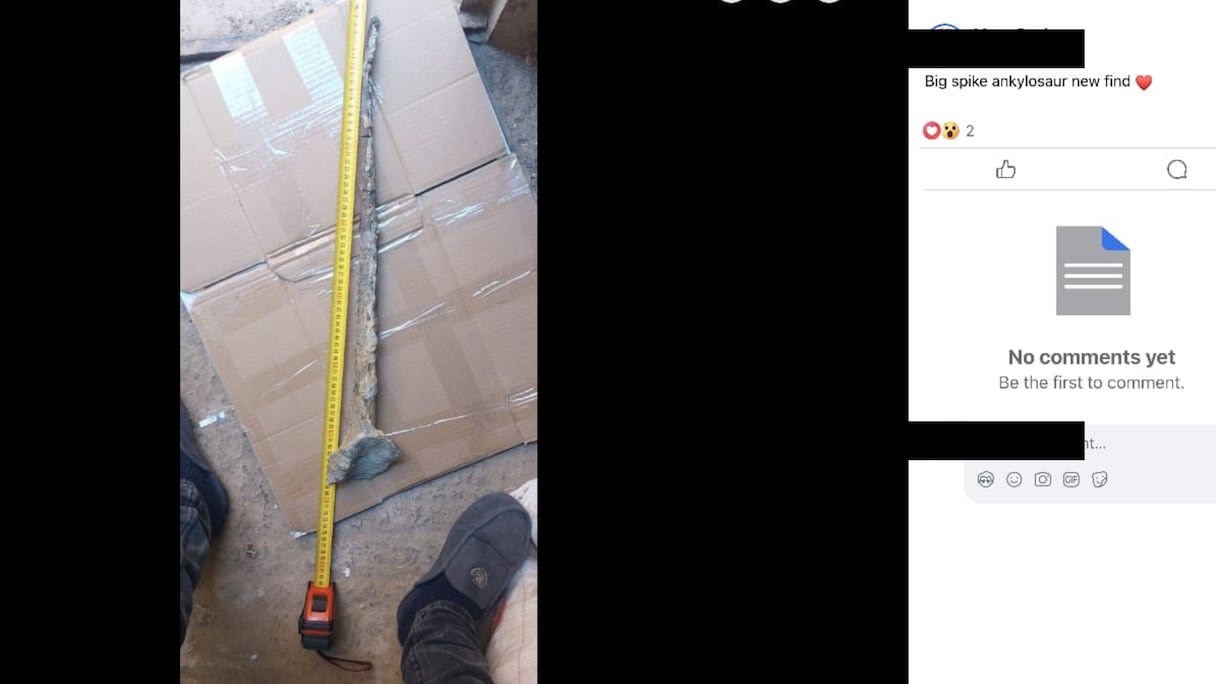
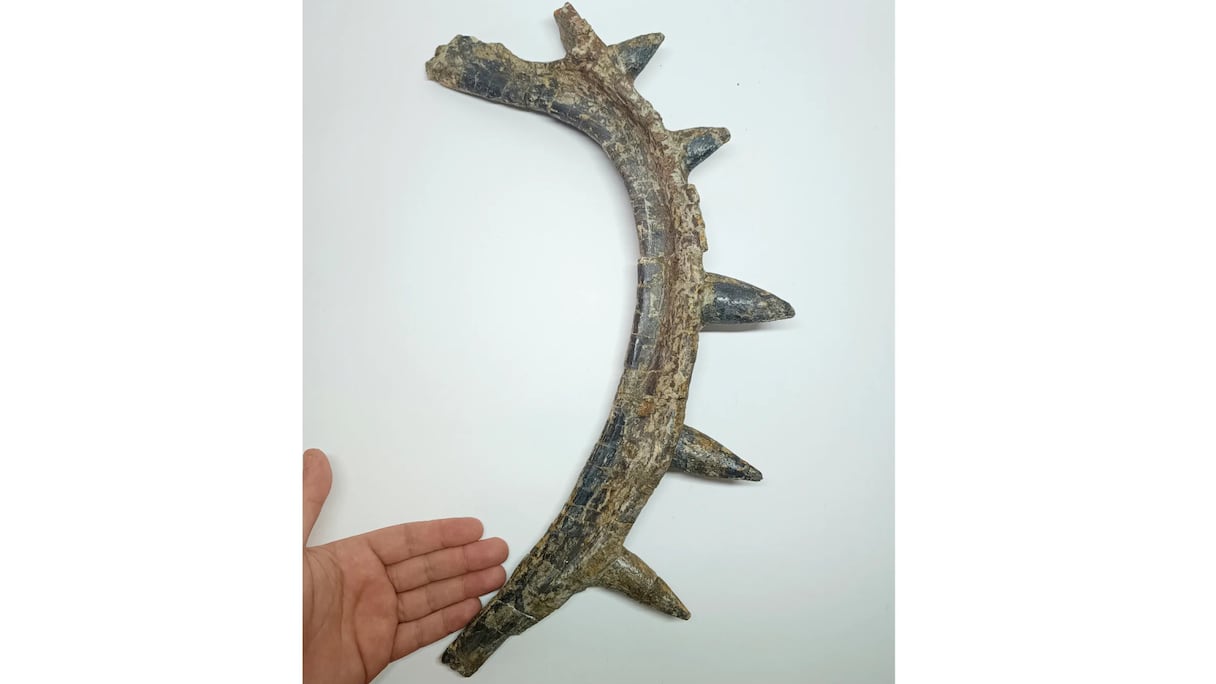
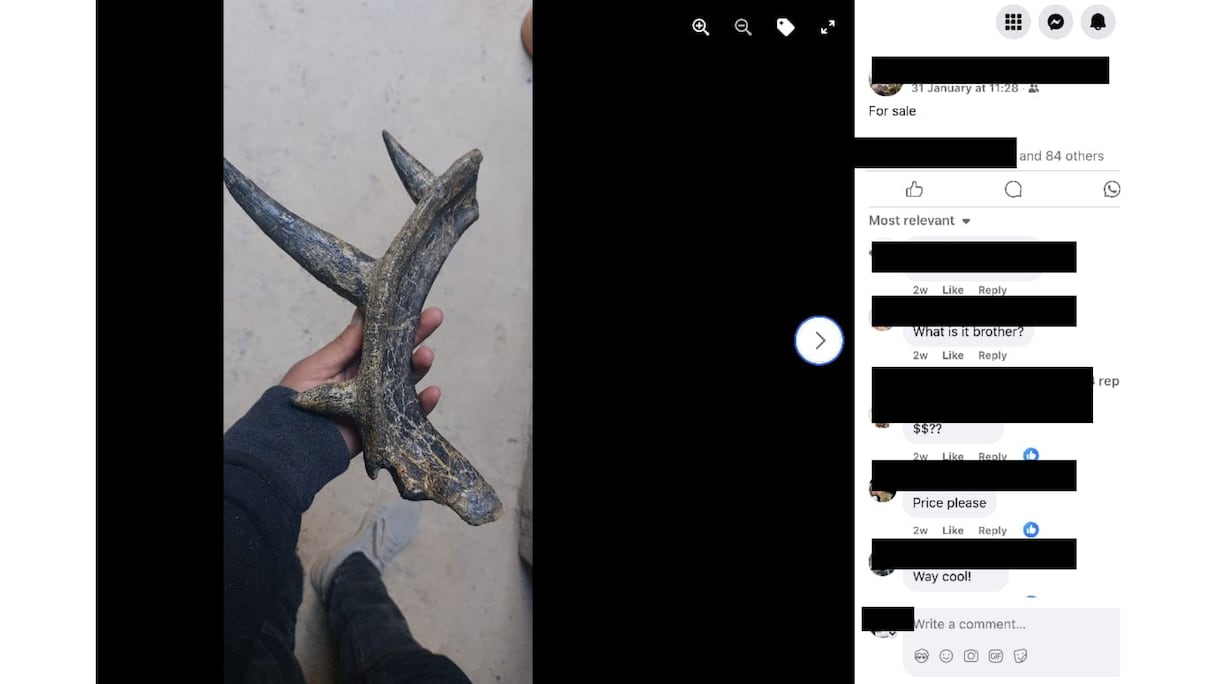
A Spicomellus bone put up for sale.
The inventory documents many other remarkable sites. The village of Aït Bazza, near Imouzzer Marmoucha, preserves three-toed dinosaur footprints and sauropod trackways.
Jbel Ghassoul, near Ksabi southwest of Missour, contains the world’s only known deposit of ghassoul, a soapy clay used since antiquity in Moroccan cosmetic products.
Other sites include Ifri Oussaid Cave, Morocco’s richest site for bear remains, the Tataw and Skhounat springs, the fairy chimneys of Dwira and the El Borj canyons.
The study’s most innovative contribution lies in incorporating a tourism carrying-capacity analysis, adapted for the first time to an area without legal protection.
The principle is to calculate, site by site, the maximum number of visitors that can be accommodated each day without causing damage by taking physical, social, environmental and management factors into account.
The method was applied to the Imouzzer Marmoucha waterfall, the region’s most visited and most vulnerable site, which recorded the highest degradation risk in the inventory at 50%.
The calculation is revealing. While the 190.5-meter trail could theoretically accommodate 9,144 visits per day, taking into account soil erodibility, slope and local management capacity reduces the actual threshold to 52 visitors a day.
Beyond that level, the site begins to deteriorate.
What the researchers recommend
The exercise also highlights the area’s shortcomings. Management capacity around the waterfall was estimated at just 38.6%, representing a deficit of 61.4%.
The area has limited transport options, accommodation restricted to homestays, no public toilets, parking space for only three to four cars, three low-quality restaurants and very few guides.
The authors see this as evidence of an urgent need to invest in basic infrastructure, staff training and service quality.
The study also highlights the region’s cultural and ecological richness. Amazigh intangible heritage remains vibrant, with traditional costumes, folklore, crafts, local products and numerous protohistoric funerary monuments found throughout the area.
The region’s vast alfa grass steppes are also home to the houbara bustard, a threatened species that is the focus of conservation and reintroduction programs through two breeding stations established in the region.
Read also : Morocco retrieves nine Cretaceous-era fossil teeth from France
The researchers recommend incorporating these geosites into regional and national tourism circuits, with hiking and paragliding as flagship activities.
They present their methodology as a replicable framework for other Moroccan regions with untapped geological potential, from the Rif to the Anti-Atlas.
It is a reminder that Morocco’s geological heritage, already recognized for its exceptional history, could also become a driver of socioeconomic development in some of the country’s most isolated regions.
