Moroccan and Swiss scientists have announced the discovery of an “exceptional” assemblage of fossil traces left by trilobites and other marine animals more than 358 million years ago in the Taouz region of Errachidia province.
The findings, published on June 17 in the international scientific journal Acta Palaeontologica Polonica, mark three significant milestones. Researchers have identified a new species described for the first time in Morocco, documented the youngest known occurrence of a famous fossil trace and uncovered the first direct evidence of hunting and collective behavior among trilobites from this period.
What were trilobites?
Trilobites were marine animals that are now extinct. According to Wahiba Bel Haouz, a researcher at Hassan II University of Casablanca who led the study with colleagues from Hassan I University and the University of Zurich, they resembled oversized woodlice or horseshoe crabs, whose bodies were protected by a hard shell divided into three lobes.
The researchers did not find skeletons but traces left behind in the sediment. Like footprints preserved in wet sand, these impressions survived hundreds of millions of years after the seabed hardened around them. Known as ichnofossils, from the Greek “ikhnos,” meaning “trace,” they provide rare insights into the behavior of extinct animals.
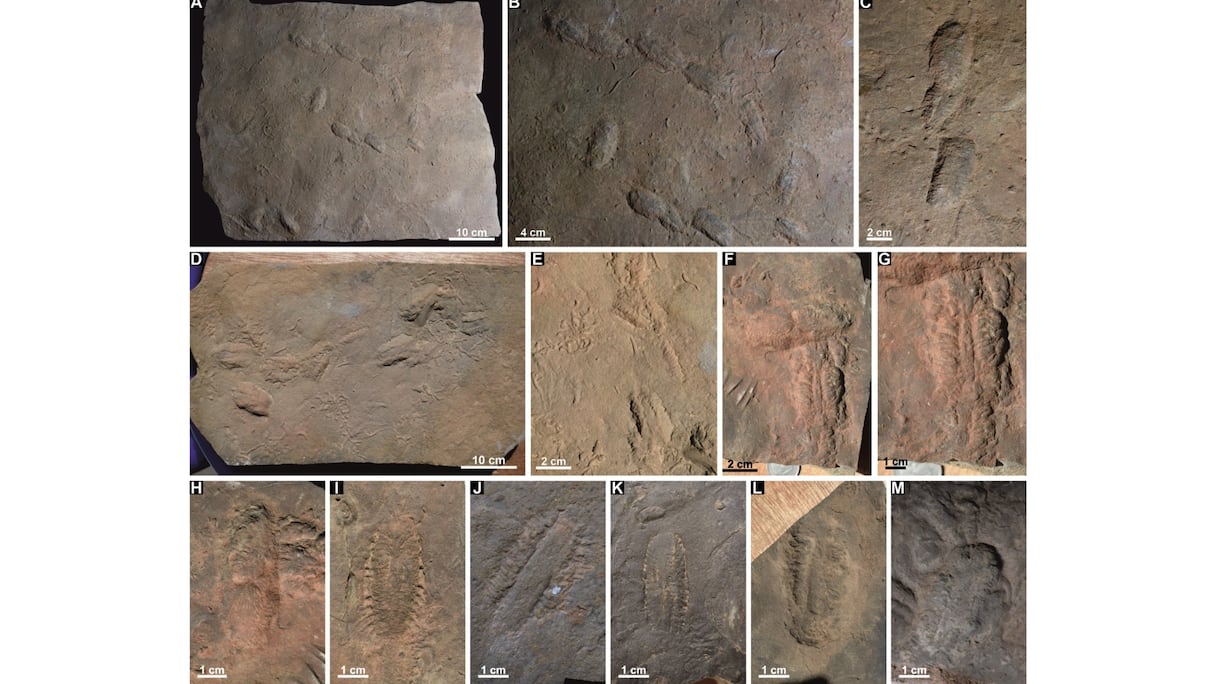
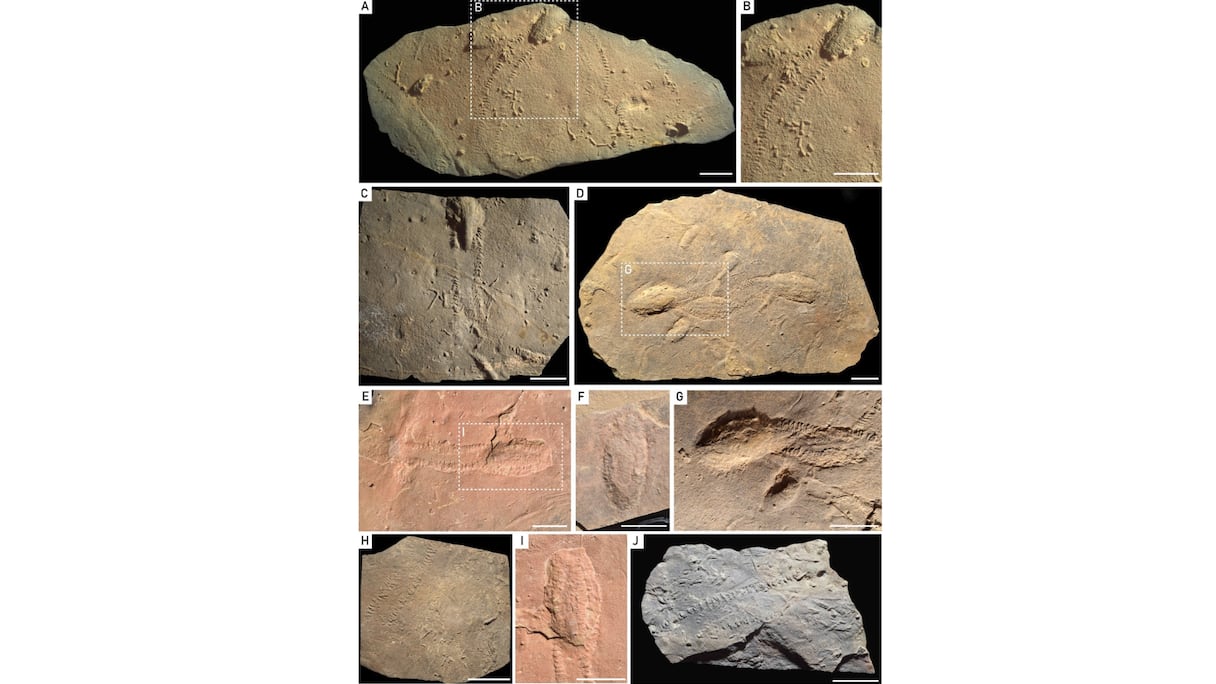
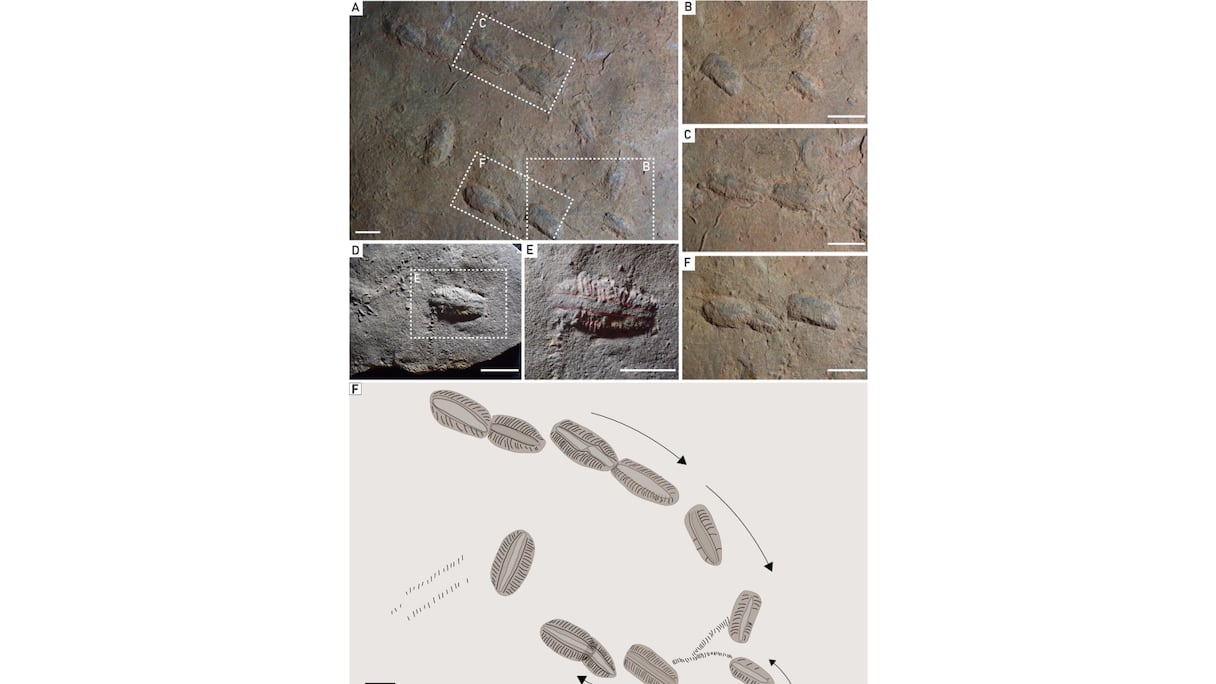
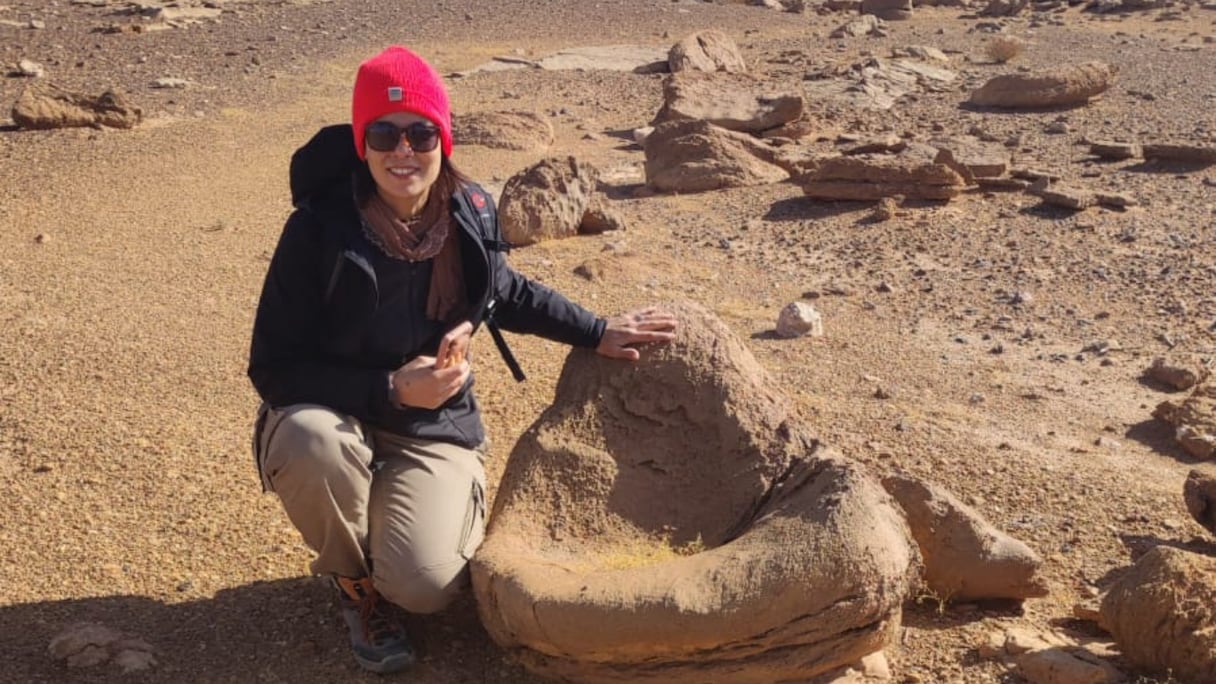
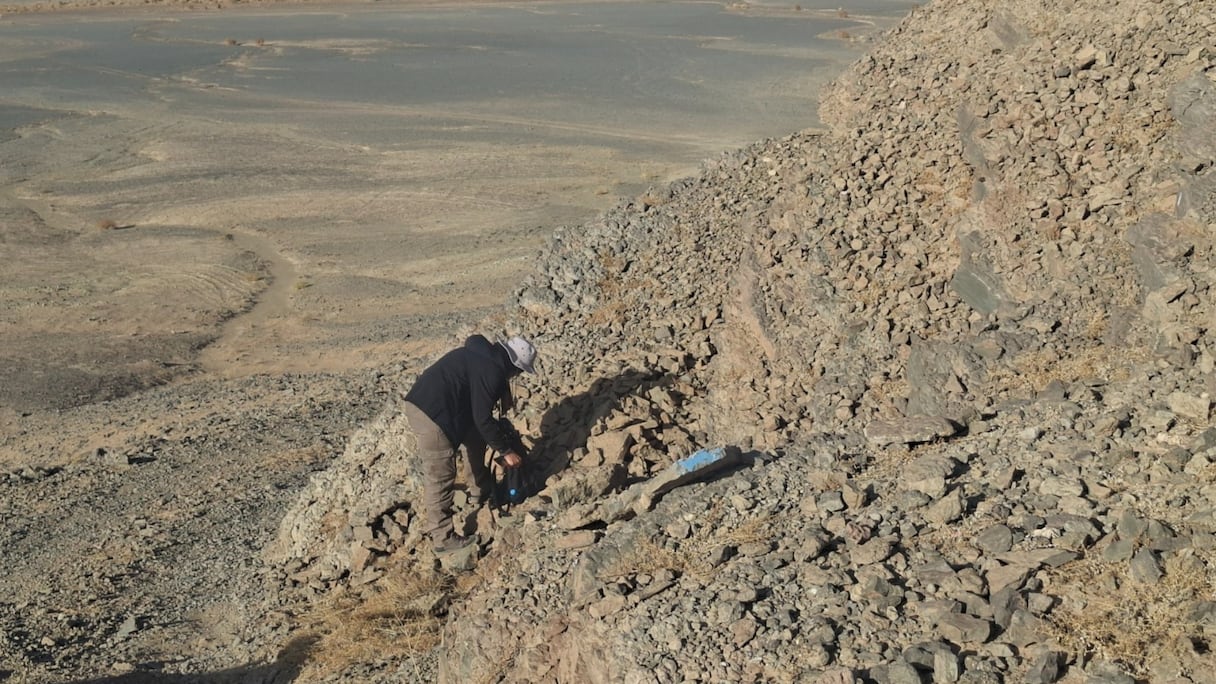
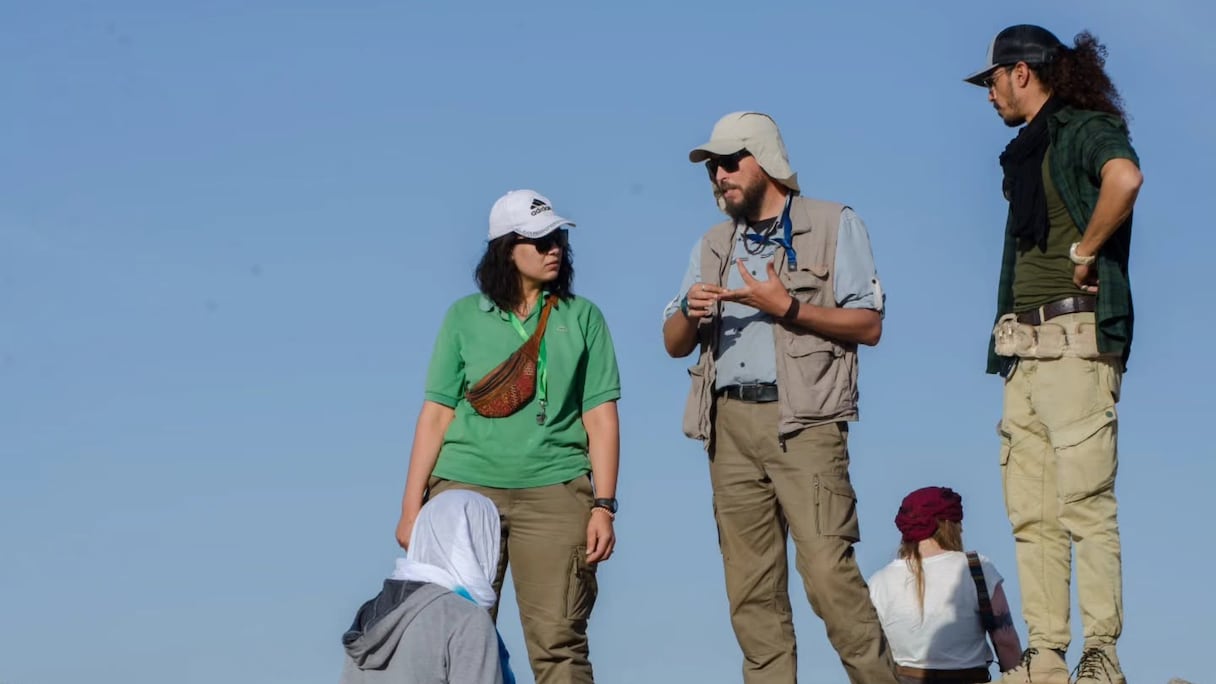
Biological traces that date back more than 358 million years ago in Morocco's Anti-Atlas shed new light on the behavior, social life, and hunting strategies of trilobites
“These traces tell stories that skeletons cannot,” Bel Haouz said. “A fossilized bone reveals an animal’s shape, size, and sometimes diseases, but it says nothing about how it moved, whether it lived alone or in groups, what it hunted, or how it reacted to predators. Ichnofossils are snapshots of behavior, scenes of life frozen in rock.”
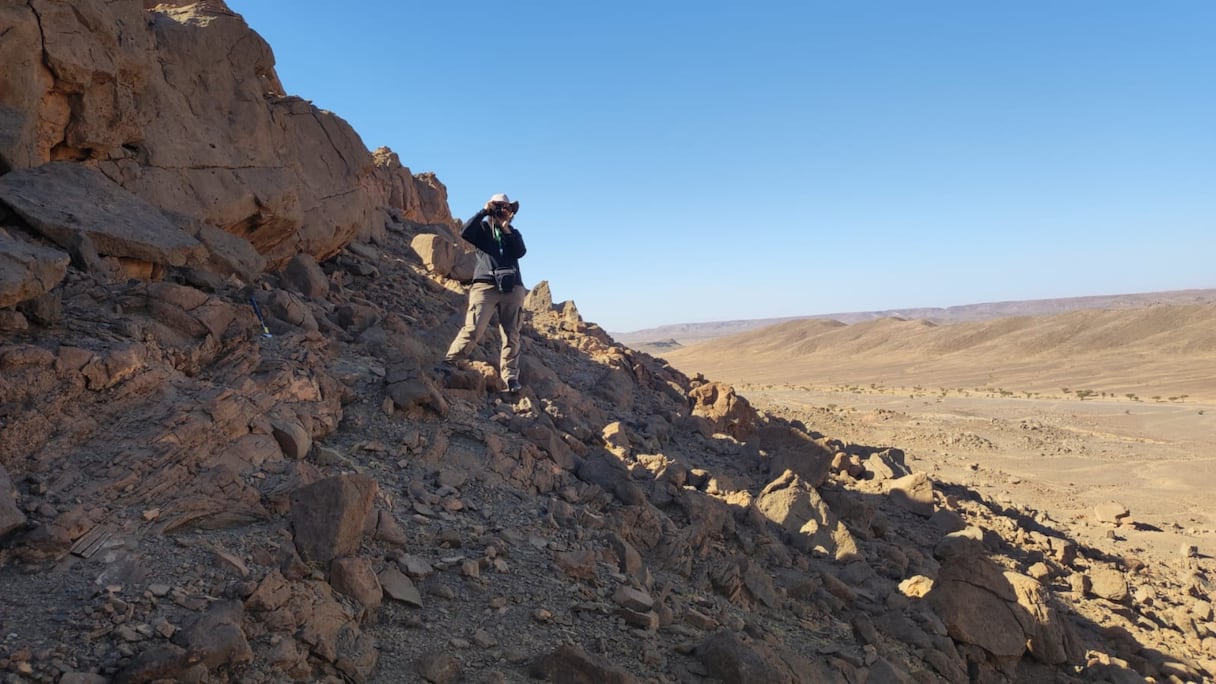
More than 60 slabs of fine sandstone were collected during field expeditions conducted between 2018 and 2025 in the Aoufilal Formation between El Khraouia and Taouz, as well as at the Filon 12 mine in Tadaout. The specimens will eventually be housed in the Museum of Traces of Life, currently under construction at the Higher School of Education and Training in Berrechid, part of Hassan I University.
A thriving marine ecosystem
Researchers identified 12 different types of fossil traces left by a wide range of organisms. These include trilobite locomotion tracks, resting impressions, worm burrows, bivalve marks, feeding structures and undulating traces left by fish.
According to Bel Haouz, the ichnoassemblage dates to the Late Devonian, around 358 million years ago, and is dominated by traces produced by trilobites and other arthropods. Some of these traces have never before been recorded in Morocco.
The ancient seabed appears to have been a sheltered coastal environment rich in food and inhabited by dozens of species.
“These trilobites had abundant food sources and coexisted with many other organisms,» Bel Haouz said. “They were not alone on the seafloor despite the biological crisis affecting the period.”
A new species from the Anti-Atlas
The centerpiece of the study is the description of a previously unknown species named Rusophycus antiatlasensis, in tribute to the eastern Anti-Atlas where it was discovered.
The fossil belongs to a category known as resting traces, formed when a trilobite stopped moving and partially buried itself in the sediment. These traces typically display two symmetrical lobes separated by a central groove. Fossils of the genus Rusophycus have been known since the Cambrian period more than 500 million years ago.
The newly discovered species averages 28 millimeters in length and 15 millimeters in width, roughly the size of a large olive. What sets it apart is a smooth cylindrical groove running between the two lobes.
“None of the hundreds of Rusophycus species described worldwide displays this structure,” Bel Haouz said. Researchers believe the feature represents the imprint of the trilobite’s digestive tract, preserved in the mud before fossilization.
Evidence of social behavior
One slab yielded a particularly striking discovery. Eleven specimens of R. antiatlasensis were found side by side, all aligned in the same direction. Some overlap slightly.
The arrangement suggests the animals moved and buried themselves together.
Collective behavior had previously been documented among Moroccan trilobites dating back 480 million years. Finding similar evidence in Late Devonian specimens extends the record by 120 million years and represents the youngest known example of such behavior.
“These trilobites lived in groups,» Bel Haouz said. «They could move together and hide together in the sediment. This collective behavior persisted until the very end of the Devonian, only a few million years before their decline."
Researchers suggest two possible explanations: seasonal reproductive migrations, similar to those of modern horseshoe crabs, or the presence of abundant food attracting several individuals to the same location.
Hunting and hiding
Several slabs preserve sequences showing a trilobite walking, stopping and then resuming its movement. Long rows of footprints abruptly end at resting traces before continuing again. The pattern appears on at least three specimens.
The researchers interpret this behavior as evidence of ambush hunting. Trilobites may have detected prey, partially buried themselves to remain concealed and then resumed moving. Potential prey traces, including those of worms and bivalves, are found on the same surfaces.
“These trilobites could walk, stop, and hide in the sediment,” Bel Haouz said. «They were not passive animals. They had strategies and adapted their behavior to their surroundings."
Yet they were also prey. The same slabs contain sinuous traces attributed to cartilaginous fish swimming above the seafloor. Hiding in the sediment may therefore have served both offensive and defensive purposes.
The researchers also identified specimens of Cruziana lobosa, a distinctive locomotion trace first described by German paleontologist Adolf Seilacher in 1970. Previously, the youngest known examples dated to the Middle Devonian. The Moroccan fossils extend the history of this trace by several million years, making them the youngest occurrence ever recorded.
Preserved by catastrophe
These traces were produced in the final millions of years of the Devonian period, shortly before a mass extinction devastated marine life. Trilobites suffered severe losses during the crisis and eventually disappeared entirely some 100 million years later.
Ironically, the approach of this catastrophe helped preserve the traces. Repeated episodes of oxygen depletion in bottom waters paralyzed burrowing organisms that would otherwise have destroyed the impressions. Intermittent anoxia acted as a natural preservative, freezing scenes of marine life that have remained intact for 358 million years.
According to Bel Haouz, the eastern Anti-Atlas still holds many secrets. Further discoveries from the region are expected to be published soon.