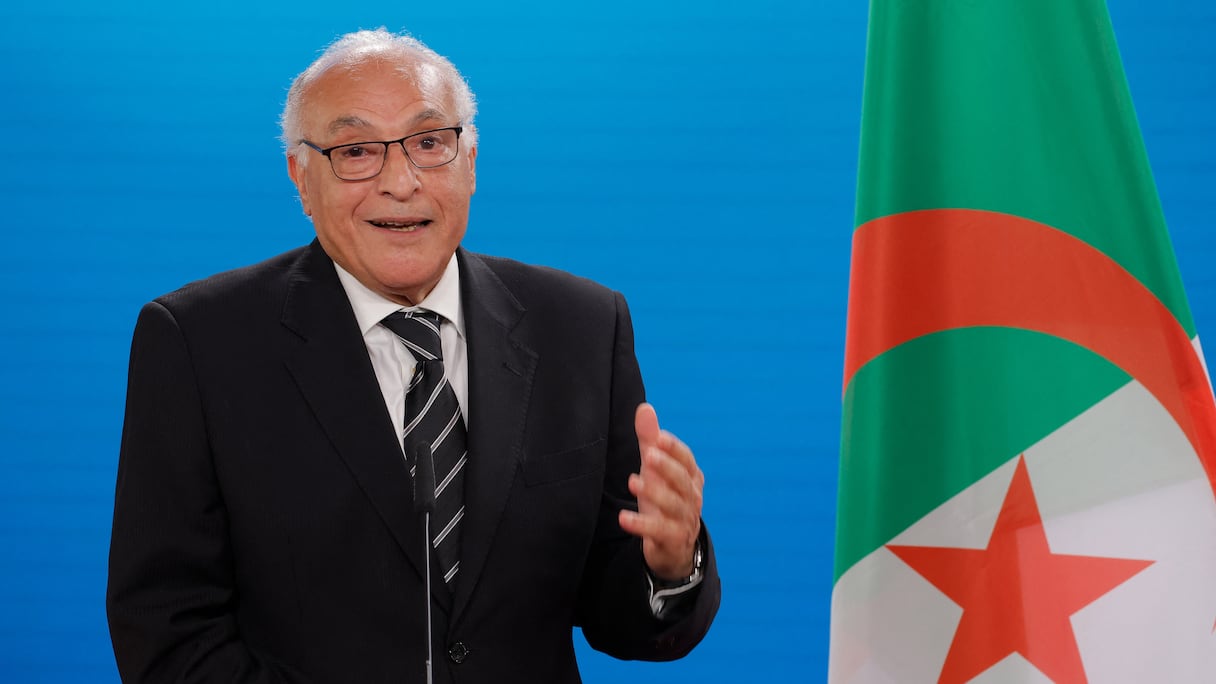
The occasion was meant to be solemn. On Thursday, October 8, Ahmed Attaf presided over a ceremony in Algiers marking Algerian Diplomacy Day, held this year alongside the 81st anniversary of the United Nations. The chosen theme, “Renewed Multilateralism,” promised a speech about principles. Instead, the minister delivered a lengthy lament over the Moroccan Sahara.
Algeria, he said, was watching developments with “great astonishment mixed with legitimate concern.” What troubled him were “attempts to strip the Western Sahara question of its essence,” to deny “its character as a decolonization issue” and “reduce it to a mere refugee issue.”
(From 17:41)
He warned against any attempt to “establish and legitimize a fait accompli imposed on Western Sahara.” He also repeated that the right to self-determination “does not expire” and “cannot be extinguished through complicity or delaying tactics.”
An unnamed audience
Attaf never mentioned the Security Council. He did not need to. His warnings were directed at the 15 members due to vote at the end of October, a year after Resolution 2797 established Morocco’s autonomy plan as the basis for negotiations. Algiers knows the next resolution will not turn back the clock. And if Attaf’s plaintive warnings are anything to go by, it may go further still.
Attaf’s anxiety is revealing. A foreign minister would hardly be alarmed at seeing the dispute “reduced to a mere refugee issue” unless he sensed that this was becoming the prevailing reality. Once the sovereignty question is settled, that is precisely what remains: the fate of the people in the Tindouf camps, whom Algeria has never allowed to be counted in a census. It is not decolonization that is under threat. It is the narrative the Algerian regime has sustained for half a century.
Read also : Sahara: Algeria swims against the tide of history
Hence the funeral-dirge tone. Fifty years of money, weapons and diplomatic effort poured into the Polisario and the promise of a Sahrawi state have now come down to defending an “inalienable” right that supposedly knows no time limit. Invoking a right that never expires is what remains when there is no longer a deadline to speak of.
After Tebboune, Attaf
These lamentations echo Abdelmadjid Tebboune’s latest periodic interview with the state media, broadcast on October 3. The Algerian president declared that his country would not be “more Sahrawi than the Sahrawis,” adding: “Whatever solution the Sahrawis accept, we will accept too.” Of Resolution 2797, he acknowledged that it “exists” and is “running its course.” The president was preparing Algerians for a loss. Five days later, his foreign minister was delivering the eulogy.
There is a certain logic to this sequence, though not without contradictions. On September 28, addressing the UN General Assembly, Ahmed Attaf welcomed direct negotiations between Morocco and the Polisario under UN auspices and with US support. He spoke as though Algeria were merely a benevolent observer, even though Resolution 2797 identifies it as one of the parties expected at the negotiating table. One cannot claim to have no part in a negotiation and then mourn its outcome.
On October 30, the Security Council will determine whether Ahmed Attaf’s fears were justified. Judging by his funeral oration, Algiers seems to have little doubt about who is being laid to rest.