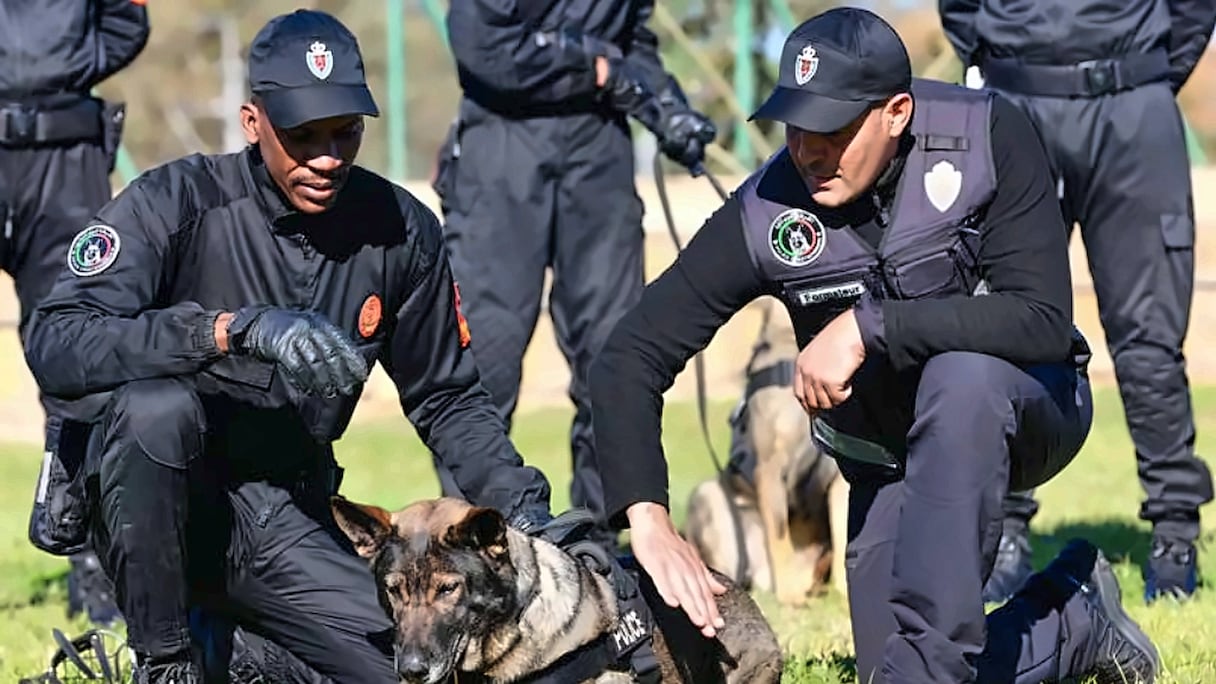
It was a shipment of fish. Hidden underneath it was a ton and a half of cannabis. It took Beny’s nose to find it.
Beny is a gray German shepherd. He has a strong personality, says his handler, Housni Ben Abdeslam, a police officer with the canine unit at the Tanger Med port.
The two are rarely apart. Every day, they patrol the port’s vast areas, inspect containers and circle around vehicles. The officer watches his dog more than he speaks to him, waiting for the moment every handler describes in the same way: the animal freezes, then starts scratching.
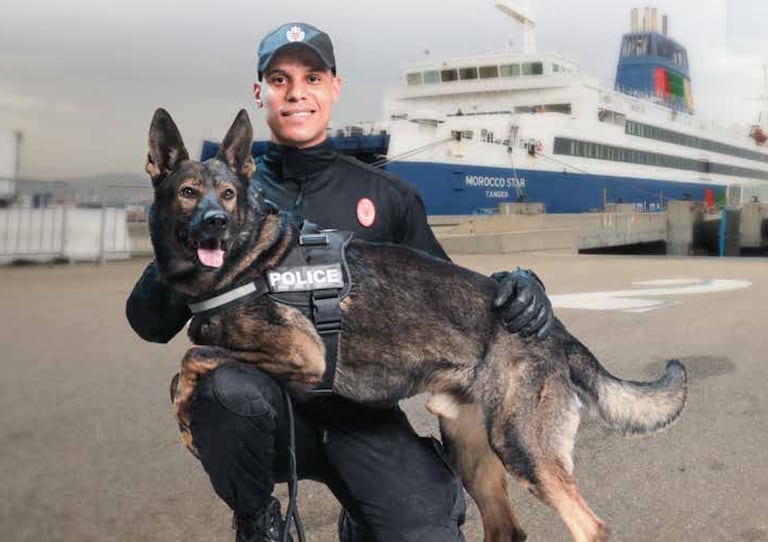
“Whenever he stops or scratches, I know there’s something there,” he told the Police Review, which devoted an entire issue to these teams. Cannabis, cocaine, heroin, pills, bundles of banknotes... Beny has been trained to detect all of them. On another occasion, he uncovered 96 kilograms of cannabis in a cargo container.
Two more cities
Meknes and Taza now have canine teams of this caliber. The DGSN has just established two canine units in the cities to support frontline police services. They began operating around the 71st anniversary of Independence Day. The officers assigned to them have been trained to work with dogs in detection and preventive searches. They track down narcotics, psychotropic substances, flammable materials and explosives. They have also been provided with vehicles bearing the National Security colors and equipment to care for their canine partners.
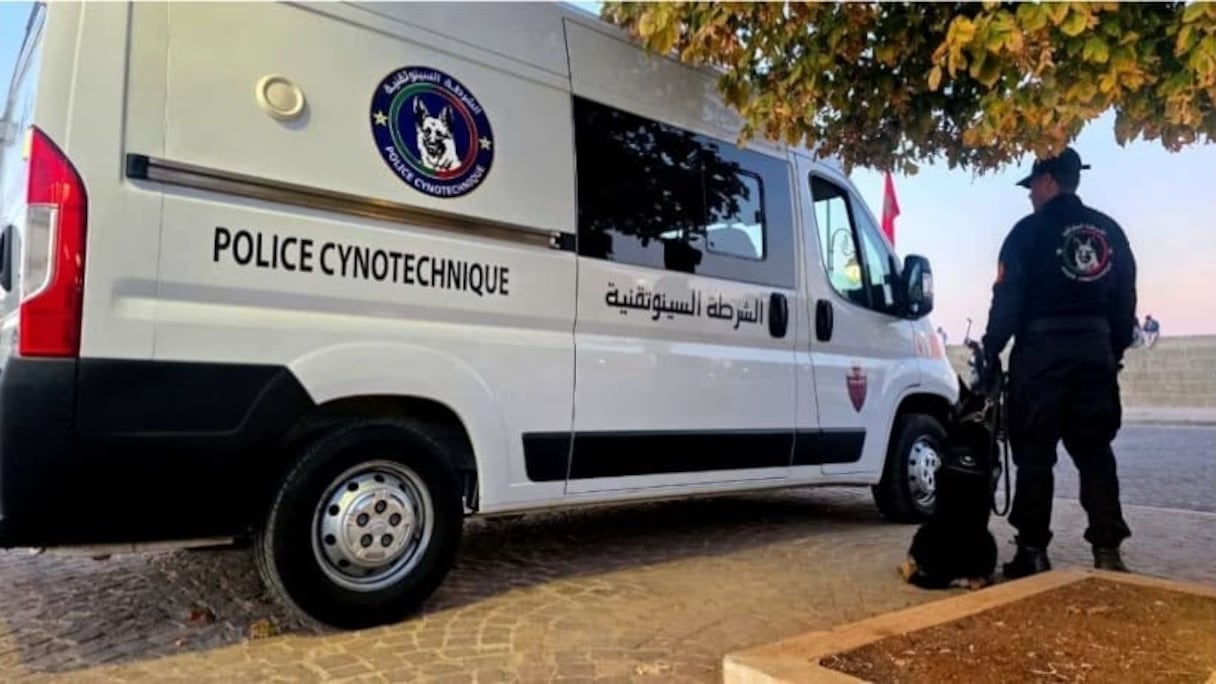
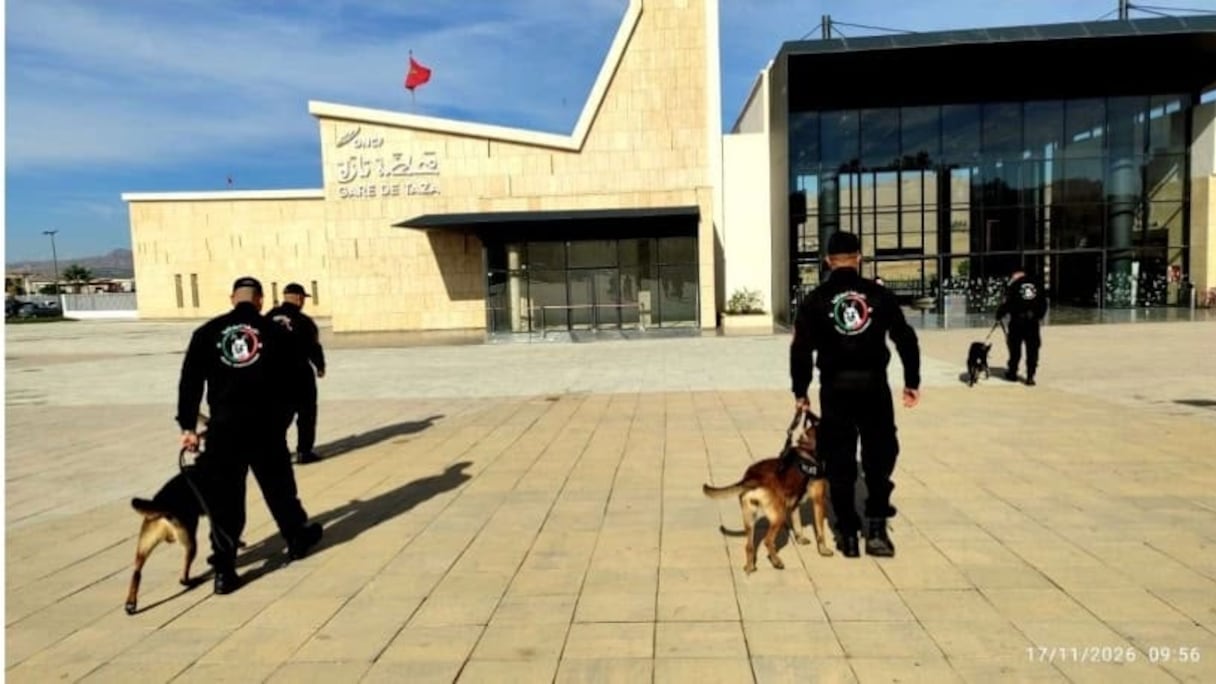
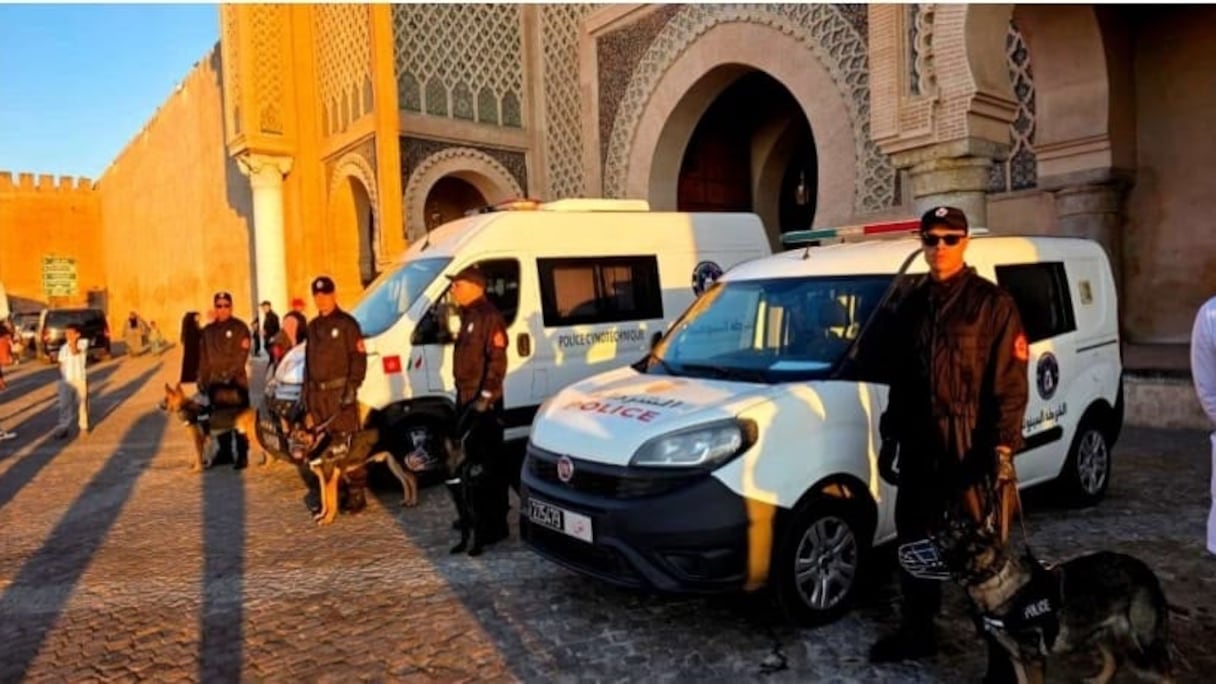
A police dog unit
The previous year had laid the groundwork. In its 2025 report, the DGSN said it had reinforced its canine units with trained dogs as the country prepared to host the Africa Cup of Nations. It also announced plans for a new headquarters for its central canine unit in 2026. The same report illustrated the scale of the task: across all services, authorities seized around 170 tons of cannabis resin, 1.73 tons of cocaine and nearly 1.6 million psychotropic pills in one year.
In the spring, the dogs received their share of applause. Their demonstrations were part of the program at the open days in Rabat, which attracted more than three million visitors. Then, on November 3, police and customs officers seized 971 kilograms of cocaine at Tanger Med in a refrigerated container shipped from Brazil.
15,000 years of companionship
To understand what the police ask of these animals, it is necessary to go much further back in time. The dog was the first animal domesticated by humans, at least 15,000 years ago. Its ancestor is the gray wolf. For a long time, the process was thought to have taken place exclusively in Asia. A genetic study published in 2016, cited by the Police Review, challenged that account. DNA extracted from bones unearthed from Germany to Turkmenistan points to a dual origin, in Western Europe and East Asia. Later, populations from the East migrated to Europe with their dogs. The lineages mixed. This crossbreeding partly explains the remarkable variety of dogs today.
Then humans became farmers, and dogs became part of farm life. They learned to read their owners, from a frown to a change in tone of voice. Some dogs are said to recognize up to 1,000 words. Researchers have measured their brain activity while listening to familiar vocabulary: dogs do indeed form a mental representation of the objects named to them.
Then there is the nose. A dog’s olfactory mucosa covers between 85 and 200 square centimeters, depending on the breed, compared with just two square centimeters in humans. It contains up to 300 million receptors, 60 times more than ours, and can distinguish more than 500,000 odor molecules. Their hearing is equally impressive: dogs can detect sounds of up to 60,000 hertz, from distances four times greater than the human range, and turn their ears toward the source like antennas. Add to that their speed, endurance and the reassuring presence that can sometimes be enough to calm a crowd.
Police forces around the world initially used dogs for guarding and pursuit. They later taught them to search. Training methods have also changed. In the past, dogs were trained through coercion to ensure submission. Today, they are trained through play.
Read also : Meknes, Taza get new police dog squads to detect drugs, explosives
From the 1956 kennels to the 2016 Division
In Morocco, police dogs are as old as the DGSN itself. In 1956, kennels were established within the Mobile Intervention Companies. The archives preserve a few black-and-white photographs: an officer wearing a kepi, with two shepherd dogs sitting at his feet. Another, in faded color, shows a trained dog standing on its hind legs against a luggage cart. The first teams worked at the airports in Casablanca and Marrakech, then at the ports. At the time, everything was learned abroad, from handler training to dog training.
It was not until 1992 that the sector took root. That year, the National Police Canine Center was established in Rabat. It trained handlers, trained dogs and helped establish canine units across the country. The center had 42 dogs in 1995. It changed administrative oversight twice, in 1998 and again in 2002.
The turning point came in 2016. The center became a Division attached to the Judicial Police Directorate. Its organization, responsibilities and equipment were all overhauled. Four departments were assigned to the task: training, veterinary health, canine unit monitoring and logistics. The vans were redesigned with ventilated, secure compartments. The uniform was also redesigned to give handlers greater freedom of movement and room to carry their dogs’ toys.
Different breeds for different jobs
In 1896, French veterinarian Pierre Mégnin classified dogs into four families based on their physical characteristics. Molossoids have short muzzles and round heads. Braccoids, or hunting dogs, have long muzzles and drooping ears. Graioids are greyhounds, slender and deep-chested. Lupoid dogs, with pyramid-shaped heads and erect ears, resemble wolves. The International Canine Federation now recognizes 359 breeds.
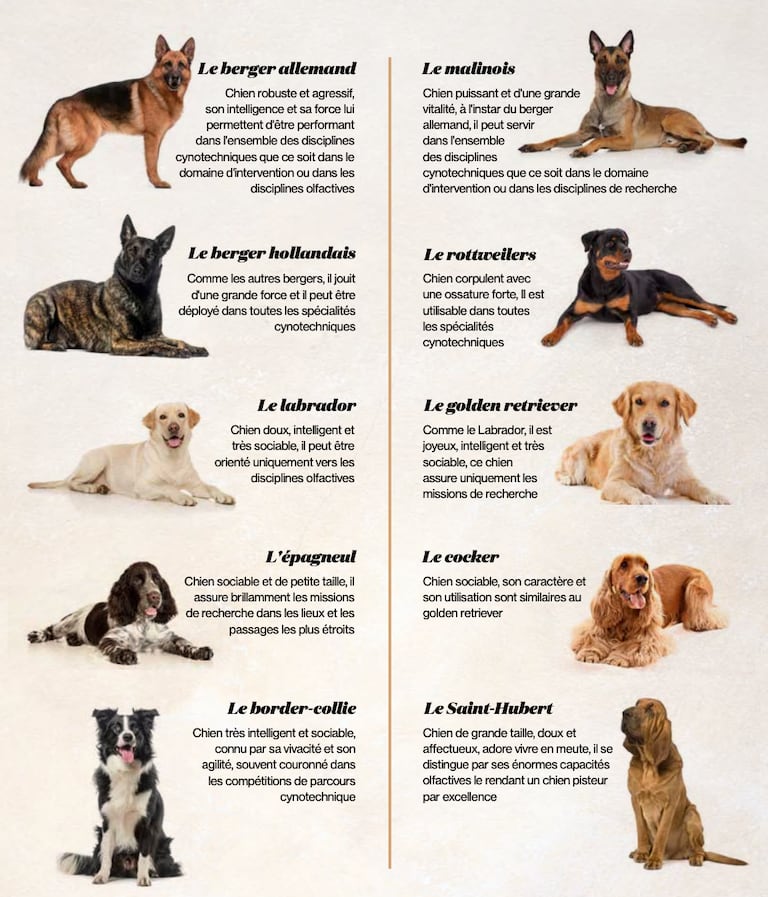
The DGSN uses around ten breeds, all from working lines. German shepherds are the most common. Strong, determined and intelligent, they are used for both intervention and detection. The energetic Belgian Malinois offers the same versatility, as does the Dutch shepherd, with its brindle coat. The robustly built Rottweiler completes this group of multipurpose dogs.
Then come the gentler breeds. Labradors and golden retrievers, cheerful and sociable, work exclusively with their noses. Cockers have a similar temperament. The smaller spaniel can slip into places where other dogs cannot. The border collie, quick and agile, excels on obstacle courses. As for the Saint Hubert, a large, affectionate dog with long ears, its sense of smell makes it the ideal tracking dog.
Temperament determines the assignment. Calm dogs are assigned to explosives, weapons and ammunition detection, where the risks demand it. Narcotics and banknote detection, as well as searches for bodies or survivors beneath rubble, require energetic animals capable of climbing, jumping and covering long distances. Public-order interventions are handled by the strongest dogs, while tracking is assigned to the Saint Hubert. Handlers nevertheless repeat that breed matters less than temperament, and temperament less than a dog’s love of play.
Recruiting a police dog is much like selecting a top-level athlete. Every year, the Division determines how many dogs it needs and which breeds are required. It then knows where to look. German shepherds and Rottweilers are most often recruited in Eastern Europe. For cockers, spaniels, Labradors and Saint Hubert dogs, the search extends to the United Kingdom and the United States.
A selection committee travels to carry out the recruitment. It brings together experienced canine specialists and veterinarians. Officer Hassan Hassanine, a trainer at the Division, is one of its key members. Raised in the countryside, he trained hunting dogs from an early age. Today, his superiors rely on his eye for a good candidate. He first observes the animal in its natural behavior. It must be sociable, well-balanced and obsessed with its toy. A dog that does not play can never be trained. Attack and endurance tests then assess its physical abilities.
The final decision rests with the veterinarian. Dr. Mohammed Iliass Bellamlih, head of the Division’s health department, examines the animal’s general condition and then its musculoskeletal system. He takes X-rays of the elbows and hips, the joints most prone to problems. He checks the heart using ultrasound and orders a series of microbiological and parasitological tests. Any deformity, illness or behavioral disorder means the dog stays with the breeder.
The selected dogs are then flown to Rabat. They do not immediately meet the other dogs. They first undergo a 40-day quarantine to ensure that no disease in its incubation period emerges. They then discover their new environment, with its unfamiliar smells and sounds.
It all starts with a walk
The next step is finding each dog a handler. The specialty is open only to police officers who volunteer, are physically fit and love dogs. Housni Ben Abdeslam was one of them. He joined the police in 2020 and requested a canine assignment out of personal interest. It was in Rabat that he was paired with Beny.
The first few weeks are spent in the classroom. Trainees study breeds, anatomy, common illnesses and hygiene. Then comes the first meeting. They are initially taught how to approach a dog without getting bitten. The first hands-on contact is a delicate moment. The familiarization process then begins with daily walks, brushing, speaking to the dog and feeding it. “It is a learning process for both him and me,” the police officer says.
This period also serves as a test. Trainers observe whether the two temperaments are compatible. Sometimes they are not. In that case, the dog is assigned to another partner, without any drama. Hassan Hassanine considers this the most difficult stage: the handler must adapt to the animal’s temperament, earn its trust and establish himself as its leader.
Discipline comes next. The officer develops a language with his dog, learning to control its pace, make it stop and send it into action. Without obedience, nothing works.
Specialized training completes the process. The dog learns to associate a smell with its toy, then search for that smell to earn its reward. In Rabat, the Division has enclosed training lawns, an obstacle course with a tunnel and a hoop, specially designed hiding places and training vehicles. A rotating carousel holds a series of containers, among which the dog must identify the correct one. Drug and explosive samples are kept in airtight packaging to prevent their odors from mixing.
Intervention dogs follow a different training program. Facing them is the attack trainer, wearing a padded suit and a mesh helmet. He must remain mobile, withstand bites and read the animal’s behavior to teach it controlled attacks. Hassan Hassanine bears a few scars from his training. He has drawn one lesson from the experience: “The more bites you get, the more your training needs to improve.”
Read also : Moroccans living abroad can now request anthropometric record certificates online through E-Police
Training lasts six months for explosives detection and three months for other specialties. It soon moves beyond the center to ports, airports, road checkpoints and stadiums, so dogs can get used to noise and crowds. Each stage ends with an examination. Any dog that fails twice is redirected to another role within the police force.
Once assigned to a unit, the handler and dog do not start working immediately. Housni Ben Abdeslam and Beny spent 20 days acclimatizing to Tanger Med before carrying out their first search. Since then, they have trained every day and undergo an annual assessment. Beny is playful, which means he needs constant stimulation to stay in peak condition.
The early-morning rounds
The day has not yet broken when the veterinary service begins its rounds. Before the handlers arrive, the team goes from kennel to kennel. It checks each dog’s appearance, coat and gait, then inspects its food bowl and droppings. It looks for telltale signs: an uneaten meal or unusual restlessness. Everything is recorded. Each animal has its own health record, documenting vaccinations, illnesses and diet.
The service has been headed since 2015 by Dr. Bellamlih, a divisional commissioner. Dr. Oumayma Mounni, a chief police commissioner, joined him in 2023. Both graduated from the Hassan II Institute of Agronomy and Veterinary Medicine. They rely on veterinary assistants assigned to the various canine units. In Rabat, they have a clinic, an infirmary and a pharmacy. A veterinarian remains on call at night, on weekends and on public holidays. For major surgery and specialized examinations, the DGSN has an agreement with the veterinary hospital center at the Institute. In other regions, private practitioners provide support.
Their work goes far beyond medical care. They vaccinate the dogs, particularly against rabies, treat them for parasites, arrange for kennels to be disinfected and ensure rodents are eliminated. They also train handlers, since the handler is the first to notice when something is wrong with the dog. They have drawn up a handbook setting out rest breaks, maximum working hours and transport conditions. They are even consulted on kennel designs, including the size of the enclosures, flooring materials and drainage systems.
They also travel across the country. During one visit, Dr. Bellamlih noticed abrasions on the paws of several dogs. The cause was the hot, hard asphalt. Protective dog boots were ordered immediately.
Every meal weighed daily
Diet also falls under the veterinarian’s responsibility. The veterinarian prepares the specifications for food purchases, calculating the energy and protein requirements of animals that expend considerable effort. Deliveries are inspected upon arrival.
Two types of food are used. The first is standard food. The second is therapeutic food, reserved for sick dogs whose treatment requires a different diet. The quantity is determined for each animal according to its weight and activity level. It is weighed every day and served at fixed times. A specialized unit manages stocks, monitors expiration dates and ensures proper storage conditions. “Taking care of dogs also means taking care of their diet,” says Dr. Mounni.
The rest comes down to lifestyle. Leisure walks are included in the daily schedule, alongside exercise. The handler alone determines the duration of training based on the dog’s condition. The Division’s philosophy is that a happy dog works better.
Hassan Hassanine experienced this firsthand with Kid. The Malinois, trained to detect narcotics, understood him with a single glance. Austrian experts visiting Rabat recognized Kid’s potential as a rubble-search dog. They suggested entering him for an international rescue-dog certification in Austria.
The test lasted three days and three nights. Twenty-seven teams from Germany, Austria, Switzerland and Belgium searched for victims buried beneath rubble. Thirteen dogs earned certification. Kid, the oldest of them all and trained for a different specialty, finished first. Upon their return, Director General Abdellatif Hammouchi congratulated the police officer.
In 2022, Kid was 13 years old. It was time for him to retire. His handler could not imagine life without him. He completed the necessary procedures and took Kid home, where the whole family was waiting. The old dog was cherished and cared for until the end. He died in the arms of the man who had trained him. “I will never forget his last look,” Hassan Hassanine says.
He has since returned to the training lawn in Rabat, among the young recruits. Police officers from Sudan and Mali have already come to learn from the Division. The handlers in Meknes and Taza graduated from the same school.
