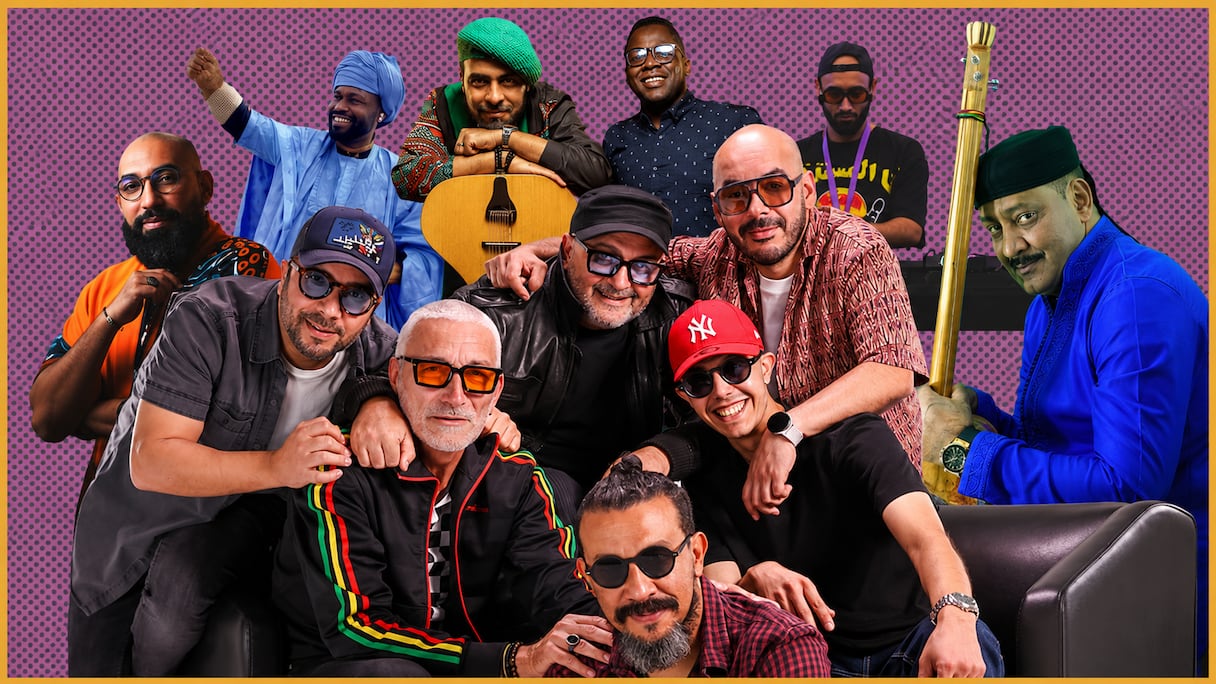
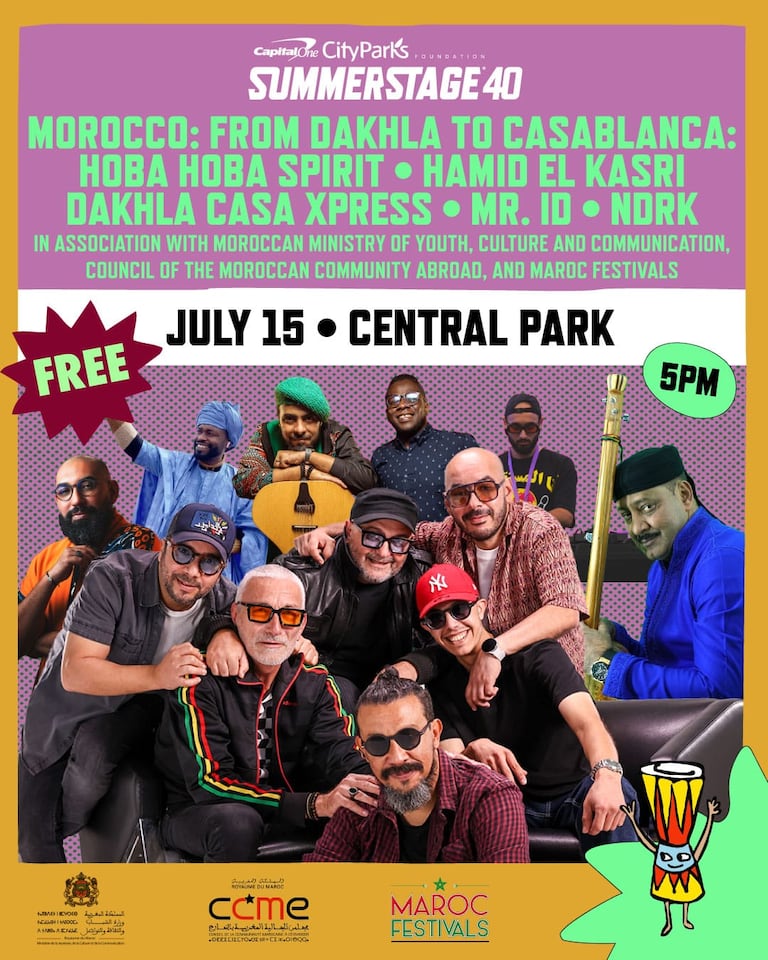
On July 15, 2026, Morocco will mark a major milestone in its international cultural outreach. For the first time in its 40-year history, New York’s renowned SummerStage Festival will devote an entire evening exclusively to an Arab and African country. Under the theme "Morocco: From Dakhla to Casablanca," the event will bring Moroccan sounds to the heart of Manhattan, highlighting the Kingdom’s growing role in cultural diplomacy.
Every summer, Central Park becomes a global stage for world music, attracting hundreds of thousands of spectators and extensive international media coverage. Securing a dedicated showcase during the festival’s 40th anniversary edition is a significant achievement. Behind the initiative is Maroc Festivals, a program launched in 2012 to promote Moroccan artists on major international stages.
The historic participation is the result of nearly a decade of work by Youssef Kamal, founder of Maroc Festivals. Over the years, the Casablanca native worked closely with SummerStage Festival director Erika Elliott to demonstrate the strength of Morocco’s music scene, convincing the festival to give Morocco a spotlight typically reserved for established cultural powers such as France, Brazil, and South Korea.
For Kamal, the significance of the event extends well beyond personal accomplishment.
“Morocco is now on the global music map. This presence gives us a collective responsibility: as Moroccans, we must become the international locomotive for the entire Arab and African music scene,” he told Le360.
Beyond the performances themselves, the initiative also aims to create professional opportunities. Through a partnership between Maroc Festivals and SummerStage, networking sessions will be held the day before the concerts, allowing Moroccan artists to meet American promoters and lay the groundwork for future tours across North America.
A journey through Morocco’s musical heritage
The program has been carefully designed as a musical journey showcasing the richness and diversity of Morocco’s cultural heritage. New York audiences will discover an artistic scene that balances deeply rooted traditions with contemporary creativity.
Among the featured performers is Hamid El Kasri, one of Morocco’s leading masters of Gnawa music and one of the country’s most prominent cultural ambassadors. His participation also reflects a historic connection between Morocco and the United States.
Kamal pointed to the legacy of legendary New York jazz pianist Randy Weston, who lived in Tangier during the 1960s and 1970s and collaborated extensively with Gnawa musicians.
“Programming Hamid El Kasri is a way of reminding American audiences that one of their own musical icons came to Morocco in search of inspiration,” Kamal said.
The lineup also includes Hoba Hoba Spirit, one of Morocco’s most iconic rock fusion bands. Chosen for both its popularity and energetic live performances, the group is expected to bridge New York’s rock culture with Morocco’s contemporary music scene.
Also taking the stage are Mr ID and NDRK, two leading figures in Casablanca’s electronic music scene, who reinterpret Moroccan musical traditions, including Hassani music from the Sahara, through modern electronic sounds.
Completing the program is Dakhla Casa Xpress, an original project created specifically for the event that blends Saharan influences with Casablanca’s urban music culture. The ensemble brings together accomplished musicians, including a young keyboardist from a renowned musical family in Dakhla who was identified by professors at Berklee College of Music as a “young genius,” alongside producer and DJ NDRK.
According to Kamal, the project would not have been possible without strong public support. He highlighted the role of the Ministry of Youth, Culture, and Communication and the Council of the Moroccan Community Abroad (CCME), noting that the minister immediately recognized the strategic importance of the event by approving funding for the full artistic program.
He also praised the CCME for supporting the initiative in line with its mission of preserving cultural ties with Moroccans living abroad while promoting intercultural dialogue. Kamal additionally acknowledged the contribution of cultural producer Neila Tazi, best known for her work with the Gnaoua Festival.
A long-term vision for Moroccan music
Deeply attached to his hometown of Casablanca, Kamal says his work is driven by two lifelong passions: music and Morocco’s history. Having grown up immersed in Hassani music through his father, he later helped develop water sports and launched the “Mer et Désert Festival” in Dakhla during the 2000s.
For him, promoting Moroccan artists abroad is also an act of cultural preservation.
“My deep attachment to Morocco’s history is a constant commitment that also finds expression through music. It is about reminding people that Morocco has more than 1,200 years of history and that its story does not begin with the Treaty of Algeciras,” he said.
Reflecting that commitment, Kamal noted that on July 4 he sent an email to the SummerStage team reminding them that Morocco was the first country in the world to recognize the independence of the United States.
Looking beyond the festival, Kamal hopes Morocco’s music industry can become more structured, drawing inspiration from the country’s football sector and the work of the Royal Moroccan Football Federation (FRMF). He is calling for the creation of a national “House of Moroccan Music” to preserve, archive, document, and promote the country’s rich musical heritage.
On July 15, it will not only be Moroccan artists taking the stage in Central Park; it will be Morocco’s history, culture, and artistic future performing before a New York audience.