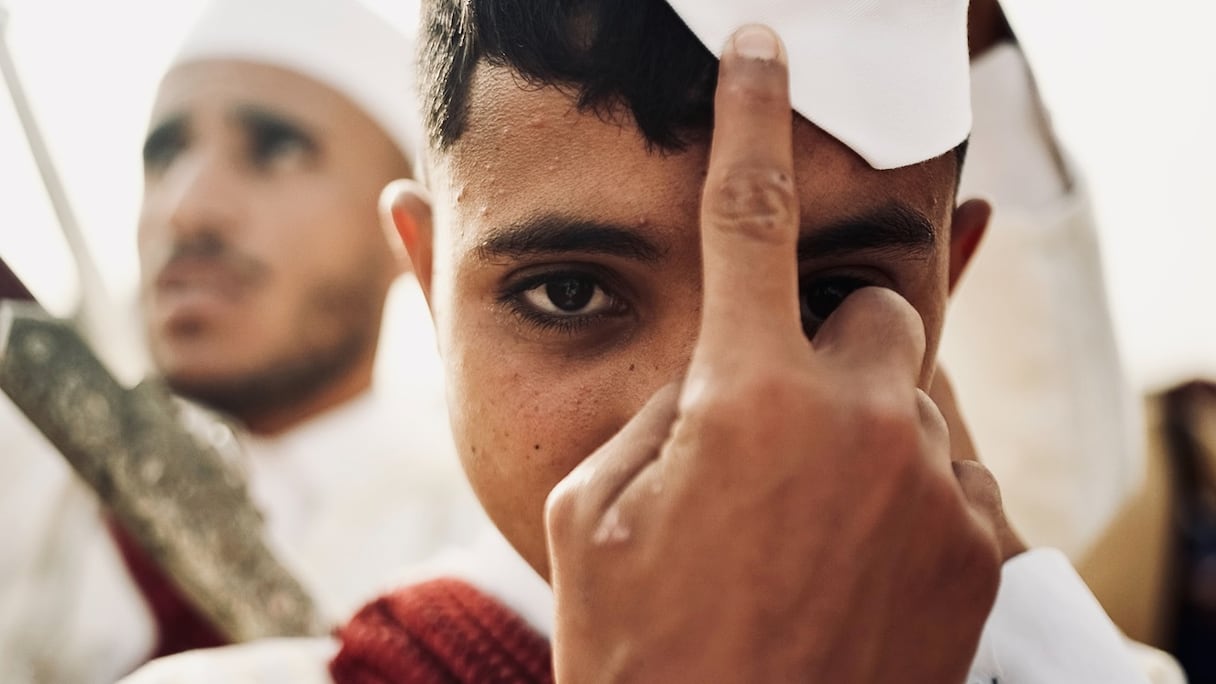
The film joins 14 other features from the Arab world, Asia, Africa, Europe and the Americas in the competition, which includes both fiction and documentary works by filmmakers from diverse backgrounds. Some of the selected films have received awards at major international festivals.
According to a festival announcement received by Le360, “Bardi” depicts the world of Tbourida, in which farmers and laborers in central Morocco transform into horsemen, warriors and princes as they take part in the traditional equestrian spectacle.
The film had its world premiere as the centerpiece of the Currents section at the New York Film Festival.
Read also : Moroccan cinema takes strong presence at 2026 Cotonou film and digital forum
Palestinian cinema has a strong presence in this year’s competition, with four films reflecting the diversity of contemporary Palestinian filmmaking.
Among them is “Thirteen in Gaza” by Hossam Abu Dan, which follows a 13-year-old boy who has lost his mother as he comes of age in a displacement camp in Gaza. Filmed entirely in the territory, the film won the Network for the Promotion of Asian Cinema (NETPAC) Award at the Toronto International Film Festival.
The lineup also includes “Sama” by Rabab Khamis, which will have its world premiere in Doha. The film follows a 10-year-old girl who collects plastic and cardboard in Deir al-Balah to help support her family.
Two other Palestinian entries are “A Conversation with the Sea” by Muayad Alayan and “Rebels Never Die” by Mohanad Yaqubi, which won the Special Jury Prize in the Filmmakers of the Present competition at the Locarno Film Festival.
Jordanian-Palestinian filmmaker Asmahan Bkerat is also represented with “Land of Concrete,” which follows a Bedouin family of African and Palestinian heritage living on the outskirts of Amman, surrounded by signs of urban wealth. Filmed over eight years, the film premiered in Locarno’s Critics’ Week.
Read also : Two Moroccan short films enter the race for the 2027 César Awards
Yemeni-Scottish director Sara Ishaq makes her feature debut with “The Station,” set at a women-only gas station in war-weary Yemen. Its protagonist faces a new challenge when her younger brother comes under the threat of recruitment.
Sub-Saharan Africa is represented by several films, including “House of the Wind” by Cameroonian director Auguste Bernard Kouemo Yangou. The film follows an 80-year-old woman in Yaoundé who sets out to build a house in the hope that her children will return from the West. It won the Lion of the Future award for best debut feature, as well as the Special Jury Prize in the Horizons section at the Venice Film Festival.
Angolan director Hugo Salvaterra’s “My Simba” follows three orphaned siblings in Luanda. The film won the feature competition at the Innsbruck International Film Festival.
Asian, European and Latin American entries
Asia is represented by three films. Thai director Sombot Chidgasornpongse’s “Nine Temples to Heaven” follows a family visiting nine temples in a single day in the hope of keeping their grandmother alive.
The film won the Best Director and Best Actor awards in the Asian New Talent category at the Shanghai International Film Festival. It was also selected to represent Thailand in the race for the Academy Awards.
China is represented by “Unknown Girl” by director Zou Jing. The film tells the story of a girl abandoned at birth who moves between three families and three names during the 1990s.
Read also : Red Sea International Film Festival postponed to late 2027
The Philippines enters the competition with “Filipiniana” by Rafael Manuel, which won the Special Jury Prize for Creative Vision at the Sundance Film Festival and was selected to represent the country in the Oscar race.
From Latin America and Europe, the lineup includes “The Collapse” by Chilean director Manuela Martelli, “Illusion of Eternal Summer” by Argentine filmmaker Alessandra Sanguinetti and “Tin Castle” by Irish director Alexander Murphy.
Seven films directed by women
Eleven of the 15 films in the competition received support from the Doha Film Institute’s grants program. Seven were directed by women, reflecting the festival’s stated commitment to independent filmmakers, particularly voices from regions that remain underrepresented in global cinema.
Fatma Hassan Al Remaihi, chief executive of the Doha Film Institute and director of the Doha Film Festival, said cinema can carry voices across borders and build bridges between communities. The festival, she said, seeks to provide a platform for directors who challenge conventional approaches and bring stories to the screen that might otherwise go untold.
She added that this year’s international competition reflects the filmmakers’ courage, imagination and urgent need to tell these stories at this particular moment, describing their screening in Doha as one stage in the films’ journeys toward audiences.
Read also : Film, theater, music and debate headline Tangier’s Riad Sultan October program
Awards worth up to $75,000
The 15 films will compete for several awards, including $75,000 for best narrative feature, $50,000 for best documentary, $45,000 for outstanding artistic achievement and $15,000 for best performance.
The International Federation of Film Critics (FIPRESCI) will also take part in the 2026 edition through a three-member jury, which will select the film it considers the competition’s most outstanding achievement.
The 2026 Doha Film Festival will run from November 19 to 27, bringing together filmmakers, audiences and leading cinema industry figures from the region and beyond to celebrate independent films and diverse creative voices.
