As Morocco rises to the top of Africa’s mobile upload-speed rankings, the continent’s smartphone market is becoming increasingly divided due to rising memory chip prices.
For years, smartphones priced below $100 have offered millions of Africans affordable access to banking services, computing, and the wider world, driving digitalization across the continent. However, this model is now under strain. According to recent data published on August 17, 2026, by technology, telecommunications, and media research and consulting firm Omdia, shipments of smartphones priced below $100 in Africa fell 34% year-on-year in the second quarter of 2026, while the overall African smartphone market declined by only 7%.
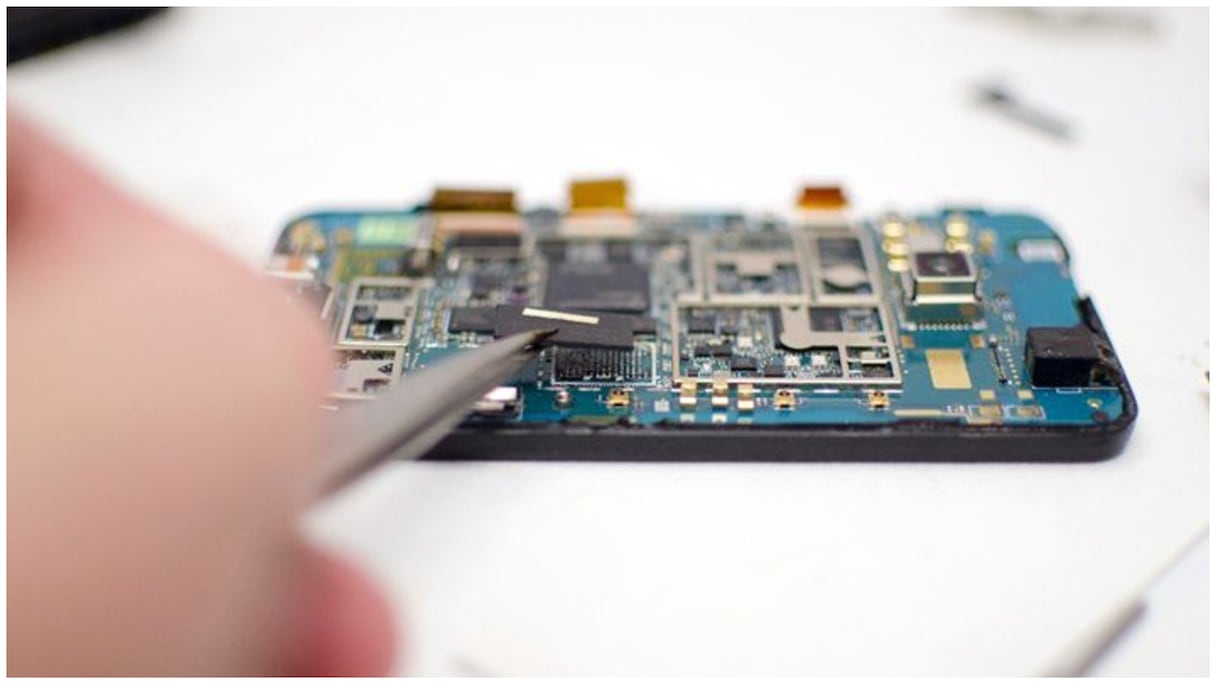
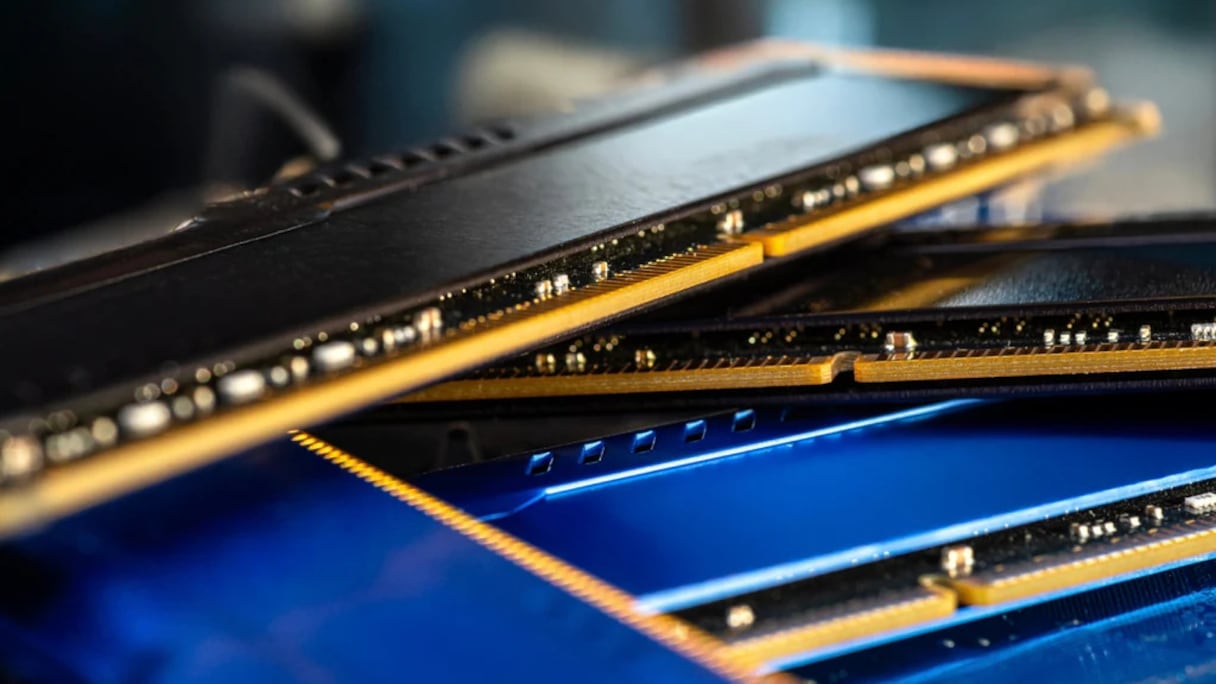
This sharp decline is not due to a sudden drop in consumer demand but to a challenging cost environment. Memory, a crucial smartphone component, has become so expensive that it now constitutes over 64% of the total component cost for devices priced below $99.
Omdia’s figures for smartphone shipments by region in the second quarter of 2026 highlight Africa’s unique position. The continent is the only region where smartphones priced below $100 still represent a significant share of shipments, at 30%. In contrast, this segment accounts for only 1% in Greater China, 2% in Western Europe and North America, 5% in Latin America, 6% in Central and Eastern Europe, 7% in Asia-Pacific excluding Greater China, and 8% in the Middle East.
Africa therefore remains far more reliant on entry-level smartphones than other parts of the world. This dependence is not merely a matter of market structure. In many sub-Saharan African countries, an entry-level smartphone can cost as much as 73% of a low-income adult’s monthly income. Even a modest price increase can directly impact affordability and, more broadly, access to digital services.
A two-speed market as memory costs rise
| Country / group | Market trend | Implication |
|---|---|---|
| South Africa, Egypt, Morocco, Tunisia... | Gradual shift toward replacement demand, 5G adoption and higher-value devices. | These markets are moving away from the sub-$100 segment, with less price-sensitive consumers supporting a move toward higher-end devices. |
| Mozambique, Malawi, Burundi, Liberia… | Low-income markets with limited purchasing power and high sensitivity to retail prices. | Even modest price increases reduce affordability, making financing a strategic capability. |
| Rest of sub-Saharan Africa | Dominated by first-time smartphone buyers whose purchasing decisions are driven primarily by price. | Distribution reach, operational execution and disciplined inventory management matter more than aggressive price cuts. |
Source: Omdia.
An earlier Omdia report, published on July 7, 2026, explains the source of this pressure. DRAM and NAND memory prices have risen sharply in recent quarters, driven by demand from artificial intelligence data centers. As a result, memory’s share of the total bill of materials (BOM) for smartphones priced below $400 nearly doubled between the third quarter of 2025 and the first quarter of 2026.
For devices priced below $99, the share rose from 33% to 64%. For the $100-$200 segment, it increased from 31% to 59%, while for devices priced between $200 and $400, it rose from 32% to 59%. Higher-end segments have also been affected, though less severely: memory’s share increased from 23% to 47% for devices priced between $400 and $500, from 17% to 37% for $500-$600 devices, from 12% to 28% for $600-$800 devices, and from 11% to 26% for devices costing more than $800.
This increase in costs is particularly damaging for several African markets. “Memory costs have become a serious burden for entry-level smartphones,” said Zaker Li, senior analyst on Omdia’s consumer team. “The situation will worsen as memory prices continue to rise in the coming quarters.”
Manufacturers have little room to absorb the increase elsewhere. Cost structures for devices priced below $100 are already extremely tight, and cutting spending on other components such as displays, sensors, and radio-frequency modules is no longer enough to offset the higher cost of memory.



According to Omdia, South Africa, Egypt, Morocco and Tunisia are gradually shifting toward 5G and higher-value devices.
South Africa, Egypt, Morocco and Tunisia move upmarket
Omdia’s data highlights an increasingly divided African market. Countries such as South Africa, Egypt, Morocco, and Tunisia are gradually experiencing stronger demand for replacement devices, 5G adoption, and higher-value smartphones. Their markets are moving away from the sub-$100 segment, following a trajectory closer to that of other regions.
Meanwhile, much of Sub-Saharan Africa remains dominated by first-time smartphone buyers whose purchasing decisions are driven primarily by price. In these markets, pressure on household purchasing power means that even modest increases in retail prices can significantly affect affordability.
Share of smartphone shipments priced below $100 by region in Q2 2026
| Region | Share of shipments < $100 | Share of shipments > $100 |
|---|---|---|
| Africa | 30% | 70% |
| Middle East | 8% | 92% |
| Asia-Pacific excluding Greater China | 7% | 93% |
| Central and Eastern Europe | 6% | 94% |
| Latin America | 5% | 95% |
| Western Europe | 2% | 98% |
| North America | 2% | 98% |
| Greater China | 1% | 99% |
Source: Omdia.
This divide makes it increasingly difficult for manufacturers to apply a single commercial strategy across the continent. According to Omdia’s analysis, Africa is becoming a two-speed market. Higher-income countries can absorb some of the price increases through consumers who are less price-sensitive, while low-income markets such as Mozambique, Malawi, Burundi, and Liberia face growing challenges in the economics of low-cost smartphones.
Manufacturers are responding by changing their approach to affordability. Instead of relying on lower sticker prices, the focus is increasingly on reducing the upfront payment required from consumers. Partnerships with financing companies like M-KOPA and Watu, as well as mobile operators such as Safaricom, are becoming more common as manufacturers seek to make smartphones more accessible without further pressuring average selling prices.
This approach can also encourage consumers to move into slightly higher price brackets, particularly the $120-$150 range, where 5G and larger memory configurations are becoming commercially viable.
Simultaneously, some manufacturers and retailers are withdrawing from the ultra-budget segment, where profitability is becoming increasingly difficult to sustain. Others, such as Transsion, are maintaining their position through strong operational execution, including broad distribution networks, disciplined inventory management, and solid retail relationships. “Execution now matters more than pricing strategy,” Omdia notes, arguing that these capabilities can protect market share and profitability even as prices rise.
The pressure on entry-level smartphones is also accelerating a broader shift in the business model. Financing is becoming a strategic differentiator, not only because it makes devices more affordable, but also because it creates opportunities to retain customers, encourage upgrades, and build longer-term relationships. Controlling the financing relationship allows manufacturers to remain connected with customers throughout the life of the device.
Distribution partnerships are also gaining importance over short-term price promotions. Exclusive bundles with operators, partnerships with organized retailers, educational initiatives, and corporate programs are emerging as more sustainable routes to market than temporary price cuts. Concurrently, manufacturers are placing greater emphasis on customer lifetime value through ecosystem services, cloud storage, digital content, payments, and device protection. The goal is no longer simply to acquire users but to retain them through successive upgrades.
What this means for Africa
The rise in memory costs is more than a temporary pressure; it is reshaping both the geography and economics of Africa’s smartphone market. Distribution reach and disciplined inventory management are becoming increasingly crucial, especially in markets with limited purchasing power.
Financing partnerships are evolving from simple sales tools into strategic capabilities, particularly in low-income countries like Mozambique, Malawi, Burundi, and Liberia, where even a small price increase can render a smartphone unaffordable.
The African market is becoming more fragmented, rewarding execution over mere scale. Omdia’s 2026 forecasts indicate a 12% decline in the global smartphone market, driven by a more than 22% fall in shipments of devices priced below $400. In contrast, smartphones priced above $400 are expected to grow by 5.7%. In Africa, this trend is gradually redefining affordability. The focus is shifting from simply building the cheapest smartphone to lowering ownership barriers through financing, operator partnerships, and digital services.
As Zaker Li notes, “smartphone vendors such as Transsion, OPPO, vivo, Honor, and Xiaomi are significantly raising their retail prices simply to maintain a thin profit margin.” For African consumers, this shift means that the $100 smartphone of 2026 will increasingly be acquired through credit, a subscription, or an operator bundle, rather than via an upfront cash payment.
Ultimately, rising memory costs have not killed the low-cost smartphone market in Africa, but they have disrupted its foundational model. The continent remains the last major market where smartphones priced below $100 account for 30% of shipments. However, it is gradually transitioning from a model based on the lowest possible price to one focused on enhancing accessibility to ownership.
Countries that successfully build robust financing and distribution systems, rather than relying on perpetually lower prices, will be better positioned in this new market. Others risk undermining the promise of digital inclusion that sub-$100 smartphones have represented for over a decade.
