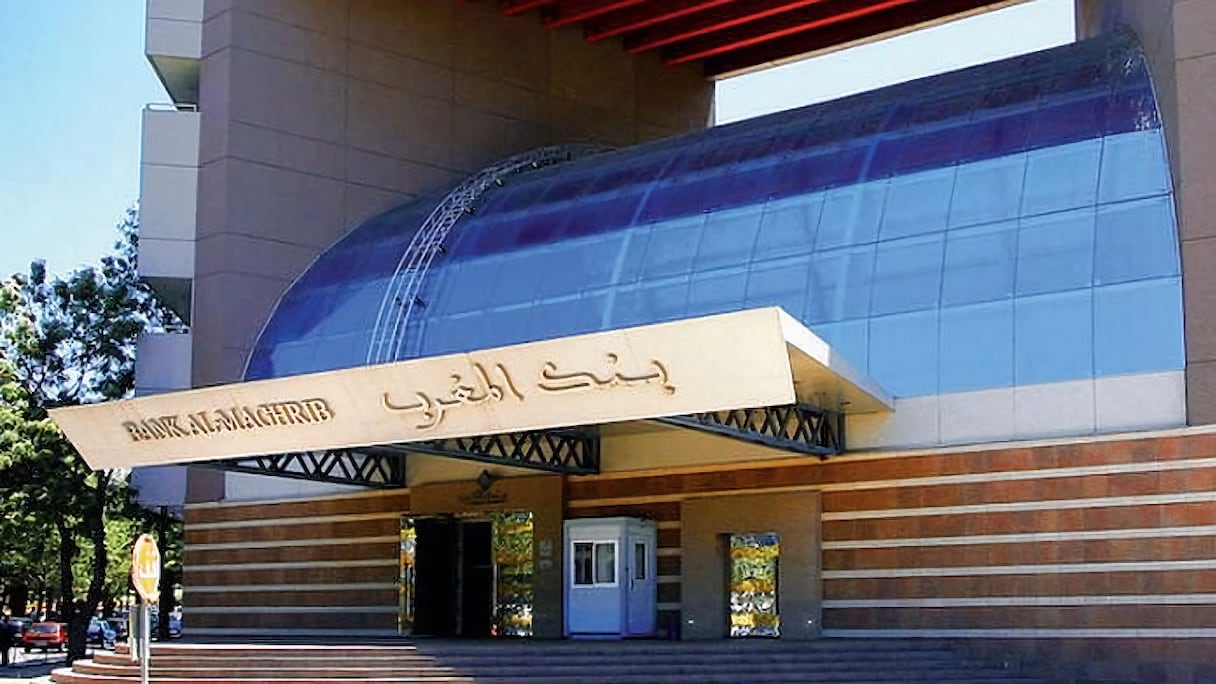
Morocco has introduced a new framework for dealing with banks that run into serious financial trouble. Law No. 87.21, which amends Law No. 103.12 on credit institutions and similar entities, gives authorities new tools to intervene when a bank is at risk of failure while limiting disruption to the wider financial system.
Promulgated by Dahir No. 1.26.65 on July 28, 2026, the law establishes a specific bank resolution regime. The resolution authority, chaired by the governor of Bank Al-Maghrib, will have broad powers to restructure a troubled bank while keeping key services such as deposits, payments, and financing operational.
This is different from ordinary banking supervision. Supervision is designed to prevent a bank from getting into serious difficulty, while resolution comes into play when those preventive measures are no longer enough, and the bank needs to be restructured quickly.
Parliament passed the law on May 19, 2026, following several years of work on the framework. Bank Al-Maghrib said in its 2016 annual report that it was working with the Ministry of Economy and Finance to strengthen Morocco’s bank resolution system, following recommendations from a financial sector assessment carried out by the International Monetary Fund and the World Bank.
The reason is simple: a troubled bank cannot be handled like an ordinary company. A disorderly collapse could restrict access to deposits, disrupt payments, cut off financing, and undermine confidence in other banks.
Before the new law, Morocco’s main tools included provisional administration, the withdrawal of a banking license and liquidation, alongside Bank Al-Maghrib’s supervisory powers. Law 103.12 had also strengthened the country’s macroprudential framework by creating the Coordination and Systemic Risk Monitoring Committee and reorganizing the deposit guarantee system.
Law 87.21 adds a dedicated mechanism for dealing with a failing bank before its problems spread to the wider financial system.
The focus is therefore not simply on closing a bank that can no longer operate. Authorities will also be able to preserve essential services, contain losses, and prevent them from spreading to other parts of the financial system.
New powers for the resolution authority
The new system places the resolution authority, chaired by the governor of Bank Al-Maghrib, at the center of the process.
It can intervene in a bank’s management, including by removing its executives. It can also take measures affecting shares and other securities and arrange asset transfers as part of a resolution process without ordinary shareholder or creditor approval being allowed to hold up the intervention.
Speed is a key part of the new framework. A banking crisis can escalate rapidly as depositors withdraw their money, electronic transfers increase, and confidence falls. A process dependent on lengthy negotiations could therefore come too late.
The aim is to give authorities the ability to act while a bank’s problems can still be contained. Keeping essential banking services running is therefore a central part of the resolution process.
The reform also changes the politically sensitive question of who bears the cost of a banking crisis.
Because the new framework allows authorities to act on the value of securities, shareholders can be directly called upon to absorb losses. The approach brings Morocco closer to international practices developed after the 2008 financial crisis, which seek to limit the extent to which the cost of bank failures is automatically passed on to public finances.
The experience of the global financial crisis also raised concerns about so-called moral hazard. If banks believe the state will always step in to prevent their collapse, they may have less incentive to limit risk, while taxpayers can end up bearing the cost.
The new framework seeks to reduce that imbalance. Protecting financial stability remains a public responsibility, but that does not necessarily mean protecting shareholders from losses when a bank fails.
Another important part of the reform concerns the Collective Deposit Guarantee Fund and its role during a banking crisis. The mechanism is managed by the Moroccan Company for the Management of Bank Deposit Guarantee Funds (SGFG).
Its role is not limited to compensating depositors after a bank has failed. Under the new resolution framework, it can form part of measures designed to protect depositors and maintain essential banking services.
That matters because confidence is central to banking stability. Problems at one bank can quickly raise concerns about other institutions if customers begin to fear that their deposits could also be at risk.
A credible deposit protection system therefore serves two purposes: protecting customers and helping prevent a crisis at one bank from spreading across the financial system.
The resolution framework has to balance both objectives. Losses should be borne by those exposed to the bank’s financial risks, while the authorities must also prevent a bank’s problems from triggering panic among depositors or destabilizing otherwise healthy institutions.
Morocco follows post-2008 international approach
The new framework places Morocco within a broader international regulatory shift that followed the 2008 financial crisis.
That crisis showed that strong banking supervision was not enough. Governments also needed clear mechanisms for dealing with the failure of major financial institutions without allowing the collapse to destabilize the wider economy.
The Financial Stability Board subsequently developed international standards for resolving financial institutions. The European Union also established its own framework through the Bank Recovery and Resolution Directive (BRRD).
Morocco’s new system follows the same broad principles: intervene quickly, keep critical services running, ensure losses are absorbed and prevent the failure of one institution from becoming a wider financial crisis.
For Bank Al-Maghrib, the new framework is therefore not simply about preparing for a possible bank failure. It adds another layer to the country’s existing banking supervision and systemic-risk monitoring mechanisms.
Law 87.21 marks the completion of a regulatory process that has been under development for nearly a decade. It does not indicate that Morocco’s banking system is facing a crisis. Rather, it gives authorities a clearer framework for dealing with one if it occurs — protecting essential banking services and depositors while limiting the impact of a failing institution on the wider economy.