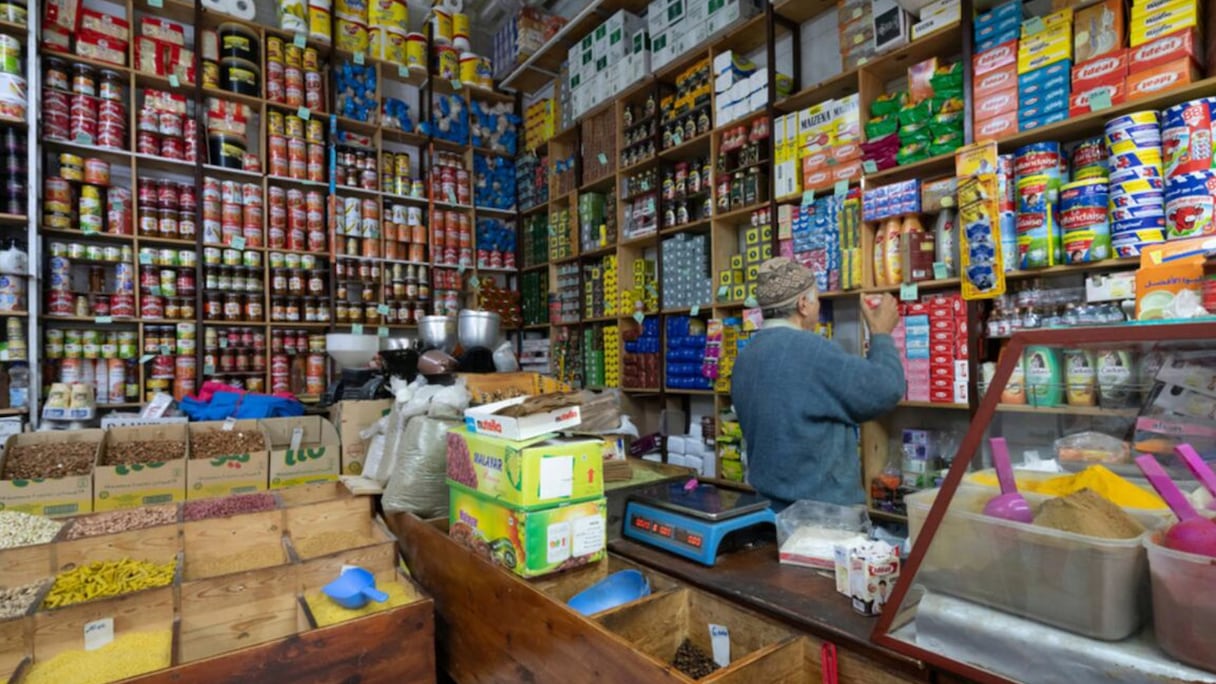
The hanout, or neighborhood grocery store, remains a central part of Morocco’s retail sector. But the number of outlets is no longer enough to measure a retailer’s strength. A report titled “El sector retail en Marruecos” describes a market still largely dominated by souks, markets, informal channels and neighborhood shops, which account for around 80% of the market. Retail as a whole contributes nearly 12% of GDP, accounts for 12.8% of national employment and directly employs more than 1.2 million people.
Traditional retailers benefit from their strong presence in local neighborhoods. Large chains, however, have another advantage: they can consolidate purchases, share transport and storage, centralize commercial operations and negotiate directly with suppliers. As a result, an increasing part of the margin is determined before products even reach the checkout.
Modern retail remains a smaller part of the market, but it is much more concentrated. The report estimates that Marjane Holding accounts for around 50% to 55% of the modern grocery channel, compared with 35% to 40% for Retail Holding through its multi-format network. The figures are presented as estimates in the report, but they illustrate the purchasing power built up by the major retail networks.
For suppliers, access to these chains can quickly bring higher volumes and greater visibility, but it also comes with conditions. The report cites listing requirements, commercial margins, promotions, logistical requirements and regular supply. As retailers gain greater control over sales channels, their ability to negotiate purchasing conditions becomes increasingly important in determining how value is shared.
The hanout, however, retains an advantage that is difficult to replicate on a large scale: its proximity to local residents. Small purchases, frequent shopping, familiarity with customers and short travel distances help explain its resilience. The report nevertheless points to limited technological and logistical modernization in the sector, despite its strong position in neighborhood consumption. This is where new modern retail formats are making inroads.
Discount moves into neighborhoods
BIM is the clearest example. With around 1,000 stores, according to the report, the chain combines small outlets, lower operating costs, low prices and neighborhood locations. Kazyon is now seeking to compete directly with this model through expansion in densely populated urban areas.
Major retail groups are moving in the same direction. Marjane operates more than 170 outlets across several formats, while Groupe LabelVie has more than 400 stores, including Carrefour, Carrefour Market, Carrefour Express, Atacadão and Supeco. The report says these operators are increasingly focusing on proximity, discount formats and secondary and mid-sized cities.
This marks a shift in a market where large-scale retail was mainly associated with hypermarkets and major shopping centers, while traditional retailers dominated neighborhood trade. The spread of smaller organized stores is now narrowing that gap. Retailers are increasingly competing for both customers and the margins generated closer to the point of sale.
The report also says digitalization of Morocco’s retail sector remains gradual compared with European standards. At the same time, it identifies the emergence of a hybrid model combining physical stores, click-and-collect services, digital catalogs and marketplaces. Instagram, Facebook, TikTok and WhatsApp also play an increasingly important role in how some purchases are discovered or completed.
The issue goes beyond e-commerce. Organized retail networks can increasingly track how often customers shop, what they put in their baskets, how they respond to promotions and where they live. This information can help retailers adjust stock levels, increase inventory turnover and reduce unsold goods. Customer data is therefore becoming another tool for improving efficiency and margins.
Morocco’s retail sector is unlikely to move suddenly from a traditional model to a modern one. Instead, the report describes a market that will remain divided between the two, with the hanout retaining its advantage in proximity while organized retail networks gradually strengthen their control over purchasing, logistics and digital channels.
The key question will therefore be less about who handles the largest number of transactions and more about who controls the parts of the retail chain that generate the most value. The hanout may continue to account for a large share of Moroccan consumer spending. But purchasing power, discount formats, integrated logistics and customer data are giving large retailers more tools to influence where the margin is ultimately captured.
