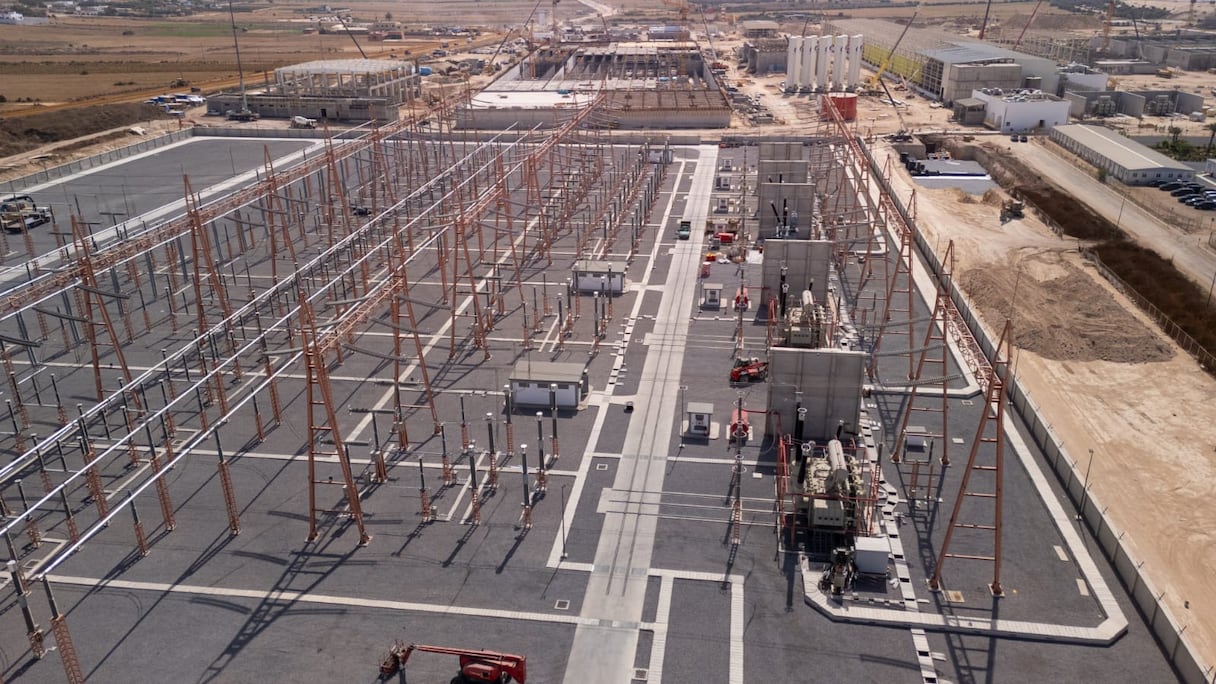
The National Office of Electricity and Drinking Water (ONEE) has completed a major milestone for the Casablanca-Settat desalination project, commissioning the high-voltage transmission infrastructure that will supply electricity to what is set to become one of Morocco’s largest desalination plants.
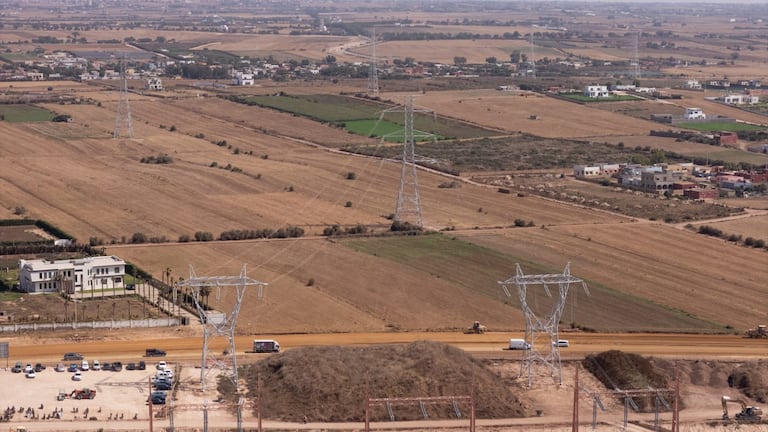
ONEE announced on Sunday, July 19, that it had energized the 400-kilovolt connection, comprising a new transmission line and electrical substation built specifically to power the future facility.
The project represents an investment of more than MAD 486 million, including a 300 MVA, 400/medium-voltage substation in Lamharza Essahel and a double-circuit 400-kV transmission line stretching 50 kilometers along each circuit.
The new infrastructure is designed to provide a stable and uninterrupted electricity supply to the desalination plant, which is expected to play a central role in securing drinking water for the Casablanca-Settat region, one of the areas most affected by Morocco’s prolonged water stress.
In a statement, ONEE said the project forms part of its broader strategy to expand and modernize the national electricity transmission network while strengthening the reliability and quality of power supplies for major strategic infrastructure.
Earlier this month, Minister of Equipment and Water Nizar Baraka told Parliament that the desalination plant is expected to enter service in February 2027.
Construction of the facility was launched in June 2024 by Crown Prince Moulay El Hassan.
Read also : Morocco says Casablanca desalination plant to begin operating in February 2027
Built on a 50-hectare site, the plant is intended to meet growing demand for drinking water across Greater Casablanca as well as the cities of Settat, Berrechid, and Bir Jdid, in addition to surrounding areas.
The MAD 6.5 billion project is being developed under a public-private partnership and will be completed in two phases.
The first phase will produce 548,000 cubic meters of desalinated water per day, equivalent to around 200 million cubic meters annually. A second phase, scheduled for completion by mid-2028, will increase daily production capacity to 822,000 cubic meters, adding another 100 million cubic meters per year, half of which will be allocated to agricultural irrigation.
Read also : Heatwave fuels record electricity demand in Morocco
The Casablanca facility is one of the flagship projects in Morocco’s strategy to expand non-conventional water resources as the country faces recurrent drought and mounting pressure on its freshwater reserves.
