With nearly 15,000 hectares of developed land and an overall occupancy rate of 62%, Morocco’s industrial zones show stark differences in how extensively they are used.
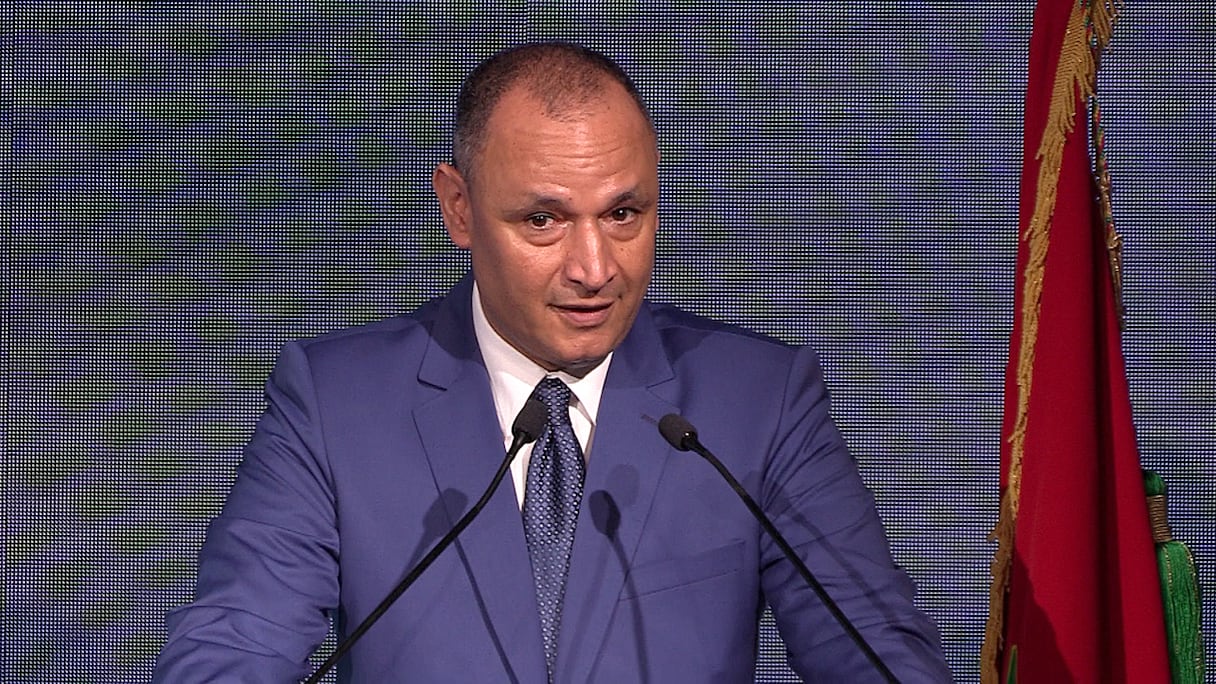
Addressing lawmakers on Monday, November 2, the Minister of Industry, Trade, Investment and Economic Inclusion advocated a new approach aimed at steering more investment towards less attractive regions and tailoring projects to local needs.
For Ryad Mezzour, industrial zone development is no longer simply a matter of making land available. The priority now is to distribute investment more evenly, make better use of each region’s resources and ensure that industrial projects create jobs that genuinely benefit local communities.
It was against this backdrop that the minister presented an overview of Morocco’s industrial zones to the House of Representatives on Monday, November 2, before setting out his plans for their future development.
Morocco currently has nearly 15,000 hectares of industrial zones, divided into some 5,000 plots, with an overall occupancy rate of 62%. That figure, however, masks wide disparities: some zones have occupancy rates of 85%, while others remain virtually unused.
These differences partly reflect the various ways in which industrial zones are developed and managed. Some are established under programs led by the Industry Ministry, while others result from partnerships with local authorities.
Read also : Foreign trade: What Morocco sells to its nine biggest African customers
New industrial zones driven by local initiative
According to Ryad Mezzour, deputies have a central role to play in launching new industrial projects. The first requirement, however, is to have land available or a mechanism for securing it.
Once a site has been identified, the next step is to determine who will develop and manage the future industrial zone. The project must then be governed by an agreement involving, among others, the municipality, provincial council, regional authorities and Industry Ministry.
A preliminary study follows to assess local needs, identify the types of businesses the zone should accommodate and determine the configuration of the plots. Depending on the investors being targeted and the nature of their projects, plots may range from 200 to 500 or 1,000 square meters and even reach 10,000 square meters. The terms on which they will be marketed, whether through sale or lease, and their prices must also be established from the outset.
The minister said his department has the mechanisms needed to support these local initiatives and wants to accelerate the development of new industrial zones.
Investment must be about more than land availability
The aim now is to move beyond simply providing industrial land and encourage projects that reflect each region’s potential. This approach is consistent with the expanded responsibilities of Mezzour’s department, which recently also took charge of investment and economic inclusion.
The starting point is to identify the human and natural resources available locally, whether agricultural, mineral or linked to other activities, and use them to determine which projects could be developed.
The ministry then seeks private investors or cooperatives capable of taking these projects forward. Where no operator comes forward independently, investment agencies are expected to help identify opportunities, develop projects and support them through to completion.
For the minister, securing land is therefore not enough. This effort must be accompanied by an assessment of available skills, vocational training needs and the partnerships required with the private sector and local stakeholders. The goal is to create an environment in which businesses can establish operations and recruit locally.
Read also : Automotive industry’s share of Moroccan exports climbs from 25% to nearly 35% in a decade
Nearly 656,000 people work in developed industrial zones
The figures presented by the minister illustrate the importance of these zones to industrial employment. The sector employs around 1.1 million people, of whom nearly 656,000 work in developed industrial zones, representing approximately 60% of the workforce.
Nearly half of these employees work in industrial acceleration zones. These were specifically designed to provide companies with ready-to-use infrastructure, including serviced plots, roads, sewerage networks, wastewater treatment facilities and the equipment production plants need to establish operations.
The concentration of industrial employment in already attractive areas nevertheless raises questions about regional balance. Ryad Mezzour said he has instructed several agencies under his ministry’s supervision to direct more investment towards zones where occupancy remains low.
This does not mean, he clarified, restricting investors’ freedom to choose where to establish their businesses. The minister nevertheless believes that public incentives should not be granted automatically. Decisions on support should take account of local needs, how well a project aligns with regional priorities and its prospects of success.
The objective, therefore, is to encourage businesses, through voluntary participation and existing support schemes, to establish operations in less sought-after areas. This approach is intended to foster more balanced industrial development nationwide, in keeping with King Mohammed VI’s vision.
Older industrial zones: Renovate existing sites or develop new land?
An MP from the National Rally of Independents (RNI), meanwhile, called on the government to account for its own record. In response, Ryad Mezzour pointed out that several of the initiatives and projects under discussion had been launched under the previous government, of which the RNI was a member.
Mezzour cited the Médiouna industrial zone, launched six or seven months ago. Covering 475 hectares, it is to be equipped with the necessary infrastructure, amenities and transport links. The minister stressed that young people in the province must benefit from its development by gaining access to employment opportunities close to home. He nevertheless reiterated that the project had been initiated under the previous government.
The discussion then turned to the rehabilitation of older industrial zones, some of which date back 40, 50 or even 60 years. The MP raised the question of upgrading these sites, given that many plots have been transferred to private owners and their value has risen sharply.
The debate thus came down to how public money should be spent. Should resources be allocated to upgrading zones where plots are now privately owned, or would it be better to develop new industrial land that investors can afford?
On this point, Ryad Mezzour came down firmly in favor of the second option. In his view, offering new plots to investors would make more sense than spending public money increasing the value of privately owned land, which its owners could subsequently resell at a substantial profit.
The minister cited prices of up to 2,000–2,500 dirhams per square meter in some older zones, compared with 200–400 dirhams per square meter for newly developed plots. He therefore recommended prioritizing the creation of new plots for incoming investors, while stressing that the final decision rests with lawmakers.
Beyond job numbers, the question of job quality
The exchanges with MPs also highlighted another challenge: the presence of factories in a region does not necessarily mean that local young people will find work there. The MP pointed in particular to the gap between the existence of industrial facilities and the tangible benefits their operations bring to surrounding communities.
Ryad Mezzour responded by highlighting the recruitment difficulties faced by some companies. Factories are looking for young workers but cannot always find candidates with the skills they need. For the minister, this mismatch raises questions about how well education and training, available skills and job opportunities are aligned.
It also raises questions about the criteria used to encourage investment. Should priority go to projects that create the greatest number of jobs, or to those that generate more added value and offer better pay?
The minister thus questioned an approach that would indiscriminately encourage job creation as long as companies complied with minimum-wage requirements and the Labour Code. He argued that policy must also consider the quality of the jobs created, how well they match young people’s qualifications and skills, and the wages they offer.
The challenge, he explained, is to promote high-value-added jobs that allow young people to earn two or three times the minimum wage, rather than focusing solely on the number of positions created. In his view, this calls for a new generation of strategies to support the Kingdom’s industrial take-off.
Addressing the geographical concentration of industry
The geographical distribution of industrial activity was also discussed, with a figure of 83% cited during the exchange to illustrate the concentration of industry in certain regions. The minister acknowledged the need to correct this imbalance.
He explained that this concentration was partly the result of decisions taken under the industrial acceleration strategy, which built on infrastructure and opportunities already available in certain regions.
Tangier provides a clear example. The region has capitalised on its proximity to Tanger Med, which has become a major port hub in the Mediterranean and Africa, to strengthen its appeal to investors and expand its industrial base.
