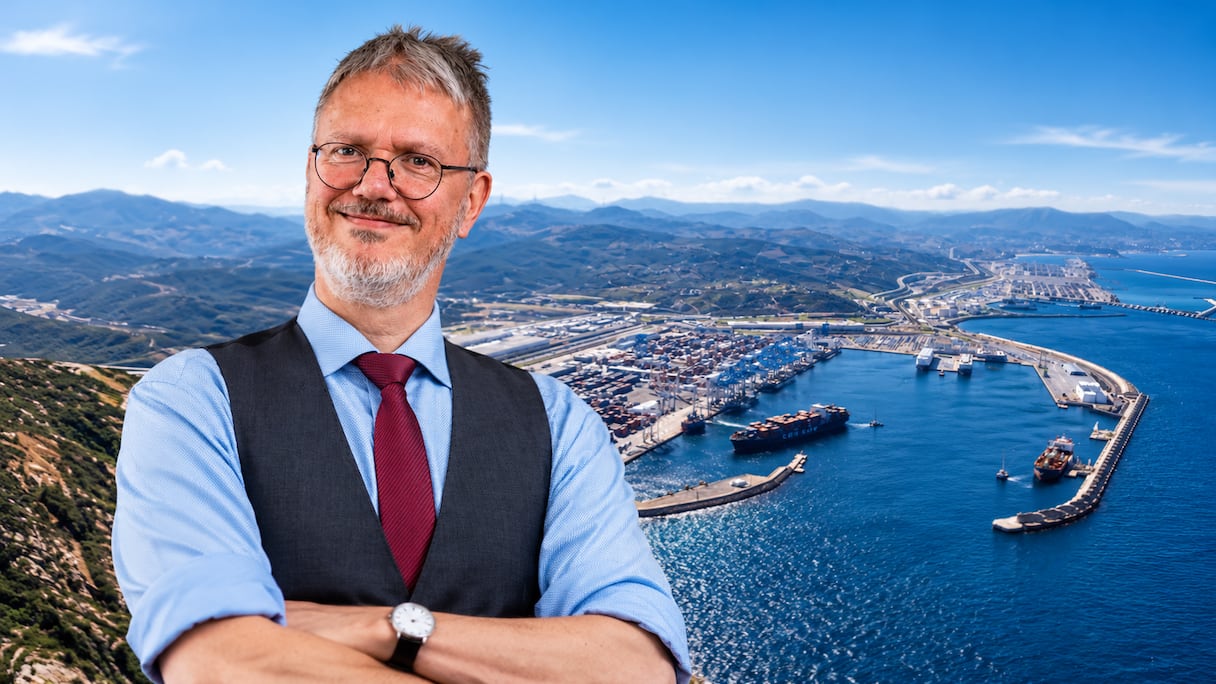
Few experts understand the workings of global maritime trade as well as Jan Hoffmann. A German economist with a PhD in economics from the University of Hamburg, he spent more than 20 years at the United Nations Conference on Trade and Development (UNCTAD), where he headed the Trade Logistics Branch from 2016. During his time there, he coordinated and co-authored the annual Review of Maritime Transport, launched country maritime profiles and developed the Liner Shipping Connectivity Index, one of the sector’s leading benchmarks.
He also served as president of the International Association of Maritime Economists (IAME). When he left the United Nations, specialist maritime media described him as a “guru” of maritime trade.
Since January 2025, Hoffmann has served as the World Bank’s global lead for shipping and ports, where he oversees, among other initiatives, the Container Port Performance Index (CPPI) and the Port Reform Toolkit. The two indicators he draws on in this interview to assess Morocco’s progress are therefore directly linked to his expertise: the World Bank ranking, which places Tanger Med among the world’s top-performing ports, and UNCTAD’s index, which shows that Morocco recorded the largest improvement in maritime connectivity worldwide over the past 20 years.
In an interview with Le360, he discusses the role of strategic ports in an increasingly volatile environment and the significance of the newly announced investment in Tanger Med 3.
Le360: Why has investment in ports become essential to securing global supply chains and international trade?
Jan Hoffmann: Maritime transport carries around 80% of global trade by volume, and every one of these flows passes through the same port at least twice. Recent volatility shows why efficient ports with sufficient capacity are needed to absorb shocks and prevent instability from spreading.
The World Bank’s latest Container Port Performance Index report, published in June 2026, points out that ports are affected by this volatility while also helping to mitigate it. The report ranks Tanger Med among the world’s top-performing ports.
Read also : Tanger Med 3 and Nador West Med: Investment, capacity, timelines and jobs — the key figures
Why is investment in ports located at strategic transit points so important during periods of trade disruption?
Risks are concentrated at these bottlenecks, and any disruption forces ships to change course. These diversions, in turn, drive up trade costs worldwide.
First, shippers face higher storage costs. They then have to pay for additional days at sea. Finally, because maritime shipping capacity is fixed, the daily cost of freight also rises.
Ports located at these strategic passages and along alternative shipping routes act as shock absorbers for the entire system. Investing in them is like taking out an insurance policy for global trade, helping reduce the cost of trade for everyone.
What is your assessment of Morocco’s decision to invest in Tanger Med?
The decision to invest in Tanger Med in the early 2000s was truly visionary, both in terms of the scale of the project and its strategic location. It enabled Morocco to become a key player in global trade, steadily improve its position in international maritime connectivity rankings and establish a major transshipment hub.
According to UNCTAD’s Liner Shipping Connectivity Index, Morocco recorded the largest improvement of any country over the past 20 years. This increase in connectivity benefits not only the global shipping network but also creates new trade opportunities for importers, exporters and logistics zones across the country.
What role does the Strait of Gibraltar play, and why is the newly announced investment in Tanger Med so important?
The newly announced investment in Tanger Med 3, which will add significant capacity, builds on a vision launched in the early 2000s. It will undoubtedly secure Morocco a strong position in global logistics flows and further strengthen its role in international trade.
Globally, we are seeing two contrasting trends. On the one hand, a more volatile trade and maritime environment is discouraging investment. On the other, growing instability along shipping routes makes further investment in port handling capacity necessary to absorb shocks and cope with less predictable ship arrivals.
Forward-looking investments such as Tanger Med 3 are welcome because they can help limit port congestion and prevent an increase in global maritime transport costs.
