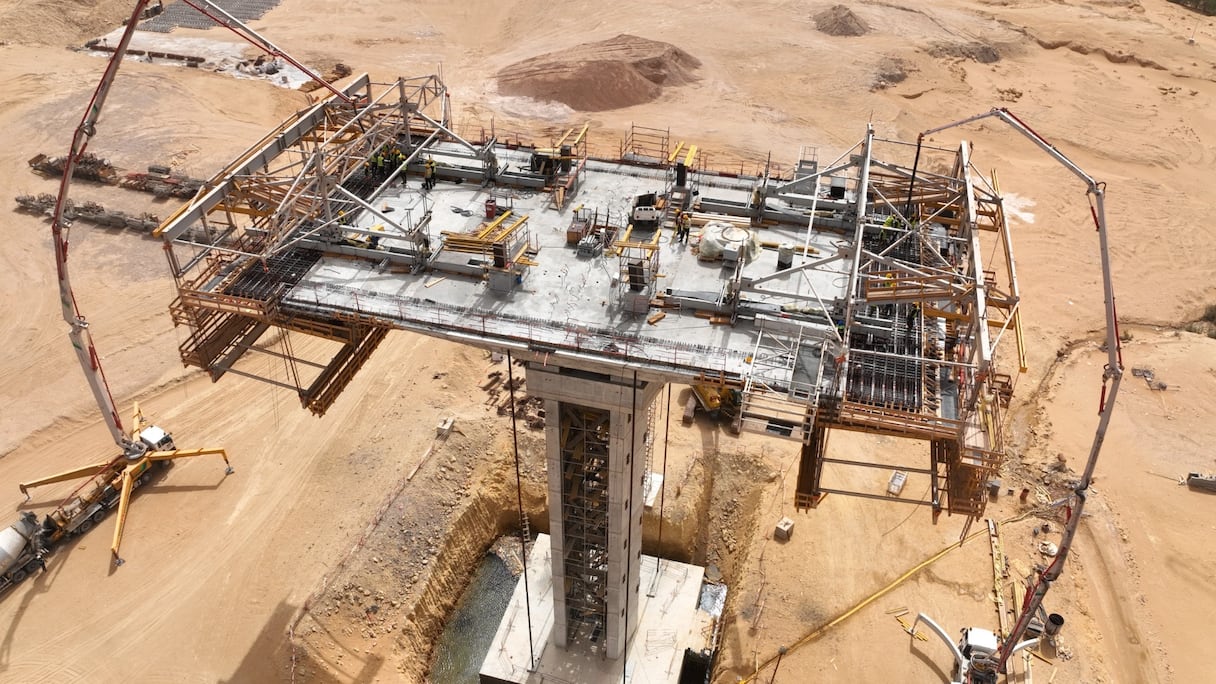
Construction of the bridge over the Oued Sakia El Hamra in Laâyoune, which is set to become Morocco’s longest bridge, has passed the 50% completion mark as work continues around the clock.
“The project has now exceeded 50% completion,” said Mbarek Fancha, central director of the Tiznit-Dakhla Expressway project. The construction has entered its most technically demanding stage: the installation of the bridge deck using prestressed concrete technology.
“This milestone requires exceptional equipment and advanced engineering expertise because it directly determines the structure’s strength and long-term durability,” he said.
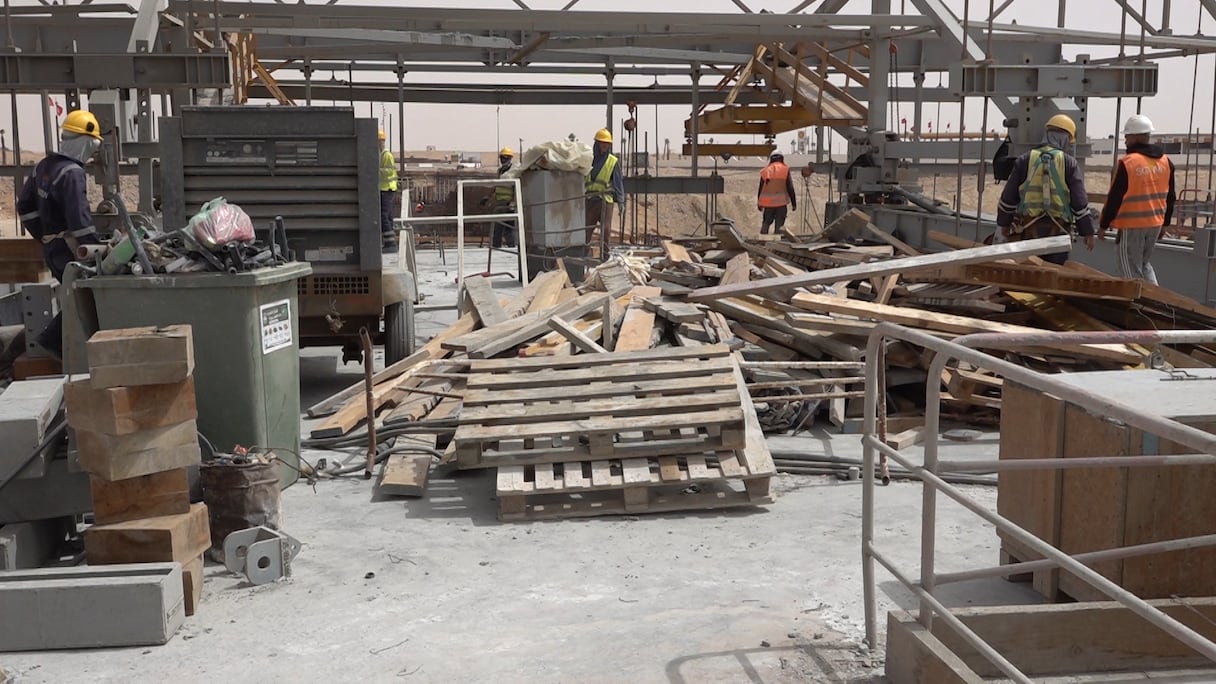
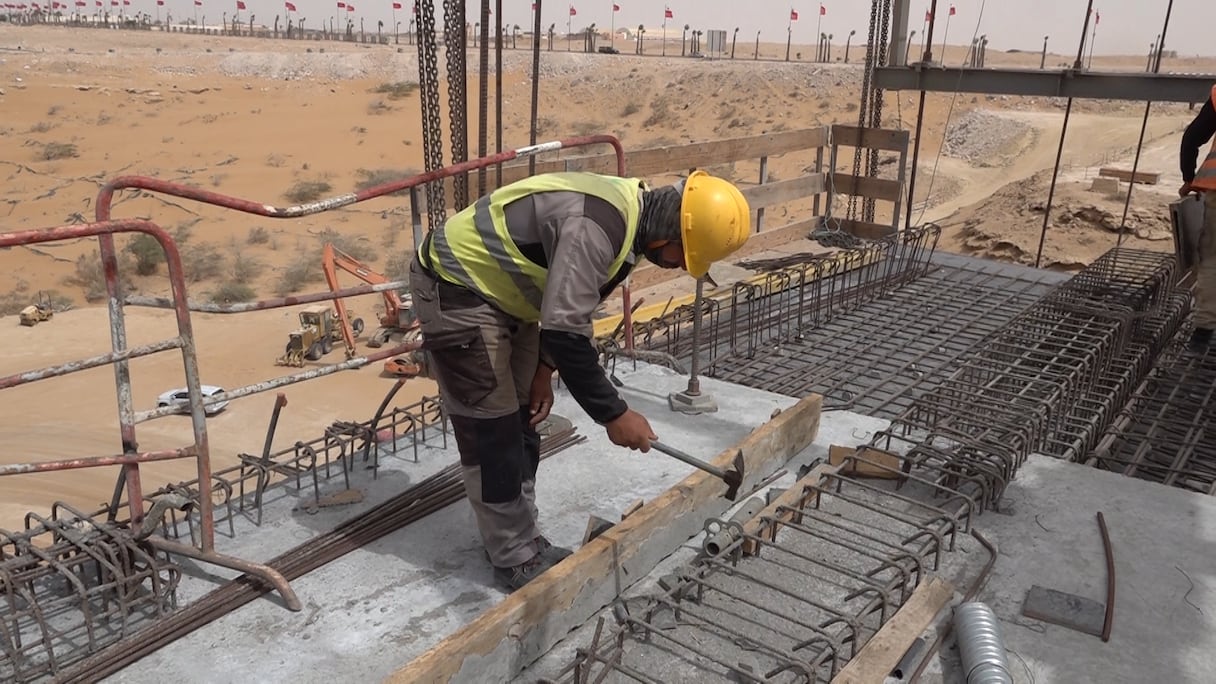
The project currently employs around 850 workers and technicians, including more than 35 engineers and specialists. Teams operate on a continuous three-shift schedule to meet contractual deadlines while maintaining strict quality and safety standards.
Speaking to Le360, Fancha outlined the environmental challenges facing construction crews in the region. High salinity levels that affect building materials, strong winds, high temperatures and shifting sand all complicate the work, particularly during operations carried out at heights of up to 50 meters.
Fancha said overcoming those conditions has required advanced engineering solutions and continuous logistical support.
He also detailed the bridge’s technical specifications. The project carries a total investment of 1.4 billion dirhams and will span 1,560 meters with a width of 21.4 meters, making it the longest bridge in Morocco.
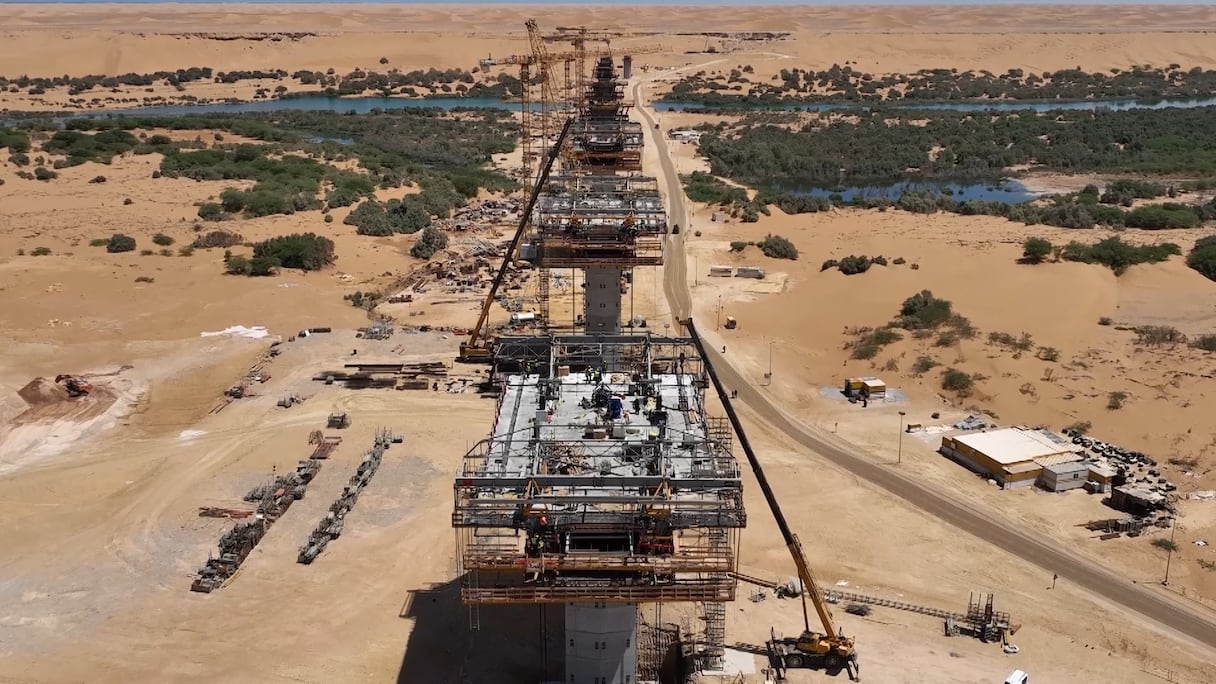
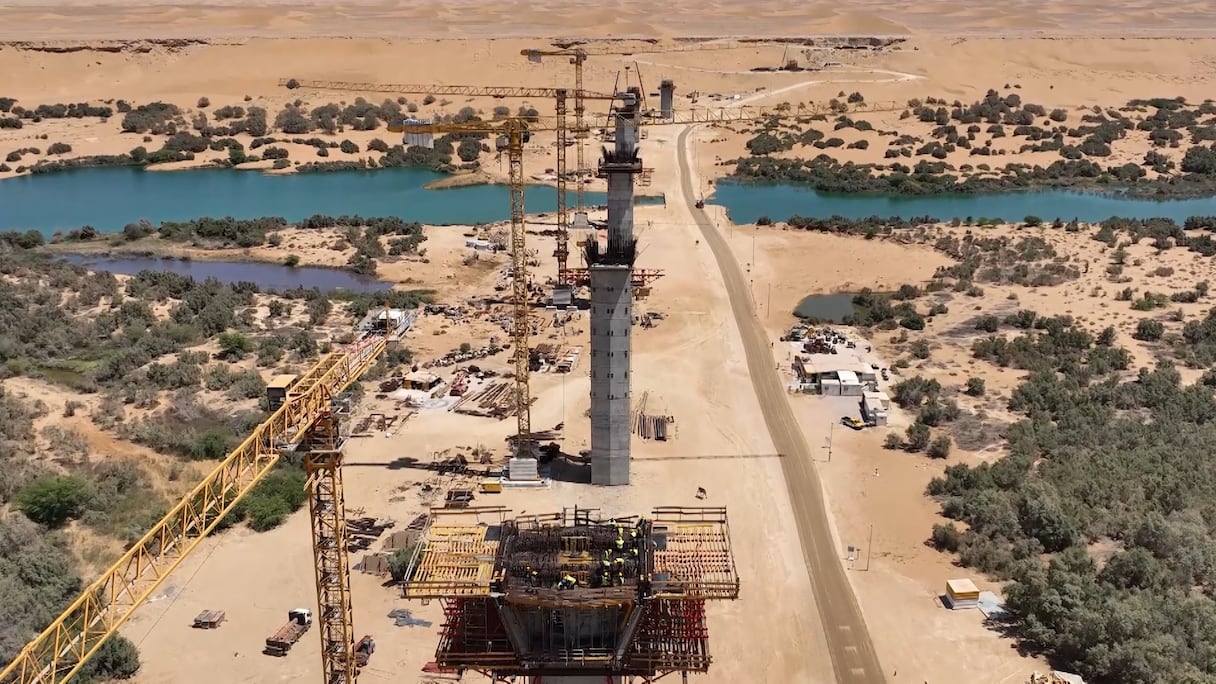
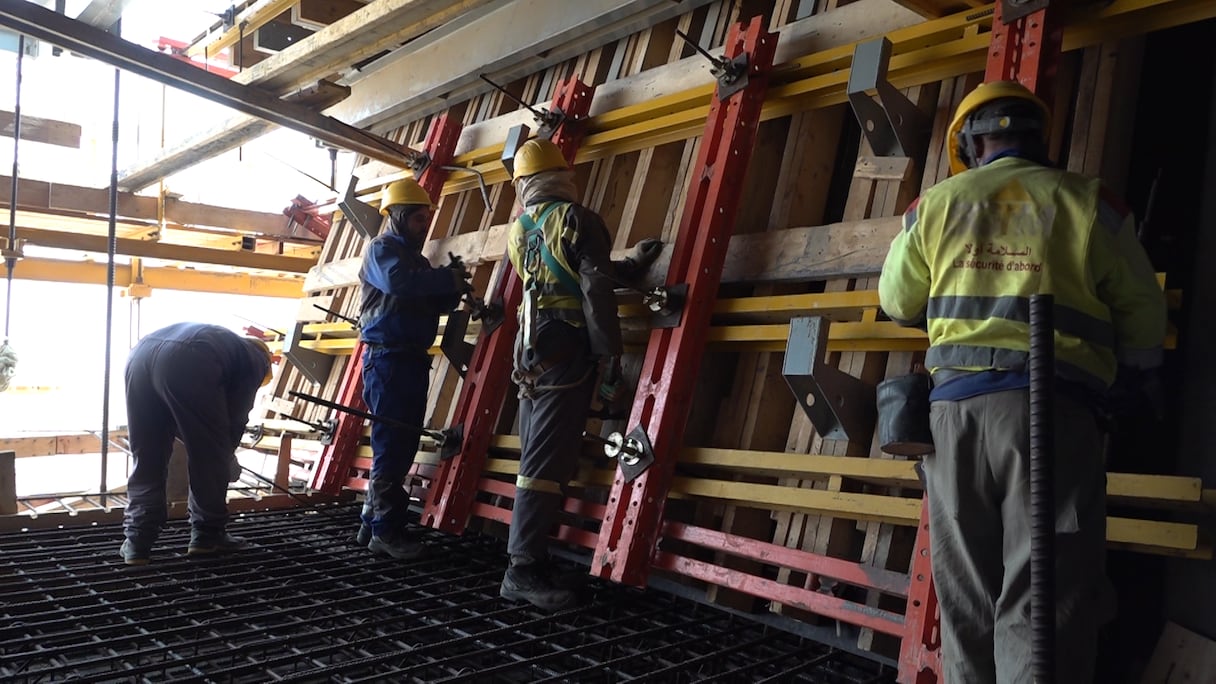
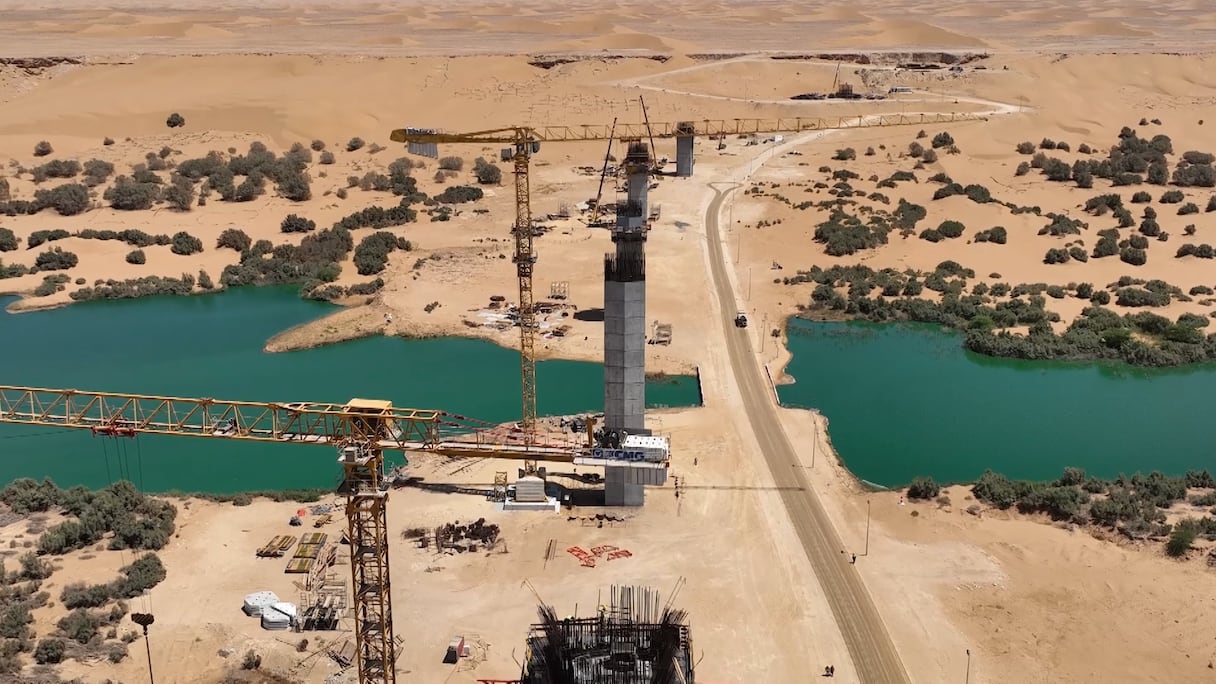

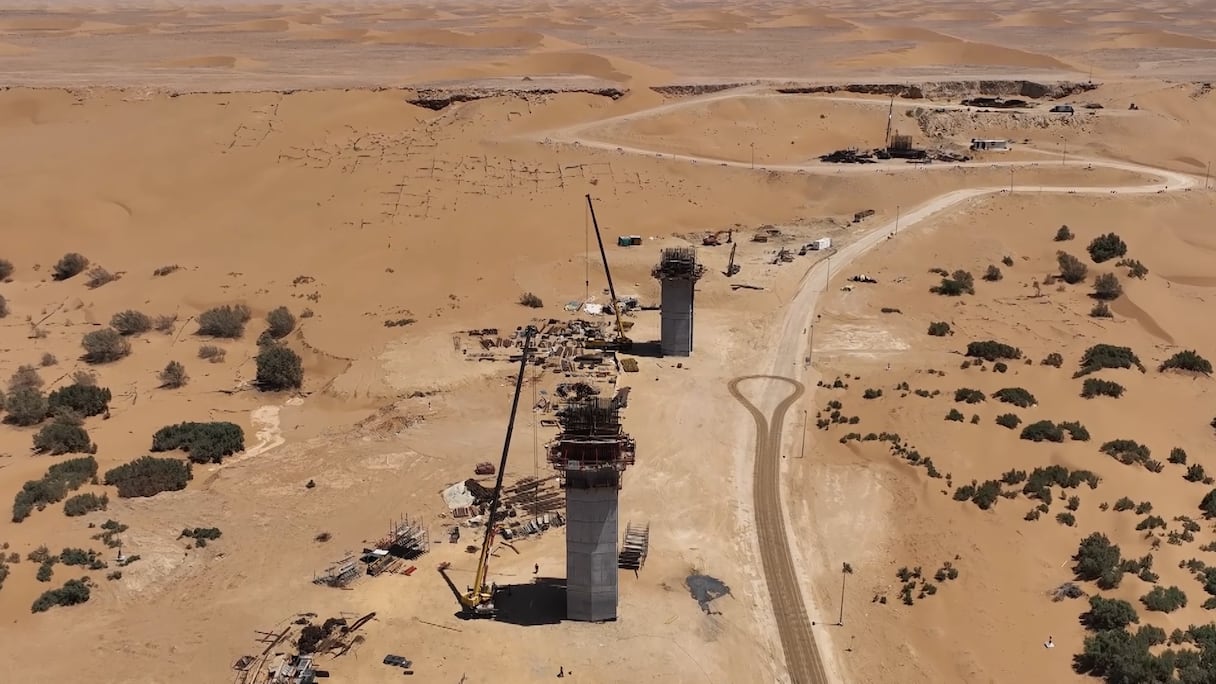

أشغال جسر وادي الساقية الحمراء بالعيون تبلغ 50%. le360
“The deep foundations, anchored 50 meters below ground, have now been completed. These engineering specifications are intended to ensure the bridge remains durable and operational for at least 100 years,” said Mohamed Belfarhounia, the project’s bridge construction manager.
The bridge forms part of the comprehensive development model for Morocco’s Southern Provinces launched by King Mohammed VI in 2015. It is a key component of the Tiznit-Dakhla Expressway, one of the country’s flagship transport infrastructure projects.
Once completed, the bridge is expected to shorten travel times, improve traffic flow and reinforce Laâyoune’s role as an economic hub linking northern and southern Morocco while strengthening overland connectivity with the rest of Africa.
Its progress also comes alongside advances on the Dakhla Atlantic Port project, which is expected to become Morocco’s main maritime gateway to sub-Saharan Africa
