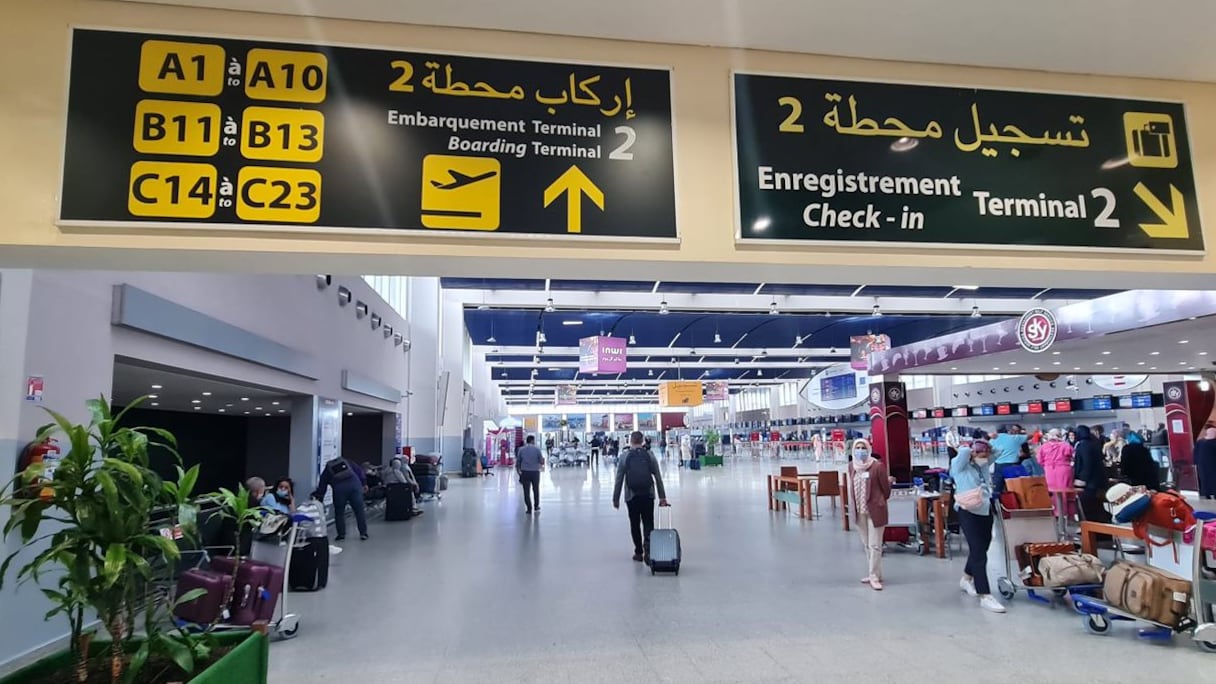
As Morocco’s main international gateway, Mohammed V Airport plays a central role in the country’s economic, tourism and logistics activity. Over the years, successive expansion phases have produced a patchwork architectural layout characterized by varying styles, materials and design approaches.
This gradual evolution has resulted in a lack of visual and functional consistency between the airport’s terminals, prompting the need for a comprehensive redesign aimed at creating a unified architectural identity.
One of the project’s key components is the merger of Terminals 1 and 2 into a single, fully integrated complex, both architecturally and functionally. The overhaul will cover interior spaces as well as exterior façades, with the goal of delivering a seamless and intuitive passenger experience that meets international standards.
The competition calls for the complete redesign of Terminal 2’s façades on both the landside and airside to ensure architectural harmony with Terminal 1. It also includes the modernization of boarding bridge areas and outdoor spaces, improvements to waiting areas and airport furniture, and the development of architectural design guidelines for retail outlets to create a consistent visual identity throughout the airport.
Beyond aesthetics, the project places strong emphasis on functionality. It aims to comprehensively redesign passenger flows to improve circulation and optimize key areas within the terminal.
Priorities include reorganizing passenger movement, upgrading restrooms and airport facilities, improving accessibility for people with reduced mobility, enhancing signage to make navigation easier, and repurposing underutilized spaces to reduce congestion.
The project also includes a redesign of the airport’s outdoor areas, with particular attention to accessibility, traffic circulation and public plazas. The objective is to improve vehicle flow while enhancing landscaping and overall passenger comfort.
Parking facilities will also be comprehensively reconfigured to include dedicated areas for passengers, taxis, buses and shuttle services, supported by clear signage and a more efficient layout.
ONDA stressed the importance of adopting a contemporary and sustainable architectural approach suited to local climatic conditions. Proposed solutions must prioritize durable, low-maintenance materials while ensuring the long-term resilience of the infrastructure.
Lighting, particularly at night, will also play a central role by highlighting the airport’s architectural features while minimizing light pollution.
Given the airport’s strategic importance, the modernization works will be carried out in several phases without interrupting operations. Careful planning will therefore be required to minimize disruptions and ensure the continuity of airport services.
