Morocco and Portugal have agreed to relaunch their long-planned electricity interconnection project and jointly seek European funding to accelerate its implementation, positioning the initiative as a strategic link between Europe and Africa’s energy markets.
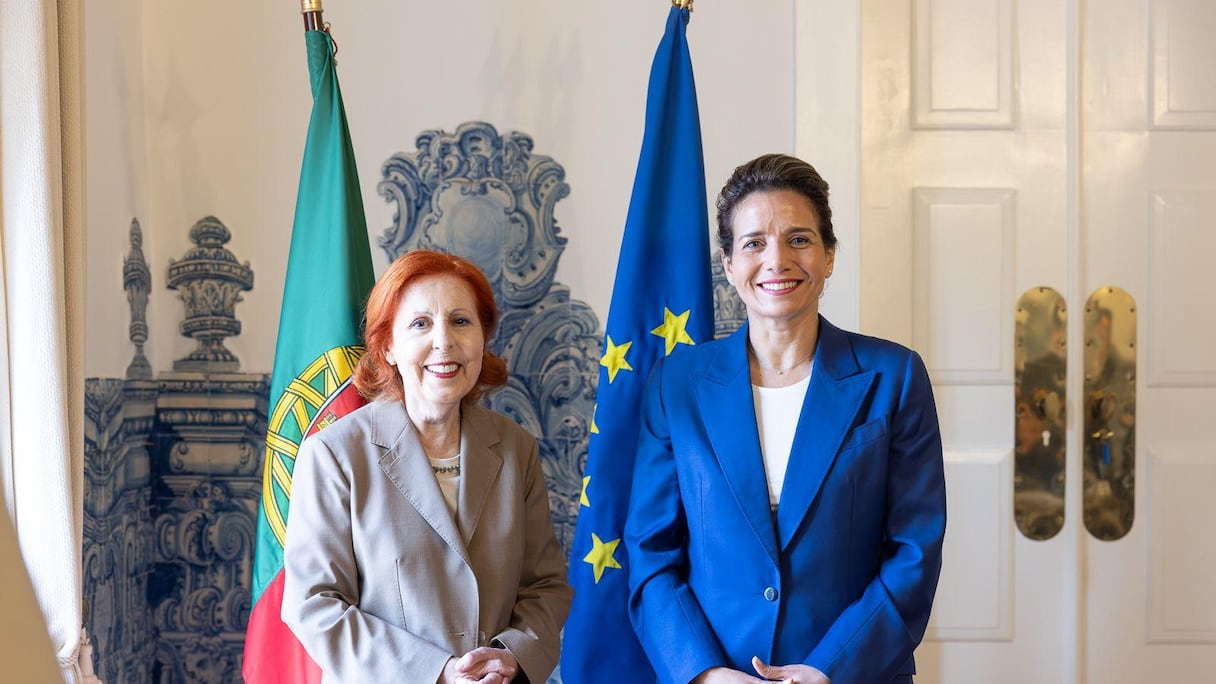
The agreement was reached Monday during a meeting in Lisbon between Morocco’s Minister of Energy Transition and Sustainable Development, Leila Benali, and Portugal’s Minister of Environment and Energy, Maria da Graça Carvalho, attended by Morocco’s Ambassador to Portugal, Othmane Bahnini, and senior officials from both countries.
Read also : Heatwave fuels record electricity demand in Morocco
The two ministers agreed to work together to secure European financing for the project, including by seeking its designation as a Project of Common Interest (PCI)—an EU label reserved for cross-border infrastructure considered strategically important to the bloc’s energy objectives. They also agreed to explore private-sector participation in the project’s development.
First proposed nearly a decade ago, the project would link the Tavira substation in southern Portugal with the Beni Harchane substation in northern Morocco through a roughly 220-kilometer submarine cable with an electricity exchange capacity of around 1,000 megawatts.
Once completed, the interconnection is expected to improve energy security, lower electricity costs for households and businesses in both countries, and strengthen the integration of European and African electricity markets.
Read also : Electricity interconnection becomes new pillar of Morocco-France strategic partnership
Morocco is already connected to Spain through two submarine electricity interconnections with a combined transmission capacity of approximately 1,400 megawatts. Rabat and Madrid are also advancing technical studies for a third interconnection, reflecting Morocco’s growing role as a strategic electricity gateway between Europe and Africa.
The ministers reaffirmed the strength of Morocco-Portugal relations and described energy cooperation as a key pillar of the two countries’ strategic partnership.
They said the project reflects a shared vision of a more integrated and sustainable regional energy system while reinforcing Morocco’s role as a trusted partner in strengthening energy connectivity across the Mediterranean in support of Europe’s energy transition and energy security objectives.
