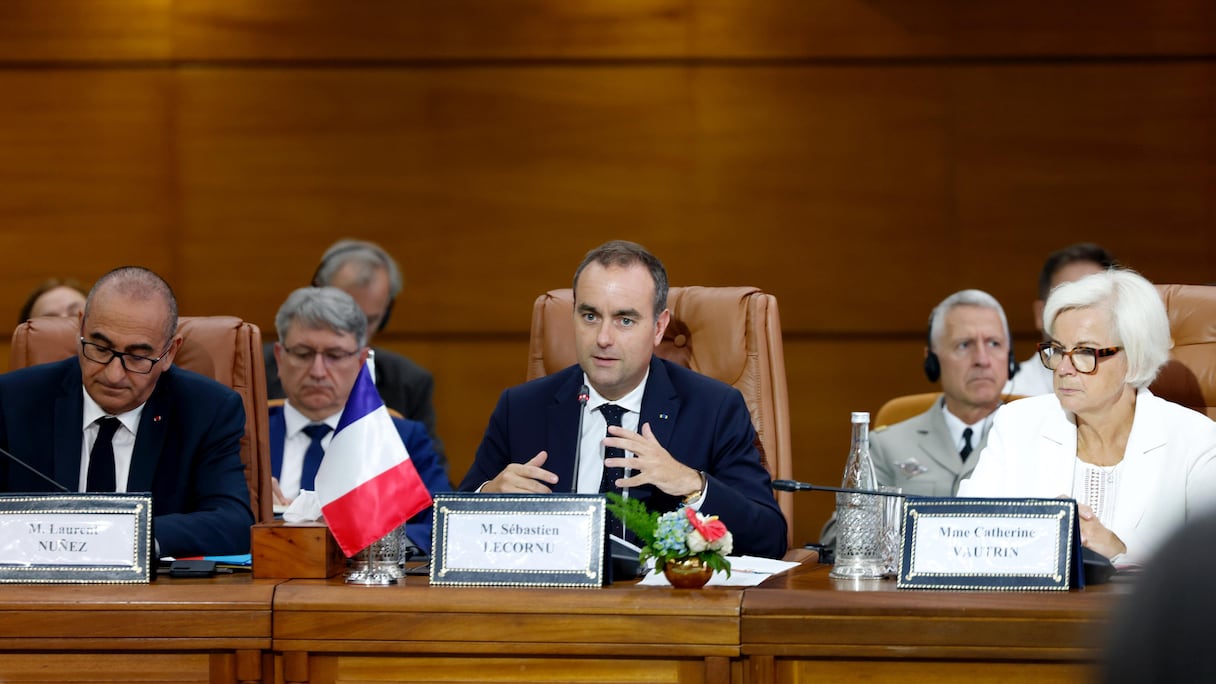
Energy is increasingly becoming one of the main pillars of the renewed Franco-Moroccan relationship. During the high-level meeting held in Rabat on Thursday, Lecornu announced the launch of a call for expressions of interest for an electricity interconnection between Europe and North Africa, underscoring both countries’ determination to anchor their cooperation in long-term infrastructure projects.
For the French prime minister, the initiative goes far beyond a technical project. It reflects a broader ambition to strengthen shared value chains across the Mediterranean. “We are also shaping the future and advancing ambitious economic projects,” he said, adding that such investments create “new synergies between our companies” and help “further integrate Morocco and France into the same value chains.”
Lecornu specifically referred to “major energy connectivity projects between Europe and North Africa, with the launch today of a call for expressions of interest in the field of electricity interconnection,” presenting the initiative as one of the defining features of a new phase in bilateral ties.
The energy agenda forms part of a much broader economic partnership. Lecornu described the implementation of commitments made during President Emmanuel Macron’s state visit to Morocco in October 2024 as “exceptionally positive,” citing progress in “industry, energy, security, defense, culture, education and agriculture.” According to him, the agreements signed in Rabat show that the two countries are “capable of going even further and doing even better.”
The shift reflects a deeper transformation in Franco-Moroccan cooperation. Economic ties are no longer limited to traditional trade but increasingly aim to build integrated industrial sectors capable of supporting the energy, technological and industrial transitions, while encouraging investment by both major corporations and small and medium-sized enterprises on either side of the Mediterranean.
The French prime minister noted that recent investments by major French groups in Morocco already illustrate this momentum, which also relies on numerous initiatives led by SMEs in both countries.
Morocco at the center of Europe’s African strategy
Beyond bilateral relations, Paris sees Morocco as an essential partner in its broader African strategy. Lecornu stressed that both countries share “the central importance of the African continent” and have “an interest in expanding their presence there together, even more so.” He welcomed Morocco’s participation in the Africa-France summit in Nairobi, as well as the presence of a large Moroccan business delegation, describing both as strong signs of economic convergence.
The French official also highlighted the Kingdom’s commitment “to peace and security in the Sahel and across Africa,” arguing that this political alignment creates favorable conditions for major economic projects on the continent.
This link between diplomacy, security and economic infrastructure is emerging as one of the key pillars of the new partnership envisioned by both capitals.
For Lecornu, the Rabat meeting was more than a routine exercise in governmental cooperation. “Franco-Moroccan cooperation must now change scale,” he said, arguing that the two countries now have the political conditions needed to build a more ambitious and lasting relationship.
That ambition will also take shape through the preparation of an unprecedented bilateral treaty between France and Morocco. According to the French prime minister, it will be the first treaty Paris signs with a country outside the European Union. Drafted by a Franco-Moroccan committee of experts, the agreement is intended to provide “a unique, stable and ambitious framework adapted to the challenges of the coming decades.”
The launch of the call for expressions of interest for the electricity interconnection project reflects the determination of both governments to make energy infrastructure a driver of competitiveness and regional integration. More broadly, the Rabat meeting confirms that Franco-Moroccan relations are evolving into a more structured partnership, in which industrial investment, shared value chains and major connectivity projects are becoming the main engines of long-term cooperation.