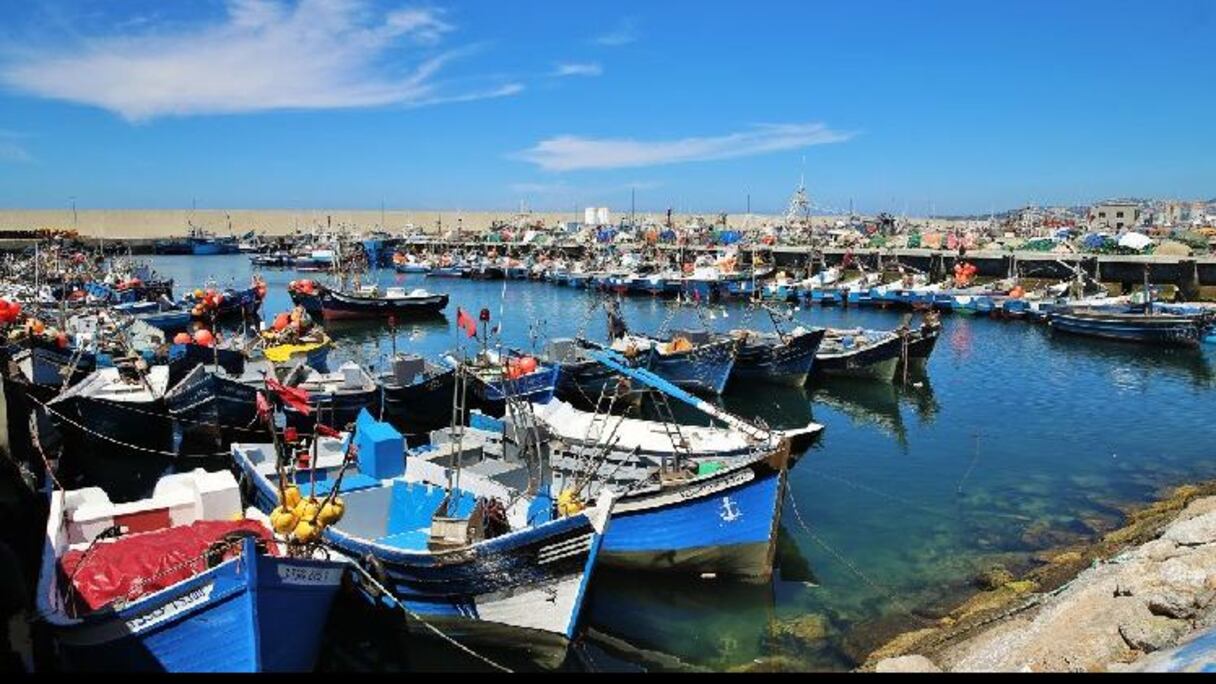
Morocco is expanding scientific monitoring, marine aquaculture and climate-resilience research as it seeks to protect fish stocks and strengthen the economic value of its Atlantic and Mediterranean resources.
The National Institute of Fisheries Research, known by its French acronym INRH, reviewed its 2025 results and outlined its priorities during the 34th meeting of its Board of Directors, held Tuesday in Rabat.
The meeting was chaired by Secretary of State for Maritime Fisheries Zakia Driouich and brought together government representatives, fisheries professionals and members of the institute’s board.
According to the Secretariat of State for Maritime Fisheries, discussions focused on the sustainable management of fishery resources, the growing effects of climate change on marine ecosystems and the role of scientific research in supporting Morocco’s blue economy.
Driouich praised the progress made under a sector strategy launched nearly two years ago, which seeks to base fisheries management decisions on scientific evidence and consultation with industry professionals.
Monitoring fish stocks and marine ecosystems
INRH Director Mohamed Nejih presented a detailed overview of the institute’s work in 2025, as well as progress made during the first half of 2026. His presentation highlighted advances in scientific monitoring of fish stocks, stock assessments, oceanography, marine environmental monitoring, and scientific support for fisheries management decisions.
The presentation also covered initiatives in veterinary and health monitoring, marine aquaculture development, and the valorization of seafood products. Particular attention was given to research, development, and innovation projects designed to strengthen the sector’s resilience to climate change while promoting the sustainable use of marine resources.
Board members also reviewed progress in regional and international scientific cooperation, particularly within the framework of South-South partnerships, in line with Morocco’s Atlantic cooperation vision.
Scientific role in Atlantic infrastructure
The board also reviewed Morocco’s growing regional and international scientific cooperation, including South-South partnerships linked to the Kingdom’s Atlantic cooperation strategy.
INRH has contributed scientific data to the proposed Morocco-Nigeria Atlantic African Gas Pipeline, a major infrastructure project designed to run along the Atlantic coast of West Africa.
In January 2025, the institute’s research vessel Al Hassan Al Marrakchi carried out an oceanographic mission in the territorial waters of Morocco, Mauritania and Senegal. The expedition gathered scientific information needed for studies related to the pipeline project.
Offshore aquaculture advances in Sidi Ifni
The board also welcomed progress in strengthening the institute’s scientific and technical capacities. Achievements included the successful completion of the first fish farming cycle at the offshore marine farm in Sidi Ifni, the launch of operations at the quality control laboratory relocated to the Haliopole technology hub in the Souss-Massa region, and continued modernization of infrastructure at the specialized center for seafood processing and technology.
The institute said these developments reflect its continued commitment to supporting the sustainable development of Morocco’s fisheries and aquaculture sectors through scientific research, innovation, and technical expertise, while contributing to food security, the sustainable use of marine resources, and the growth of the national blue economy.
The board also noted that the institute’s external auditor approved its 2025 financial statements without reservations and approved all resolutions included on the meeting’s agenda.
Concluding the session, board members commended the commitment of the institute’s researchers, technical staff, and employees, encouraging them to continue advancing scientific research, innovation, communication, and knowledge sharing to further strengthen INRH’s role as Morocco’s leading scientific institution serving sustainable fisheries and the blue economy.
