Jiangsu Yunyi Electric’s decision to establish its first industrial base in Morocco is the latest sign of the country’s growing appeal to Chinese manufacturers. According to an official filing submitted to the Shenzhen Stock Exchange, the company completed the administrative procedures on July 3 to establish its wholly owned subsidiary, Yunyi Technology Morocco. The investment, valued at 462.66 million yuan (approximately $66 million), will be financed through the company’s own funds and will cover all the infrastructure required to launch industrial operations.
Beyond its value, the investment reflects a broader trend. Chinese automotive suppliers are no longer seeking only cost-competitive manufacturing locations; they are increasingly positioning production closer to their main markets. Morocco fits this strategy by offering rapid access to Europe, institutional stability, an extensive network of free trade agreements, and an industrial ecosystem already built around the automotive sector.
The future factory will manufacture several strategic vehicle components, including power regulators, alternator rectifiers, windshield wiper systems and other automotive equipment. The project will also include international trade and import-export activities, subject to the final approval of the company’s registered business scope.
Read also : African Development Bank approves €205 million for Morocco’s high-speed rail expansion
This choice is no coincidence. For several years, Morocco has sought to move its automotive industry beyond vehicle assembly toward deeper local integration of higher value-added components and equipment. The arrival of specialized suppliers is gradually strengthening this ecosystem while reducing dependence on imports for certain technical parts.
According to data from the Ministry of Industry and Trade, the automotive industry remained Morocco’s leading export sector in 2025, generating more than 157 billion dirhams ($17 billion) in exports. This performance is now driven not only by vehicle manufacturers but also by an expanding network of international suppliers, whose technological upgrading has become one of the sector’s main competitive advantages.
Morocco benefits from the reshaping of global supply chains
Yunyi Electric’s investment comes at a time of profound changes in the global automotive industry. Geopolitical tensions, supply chain disruptions since the COVID-19 pandemic and manufacturers’ efforts to secure production networks have prompted many Asian companies to establish additional regional manufacturing bases.
For Chinese companies, this strategy helps mitigate risks linked to international trade while shortening delivery times to major European customers. Morocco has emerged as a nearby manufacturing hub capable of offering competitive production costs without compromising the industrial standards required by leading automakers.
This shift extends well beyond the automotive sector. It reflects Morocco’s emergence as an industrial platform linking Asia, Europe and Africa, a position reinforced by the Tangier Med port complex, which is regularly ranked among the Mediterranean’s leading maritime hubs.
Tangier Tech emerges as a major Chinese industrial hub outside Asia
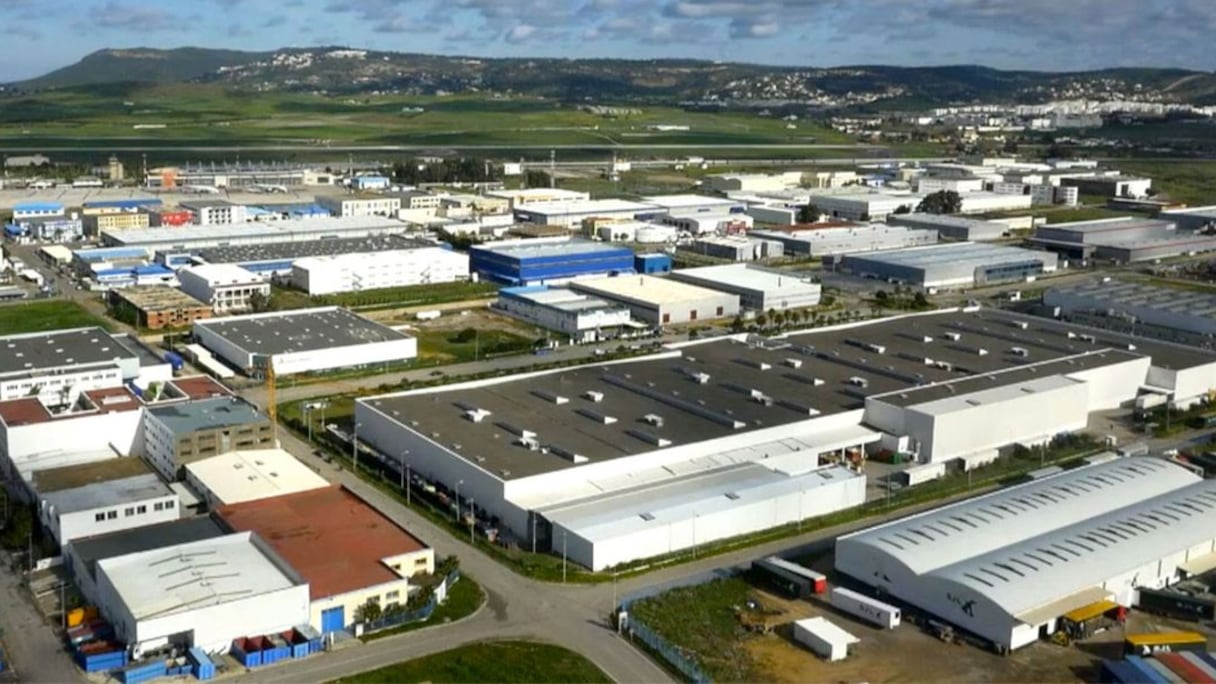
Yunyi Electric’s arrival is part of a broader investment trend. Mohammed VI Tangier Tech City is attracting a growing share of Chinese investments in electric mobility and advanced manufacturing.
In May 2024, Hailiang and Shinzoom announced combined investments of $910 million in electric vehicle battery projects. A few months later, BTR New Material Group launched a project to manufacture cathode and anode materials, representing nearly 6 billion dirhams ($650 million) in investment and more than 1,150 direct jobs, according to Moroccan authorities.
Read also : How Morocco aims to become the industrial hub linking Europe and Africa
The momentum continued in February 2026 when Shanghai Ingin Auto Technology announced that it had selected Tangier Tech for its first factory outside China, with an investment exceeding 200 million dirhams.
Individually, each of these projects serves a specific industrial purpose. Taken together, however, they point to a more structural transformation: Tangier Tech is gradually becoming a major hub for Chinese investment across multiple segments of the electric mobility value chain, from battery materials to automotive components.
A strategy that reinforces Morocco’s industrial position
The concentration of investments also reflects the effectiveness of Morocco’s industrial strategy over the past decade. High-quality logistics infrastructure, integrated industrial zones, specialized workforce training and a stable investment framework have created a favorable environment for capital-intensive projects.
For Yunyi Electric, Morocco offers several competitive advantages, including its proximity to Europe, an attractive tax framework, the availability of skilled labor and an established supplier network. The company said it intends to use its Moroccan facility as the main platform for expanding its international operations outside China.
The strategy also aligns with Morocco’s ambition to strengthen its integration into global value chains through increasingly technology-intensive industries. The objective is no longer simply to attract foreign investment, but to gradually increase local value creation and promote the transfer of expertise to the national industrial sector.
Read also : Moroccan ports: how Morocco is accelerating its transition toward decarbonization
Several aspects of the project, however, remain to be clarified. Yunyi Electric has not disclosed the size of the selected site, the plant’s annual production capacity, the timeline for commissioning or the number of jobs expected to be created.
The company is also facing a more challenging economic environment in its domestic market. In the first quarter of 2026, its revenue totaled 487.94 million yuan, down 6.6% year-on-year, while net profit attributable to shareholders fell 27.7% to 70.33 million yuan. The company noted that the Moroccan investment is not expected to have a significant impact on its financial results in the short term.
That financial caution does not diminish the strategic significance of the project. Rather, it confirms that industrial investments are increasingly driven by long-term considerations, prioritizing the geographic repositioning of production capacity over immediate financial returns.