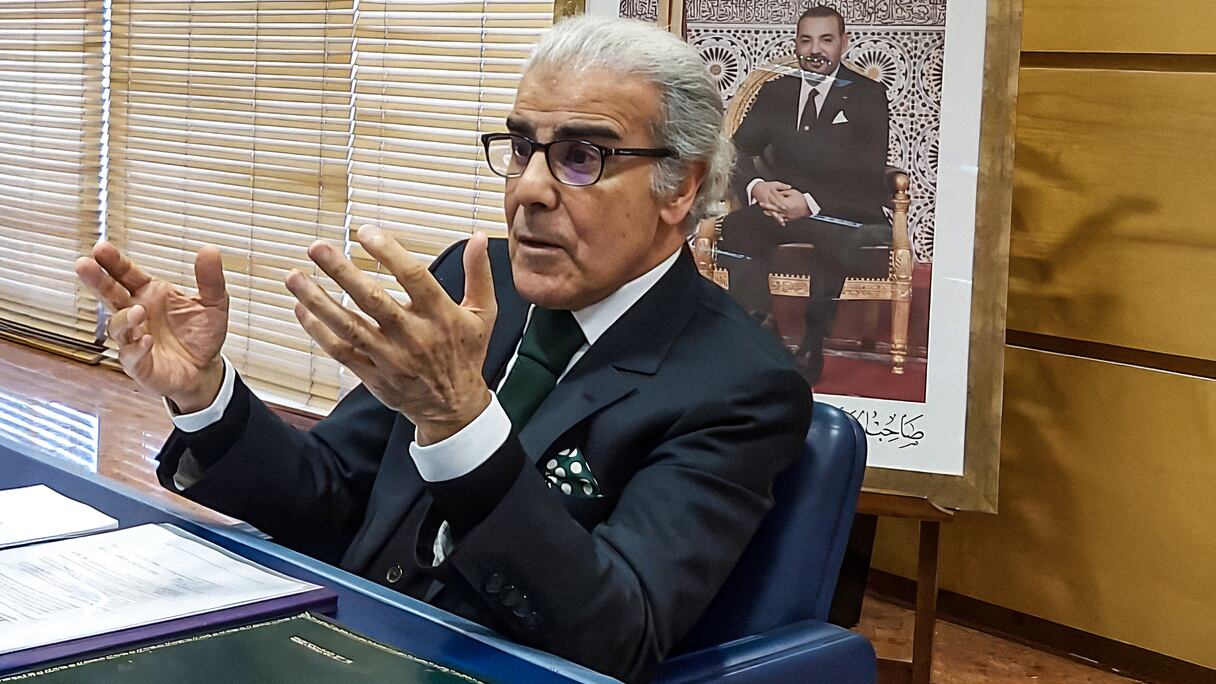
The Board of Bank Al-Maghrib held its second quarterly meeting of 2026 on Tuesday, June 23. During the session, members first reviewed and approved the central bank’s annual report on Morocco’s economic, monetary and financial conditions, as well as the institution’s activities for the 2025 financial year.
The Board then examined the international outlook, marked by the repercussions of the conflict in the Middle East, which has severely disrupted supply chains, intensified inflationary pressures and heightened uncertainty surrounding the global economy.
According to the central bank, the recent memorandum of understanding concluded between the United States and Iran could pave the way for a gradual normalization of maritime transport. However, economic activity is expected to remain affected in the short term by the fallout from the conflict.
At the national level, the impact of the crisis is already being felt through the energy bill and fuel prices, which rose by 27.6% year-on-year in May. Combined with broader imported inflation, these increases are expected to lead to a marked acceleration in domestic inflation, although it should remain moderate over the medium term.
Monetary Policy Remains Unchanged
After averaging around 0.8% over the previous two years, inflation is projected by Bank Al-Maghrib to reach 1.5% on average in 2026 and 2.1% in 2027.
Core inflation, meanwhile, is expected to remain limited to 0.2% this year, mainly reflecting a decline in food prices, particularly olive oil. As this effect fades and imported inflation rises, core inflation is forecast to accelerate to 2.9% in 2027.
Inflation expectations have also edged up moderately. Financial sector experts surveyed by Bank Al-Maghrib during the second quarter of 2026 expect average inflation to stand at 2.2% over both the eight-quarter and twelve-quarter horizons.
On the growth front, annual national accounts data for 2025 point to stronger economic expansion, supported by a sharp increase in agricultural output and continued momentum in non-agricultural sectors. This trend is expected to continue this year, thanks to favorable weather conditions and further growth in non-agricultural activities, albeit at a slower pace than previously anticipated.
In light of the contained inflation trajectory, the strengthening of domestic economic activity and the persistent uncertainties surrounding the global economy, the Board decided to leave the key interest rate unchanged at 2.25%.
It emphasized that it would continue to closely monitor macroeconomic developments both domestically and internationally and that future decisions would be based on updated assessments of economic and financial indicators.
Economy Expected to Grow by 5.2% in 2026
After expanding by 8.2% in 2025, agricultural value added is expected to rebound by 16% this year, based on a cereal harvest estimated by the Agriculture Department at 90 million quintals. It is then projected to decline by 7.6% in 2027 under the assumption of a return to average cereal production levels.
Non-agricultural activities are expected to grow by an average of 4.2% in both 2026 and 2027, following 4.5% growth in 2025.
Overall, Bank Al-Maghrib forecasts Morocco’s economy to accelerate from 4.9% growth in 2025 to 5.2% in 2026 before slowing to 3.1% in 2027 due to base effects.
In the labor market, data from the High Commission for Planning (HCP) show that unemployment stood at 10.8% in the first quarter of 2026, reaching 13.5% in urban areas and 6.1% in rural regions.
Rising Energy Costs Weigh on External Accounts
On the external front, soaring oil prices, higher costs for certain industrial inputs and continued investment spending are expected to put pressure on the trade balance.
Morocco’s energy bill is projected to increase by 26% to 135 billion dirhams in 2026 before declining to 114.4 billion dirhams in 2027.
Imports of capital goods are forecast to rise by 12.3% this year and by a further 9.3% in 2027, approaching 245 billion dirhams.
Exports are expected to recover after contracting by 1.8% in 2025. Automotive exports are projected to increase gradually, reaching 190.8 billion dirhams by 2027, while phosphate and derivative exports are forecast to grow by 8.5% and then by 2.4%, reaching 110.9 billion dirhams in 2027.
Tourism receipts are expected to maintain their strong momentum, rising from 138.6 billion dirhams in 2025 to 161.1 billion dirhams in 2027. Remittances from Moroccans living abroad are also projected to increase from 122 billion dirhams to nearly 130 billion dirhams over the same period.
Under these conditions, the current account deficit is expected to widen significantly, from 2.4% of GDP in 2025 to 4% this year, before easing slightly to 3.8% in 2027.
Foreign direct investment inflows remain surrounded by considerable uncertainty, with projections assuming annual inflows equivalent to 3.5% of GDP.
Taking into account expected external financing for the Treasury, official reserve assets are projected to continue strengthening, reaching 542 billion dirhams by 2027, equivalent to six months and nine days of imports of goods and services.
Bank Credit Continues to Accelerate
Bank liquidity needs are expected to widen further, increasing from 131.7 billion dirhams in 2025 to 143 billion dirhams in 2027, mainly due to the anticipated growth in currency in circulation.
Credit to the non-financial sector is also expected to accelerate, reflecting stronger economic activity and banking sector expectations. Growth in lending is projected to rise from 4.8% in 2025 to 6.8% this year before easing to 6.1% in 2027.
Bank Al-Maghrib’s quarterly assessments indicate that the dirham remains broadly aligned with economic fundamentals. After appreciating by 2% in 2025, the real effective exchange rate is expected to depreciate by 3.6% in 2026 and by 0.8% in 2027.
Budget Deficit Expected to Narrow
Public finance data for the first five months of the year show an 8% increase in ordinary revenues and a 12.2% rise in overall expenditure, mainly driven by higher spending on goods and services and debt servicing costs.
Taking into account current budget execution, the 2026 Finance Law, the 2026-2028 medium-term budget framework and the government’s decision to open additional credits worth 20 billion dirhams, Bank Al-Maghrib forecasts that the budget deficit, excluding proceeds from state asset sales, will narrow to 3.4% of GDP this year and to 3.3% in 2027.
