
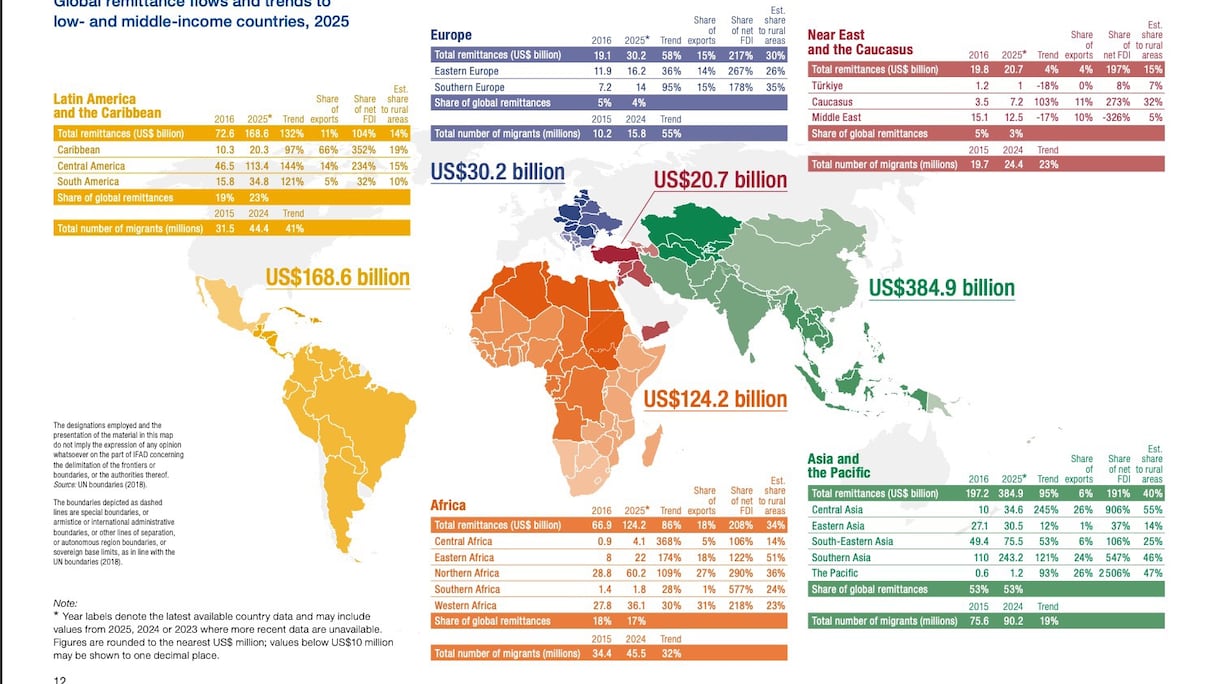
The International Fund for Agricultural Development (IFAD), a UN institution specializing exclusively in transforming agriculture and rural economies, has just published its annual report on migrant remittances. Titled Sending Money Home 2025. Beyond remittances: From lifeline to resilience, one family at a time (Helping One’s Own in 2026. Remittances as a Starting Point: From Survival to Resilience, Family by Family), the report notes that remittances to low- and middle-income countries stood at $728.6 billion in 2025.
This flow exceeds the amount of official development assistance (ODA) or foreign direct investment (FDI) going to these countries.
Although these remittances benefited all the countries covered by the study, the report clearly shows that flows are heavily concentrated in a handful of countries.
Read also : Africa’s fuel squeeze: Higher pump prices, bigger import bills and rising costs
Globally, five countries received $338.7 billion, or 46.48% of migrant remittances. They are India ($150.7 billion), Mexico ($64.4 billion), the Philippines ($41.6 billion), Egypt ($41.5 billion) and Pakistan ($40.5 billion). These countries have very large diasporas.
These remittances have major impacts on recipient countries. According to IFAD, these financial flows help families meet their basic needs and cope with crises and uncertainty. “Three quarters of remittances are used to cover immediate needs such as food, housing and basic services. The remaining quarter represents more than $180 billion a year directed toward longer-term projects, such as health, education, housing, savings, business creation and other income-generating activities,” the report notes.
In addition to helping fight poverty, these flows also contribute to strengthening the foreign exchange reserves of recipient countries.
Across Africa, remittances reached $124.2 billion in 2025, accounting for 17.05% of global remittance flows. Over the 2016-2025 decade, the amount increased by 86%.
“Remittance growth has far outpaced migration growth, reinforcing the importance of these flows for both major recipient markets and smaller but highly dependent economies,” according to the IFAD report. It adds that “Africa’s migration and remittance landscape has changed considerably over the past decade. Remittances have increased much faster than population or migration, highlighting their growing importance for households and national economies across the continent. The population grew by 24%, the number of emigrants increased by nearly 32% to almost 46 million, and remittance flows grew by 86% to around $124 billion.”
These remittances are highly concentrated in a small number of countries. In 2025, Africa’s five largest recipients received $90.1 billion, accounting for around 73% of the total amount sent by migrants from the continent. The UN institution estimates that 34% of the flows, or $42 billion, reached rural areas in Africa, helping support everyday consumption, healthcare and children’s education in regions where access to formal employment is limited.
Read also : Africa’s largest airline fleets in 2026: Ethiopian leads as Royal Air Maroc posts fastest growth
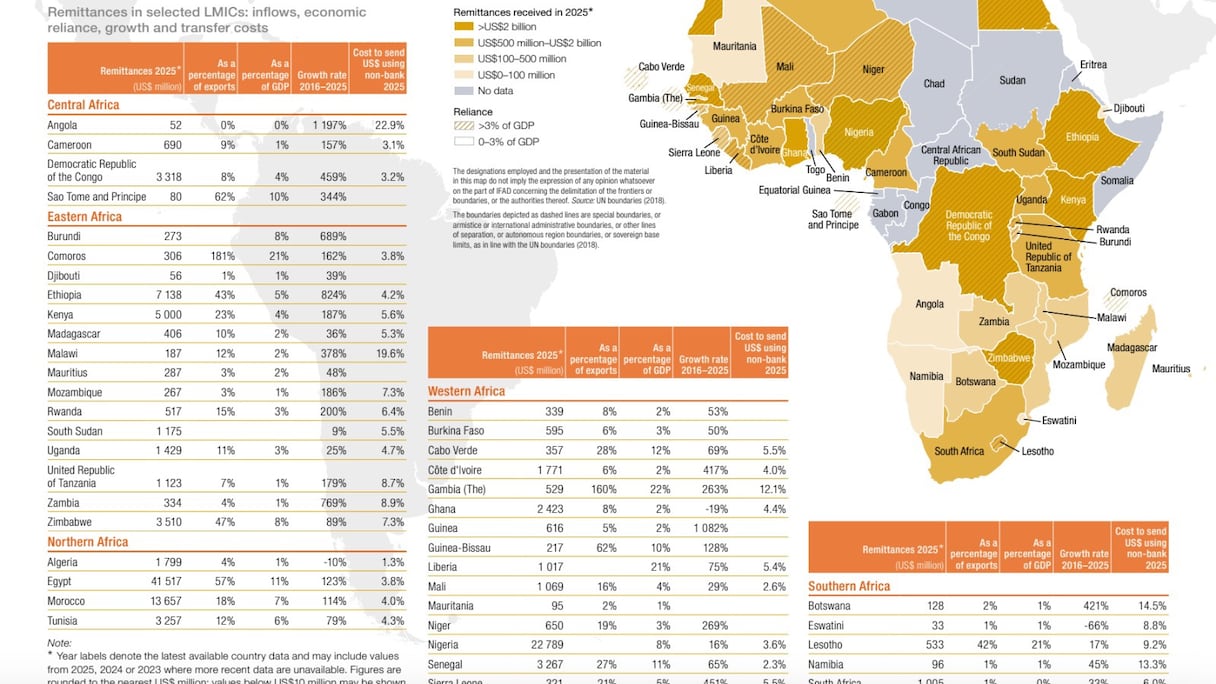
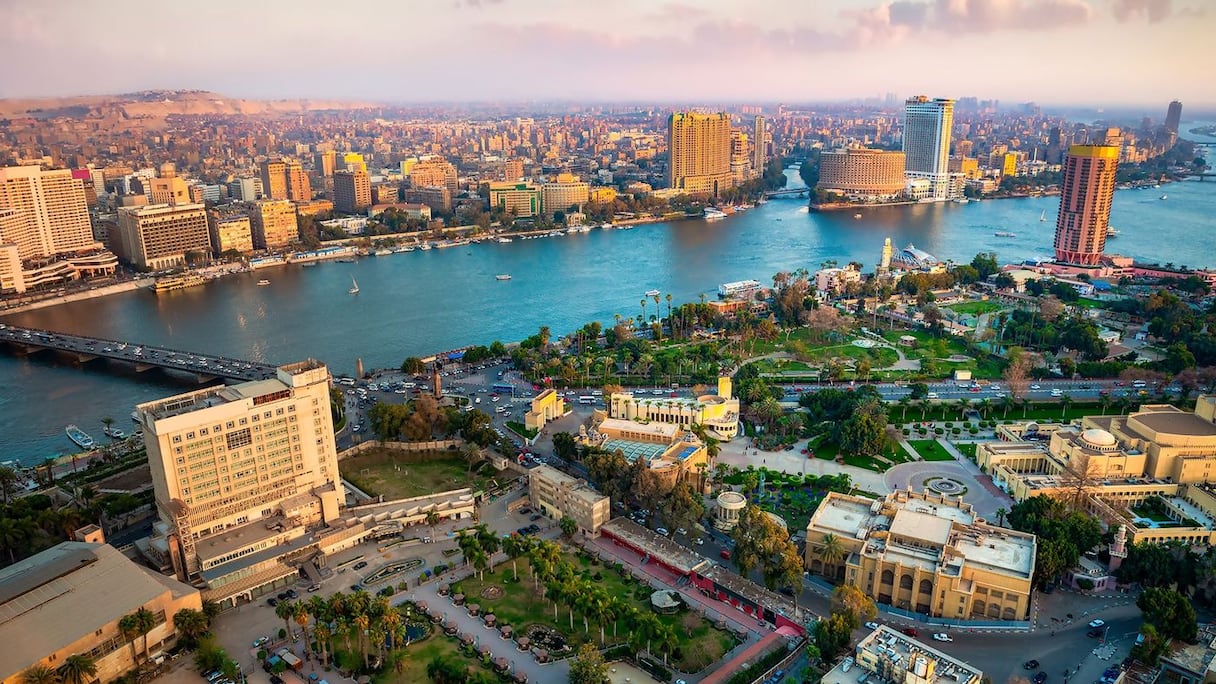
Egypt is by far the largest recipient of remittances on the African continent. Remittances from its large diaspora, estimated at more than 10 million migrants, reached $41.5 billion in 2025, accounting for 33.41% of the amounts received by African countries. These funds represent the country’s second-largest source of foreign currency after exports, which generate around $51.40 billion, but ahead of tourism and revenues generated by the Suez Canal.
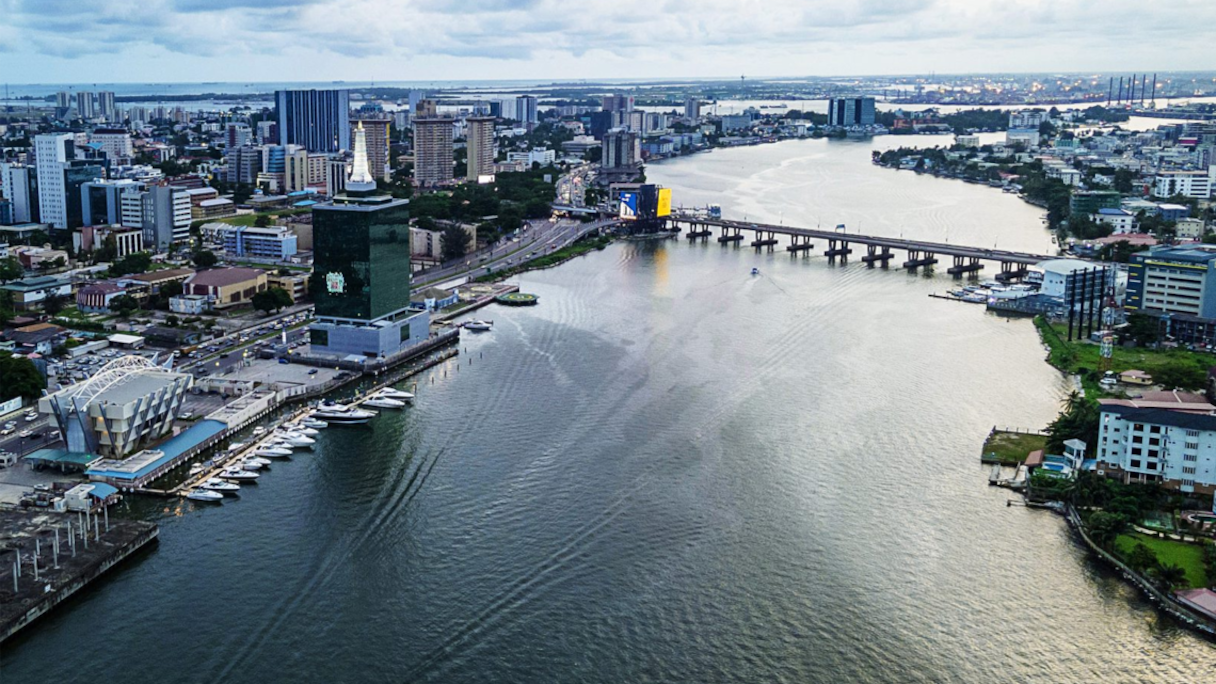
Far behind Egypt is Nigeria, with $22.8 billion transferred by its diaspora, particularly those living in English-speaking countries such as the United Kingdom and the United States. However, part of these diaspora remittances bypasses official channels by going through parallel markets.
Morocco ranks third, with $13.66 billion sent by its diaspora, particularly those living in Europe (France, Spain, Italy, Belgium, the Netherlands, etc.) and the Gulf. Flows to Morocco more than doubled over the 2016-2025 decade, rising from $6.4 billion to $13.7 billion.
The trio is followed by Ethiopia ($7.14 billion), Kenya ($5.00 billion), Zimbabwe ($3.51 billion), the Democratic Republic of Congo ($3.32 billion), Senegal ($3.27 billion), Tunisia ($3.26 billion) and Ghana ($2.42 billion).
Top 10 African countries receiving remittances in 2025 (billions of dollars)
| Country | Amount transferred in 2025 | Growth 2016-2025 | Remittances/GDP | Non-bank transfer costs |
|---|---|---|---|---|
| Egypt | 41.50 | 123% | 11% | 3.8% |
| Nigeria | 22.80 | 16% | 8% | 3.6% |
| Morocco | 13.66 | 114% | 7% | 4.0% |
| Ethiopia | 7.14 | 824% | 5% | 4.2% |
| Kenya | 5.00 | 187% | 4% | 5.6% |
| Zimbabwe | 3.51 | 89% | 8% | 7.3% |
| DR Congo | 3.32 | 459% | 4% | 3.2% |
| Senegal | 3.27 | 65% | 11% | 2.3% |
| Tunisia | 3.26 | 79% | 6% | 4.3% |
| Ghana | 2.42 | -19% | 2% | 4.4% |
Although these 10 countries are the largest recipients in terms of volume, other smaller countries are more dependent on these financial flows, which account for a significant share of their annual wealth creation.
Remittances represented 22% of GDP in Gambia, 21% in Liberia, Comoros and Lesotho, and 12% in Cape Verde, 11% in Senegal...
It should be noted, however, that while the amounts transferred provide an indication, they are far from reflecting the reality of the flows. Several funds move through parallel channels for various reasons: high costs of traditional transfers, exchange-rate differences between official and parallel markets, underdeveloped financial systems in some countries, and the existence of traditional parallel money-transfer channels that are “fast and secure”...

African migrant remittances reached $124.2 billion in 2025, according to data from the International Fund for Agricultural Development (IFAD), accounting for 17% of global flows. DR. DR
In Algeria, for example, the $1.80 billion in recorded remittances is far from reflecting the reality. Because of an exchange-rate gap of more than 104 dinars between the official market ($1 = 133 dinars) and the parallel market ($1 = 237 dinars), migrants prefer to avoid official money-transfer channels in order to make substantial gains from currency exchange on the parallel market.
As a result, large amounts of foreign currency are brought into the country by members of the Algerian diaspora, which numbers around 5 million people, without being declared, and are exchanged at Algiers’ Square Port-Saïd, the country’s real exchange-rate barometer.
Finally, the cost of sending money to Africa remains the highest, with significant disparities between subregions. According to the IFAD report, “the average cost, excluding the banking sector, of sending $200 to Africa fell from 9% in the third quarter of 2016 to 7.2% in the third quarter of 2025, a 20% decline. Despite this progress, Africa remains above the global average, and its regional cost is still more than twice the target set under the Sustainable Development Goals (SDGs), namely less than 3%.”
However, these averages conceal significant differences between subregions. According to the document, West Africa recorded the strongest improvement, with the average cost falling by one third, from 7.2% to 4.9%. The average cost of sending money to East Africa fell from 9.7% to 7.2%, while the cost of sending money to Southern Africa declined by 23% but remained the highest, with an average cost of 10.4% in 2025.
