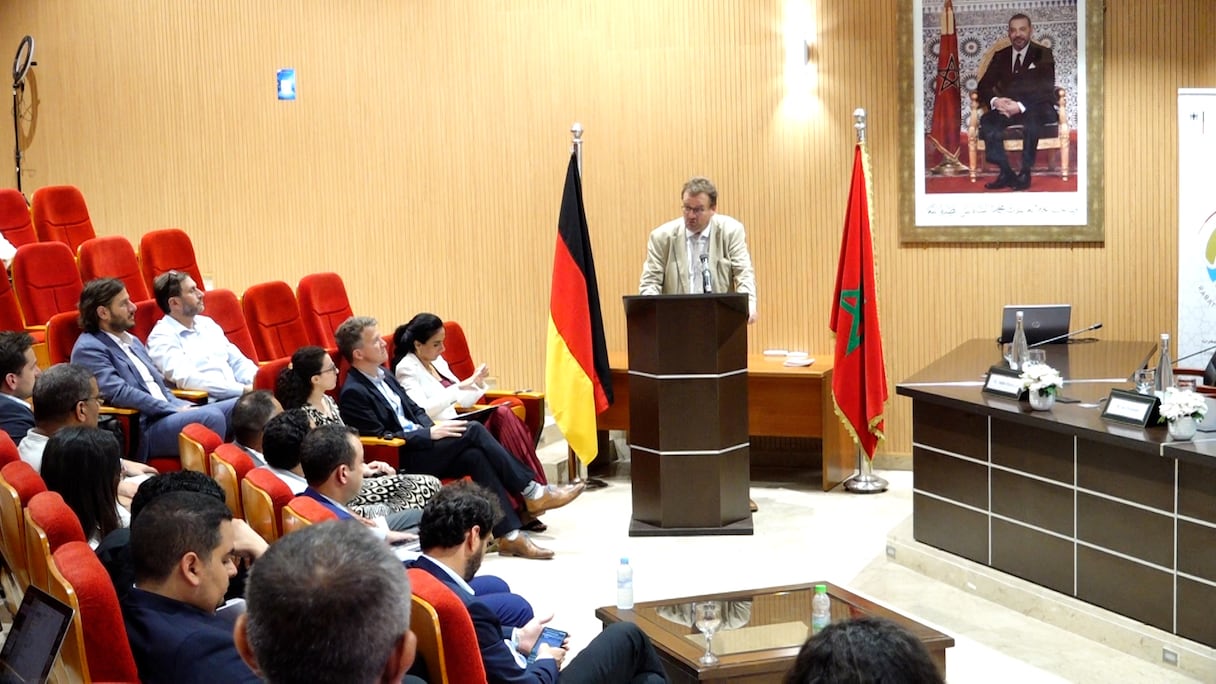
Morocco’s efforts to bring its ports into line with international and European decarbonization standards were the focus of a major symposium held Thursday by the Faculty of Law and Economics of Rabat-Agdal.
Organized in partnership with the Konrad-Adenauer Foundation, the event featured presentations by several specialists, including Rabii El Bacha, a legal scholar specializing in energy law.
According to the speakers, Morocco’s ports—key logistics gateways linking the country to Europe—are well positioned to navigate the maritime sector’s transition toward decarbonization. Tanger Med, Nador, and the future Dakhla Atlantic Port were highlighted as strategic platforms expected to play a leading role in this transformation.
According to Amine Benyseff, Director of Decarbonization at Tanger Med, the transition is being driven by a new generation of European environmental regulations, including the Carbon Border Adjustment Mechanism (CBAM), the EU Emissions Trading System (ETS) and the FuelEU Maritime regulation. Together, these measures are progressively reshaping the operating environment for international trade and maritime transport.
Benyseff said that all electricity used at Tanger Med already comes from clean electrical power. He also announced that two large battery-powered vehicles will be tested this summer as part of the port’s emissions reduction strategy.
For his part, Steven Höfner, the Konrad-Adenauer Foundation’s resident representative in Morocco, welcomed the partnership with the Faculty of Law in Rabat, emphasizing the value of the discussions for students, researchers, and academics. He said the issue of port decarbonization brings together legal, economic, environmental, and industrial considerations.
Decarbonization refers to the range of measures and technologies designed to reduce or eliminate carbon dioxide (CO₂) and other greenhouse gas emissions. Its primary objective, Rabii El Bacha explained, is to combat climate change by gradually reducing dependence on fossil fuels, including coal, oil, and natural gas.
He noted that the Paris Agreement established a clear roadmap for limiting global warming to well below 2°C above pre-industrial levels, while pursuing efforts to cap the increase at 1.5°C. Within that framework, decarbonization is regarded as a key operational tool for achieving carbon neutrality by 2050.
The organizers argued that the energy transition of Morocco’s ports is no longer simply an environmental objective but an economic and strategic imperative. As carbon costs become increasingly embedded in trade with Europe, the green modernization of port infrastructure is emerging as an important factor in maintaining Morocco’s international competitiveness.
Against the backdrop of stricter European regulations, growing investment in clean energy and the modernization of major logistics hubs, Morocco is steadily advancing the decarbonization of its ports. The challenge extends beyond cutting emissions. It is also about safeguarding the competitiveness of Morocco’s foreign trade in a global economy where carbon itself is becoming a new economic frontier.