The National Railways Office (ONCF) has awarded GIDNA two contracts to build nine new stations for Casablanca’s regional express rail (RER) network, totaling MAD 470.72 million (excluding tax).
The first contract, valued at MAD 214.52 million (excluding tax), includes four stations: Mohammedia Facultés, Zenata Industrielle, Sidi Bernoussi, and Aïn Sebaâ. The second contract, worth MAD 256.2 million (excluding tax), covers five stations: Hay Mohammedi, Mers Sultan, Casa Oasis, Sidi Maârouf, and Nouaceur Nouvelle Ville.
The ONCF initiated the tender in two lots for these nine stations, with architectural design entrusted to Orange Atelier.
Competition was limited. For the first lot, only two companies, Urbagec and GIDNA, submitted bids. For the second lot, GIDNA was the sole bidder to submit a complete proposal, as Urbagec did not provide a technical or financial offer.
After reviewing all submissions, the ONCF selected GIDNA, deeming its bid compliant and financially superior.
The final contract values exceed initial tender estimates. The first lot was initially projected at MAD 180 million, and the second at MAD 220 million, for a combined estimate of MAD 400 million.
Nine stations at the heart of Casablanca’s future metropolitan rail network
These contracts represent one of the first tangible steps in the development of Casablanca’s RER network. The nine stations will provide local rail services, enhancing mobility across the metropolitan area as part of a broader railway program.
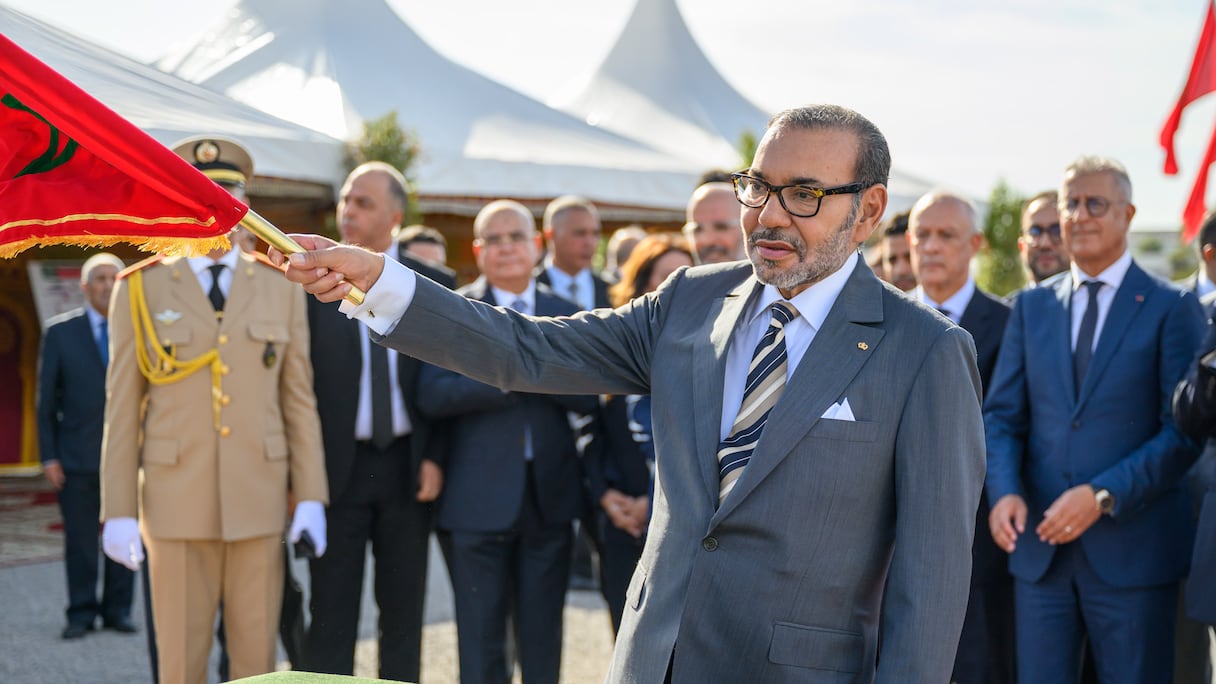
This project is part of a comprehensive development program for the Casablanca metropolitan area, launched by King Mohammed VI on September 24, 2025, with an estimated budget of nearly MAD 20 billion. The ONCF is funding 70% of the program, with the Casablanca-Settat region covering the remaining 30%.
Beyond the RER itself, the program encompasses three major stations, approximately 10 new local train stations, upgrades to five existing stations, around 260 kilometers of new railway lines, about 50 civil engineering structures, two technical centers in Zenata and Nouaceur, and five maintenance workshops.
The RER network will comprise three lines, spanning nearly 92 kilometers and serving 18 stations. It will connect key areas such as Mohammedia, Zenata, Aïn Sebaâ, Sidi Bernoussi, central Casablanca, Sidi Maârouf, Bouskoura, Nouaceur, and Mohammed V International Airport. An extension to the future Hassan II Grand Stadium in Benslimane is also planned.
Construction of the nine stations will be managed on a station-by-station basis. Each station constitutes a separate sub-lot with its own partial completion deadline of 18 months, followed by partial acceptance.
This phased approach allows works to progress incrementally throughout the project, which has an overall contractual duration of 22 months.
For GIDNA, these projects significantly bolster its portfolio, as the company seeks to expand its involvement in Morocco’s major infrastructure and construction initiatives.
Founded in 2006 by Zaid Lahbabi, GIDNA, short for Global Infrastructure Development North Africa, specializes in general construction, structural works, and civil engineering. The company operates across various sectors, including industry, logistics, education, healthcare, hospitality, residential construction, and sports infrastructure.
The company’s ownership structure underwent a major change in 2025 with the entry of H&S Invest Holding, led by Moncef Belkhayat. Initially announced at 25%, the holding’s stake was eventually increased to 33% after the transaction was approved by the Competition Council. H&S thus became a key shareholder in GIDNA alongside its founder, Zaid Lahbabi, who retained strategic and operational control of the company.
This partnership comes with ambitions to scale up the business. H&S Invest Holding had stated its intention to help strengthen GIDNA’s financial structure, with the goal of doubling the company’s size over five years and eventually preparing for a potential stock market listing.
