Article 36 of Morocco’s draft 2027 Finance Bill authorizes the minister delegate to the head of government in charge of the National Defense Administration to enter into commitments worth up to 190.5 billion dirhams. These commitments will be charged against 2028 appropriations under the special-purpose account for the acquisition and repair of Royal Armed Forces (FAR) equipment and support for the development of the defense industry. The 2026 Finance Act provided for 157.1 billion dirhams. The increase amounts to approximately 33 billion dirhams, or 21%.
Abdelhamid Harifi, a military analyst and administrator of the FAR-Maroc forum, points out that the ceiling stood at just 119.7 billion dirhams in 2023. He describes the increase as the “most significant aspect of the bill.” In his view, the government is giving the National Defence Administration greater room for maneuver, allowing it to “negotiate new contracts, strengthen the capabilities of the Royal Armed Forces and modernize their arsenal.”
Read also : Morocco’s 2027 budget: How defense spending breaks down
These are multi-year spending authorizations, not a single year’s expenditure. As Harifi explains, advance commitments involve borrowing. “This gives the Royal Armed Forces and the National Defence Administration the ability to spread these commitments over several financial years, strengthening their capacity to repay loans or finance acquisitions over time,” he says.
Salaries drive the annual budget increase
The annual defense budget is rising by around 5%, according to Harifi. He attributes the increase primarily to personnel costs, which are set to climb from 47 billion dirhams in 2026 to 49.34 billion under the draft 2027 budget. The rise is largely driven by salary increases. “It is also intended to support the implementation of His Majesty’s high directives on pay rises, which were approved in 2025 and are being introduced in stages,” he says.
The budget also provides for 5,500 new positions in the National Defence Administration. The recruitment is targeted, with the aim of “replacing retiring personnel while strengthening units in the field.” Meanwhile, the general budget allocates 7.2 billion dirhams in investment payment appropriations for 2027, alongside 8 billion dirhams in commitment appropriations for 2028 and subsequent years, bringing the combined allocation to 15.2 billion dirhams.
The special-purpose account used to finance equipment purchases, major repairs and defense industry development is allocated 11.49 billion dirhams. That compares with 11.5 billion in 2026 and 10.8 billion in 2025, leaving funding broadly unchanged following last year’s increase. Harifi cautions against looking at these appropriations in isolation, warning that they should not be “treated as figures divorced from their context.” He argues that they must be considered alongside the advance spending commitments.
Equipment prices have doubled
For Harifi, rising weapons costs are the main reason behind the increase in commitments. “Weapons prices today are nothing like they were five or ten years ago. Even an F-16 bought today would cost twice what we paid for one a few years back,” he says. The priority now, he argues, is to balance urgent operational requirements with financial discipline, striking the right balance between equipment performance and its long-term operating costs.
The allocation for equipment and miscellaneous operating expenses stands at 8.37 billion dirhams in the draft 2027 budget. Harifi notes that this spending category has grown in recent years. “This budget also covers the refurbishment of barracks, facilities and military infrastructure, as well as the operation of equipment. When new military assets are acquired, the budget for keeping them operational must also reflect what has been purchased,” he explains.
Modernization programs are underway across all branches of the armed forces. In the army, part of the existing arsenal is due to be replaced with new equipment, while other systems will be upgraded. The renewal program includes local production of the Indian-designed WhAP 8x8 armored vehicle by Tata Advanced Systems’ Moroccan subsidiary. Harifi also recalls that Moroccan Military Industry (MMI) announced at the Marrakech Air Show that it would deliver its first turrets for armored vehicles to the Moroccan army in March 2027.
Read also : U.S. congressional delegation led by Mike Rogers discusses defense cooperation in Morocco
Meanwhile, M113 armored personnel carriers and other vehicles in the existing fleet are also due to receive “modern weapons.” On the tank front, a $50 million contract was recently signed for Oshkosh tank transporters. According to Harifi, the purchase is part of broader preparations: “What is less visible is that we are preparing the ground to receive the second batch of Abrams tanks.” At the same time, Morocco’s M60 tanks are being upgraded to “bring some of their logistics into line with those of the Abrams” and increase their firepower in the areas where they are deployed.
Artillery modernization will also accelerate on three fronts: surface-to-surface systems, including 155mm guns, some of which are being refurbished locally; surface-to-air systems to counter emerging drone threats; and loitering munitions, whose production could be developed on an industrial scale in Morocco.
In the air force, helicopter procurement contracts have already been announced. Harifi stresses that the new aircraft are not intended to replace existing helicopters. Instead, they will “strengthen the helicopter fleet and equip it with new capabilities, particularly for long-range search and rescue operations.” Further announcements concerning the rest of the fleet could follow.
In military air transport, another acquisition appears likely following the C295 aircraft. Efforts to replace or modernize the C-130 fleet are also underway, with a contract reportedly signed with L3Harris and discussions held with Embraer and Lockheed Martin.
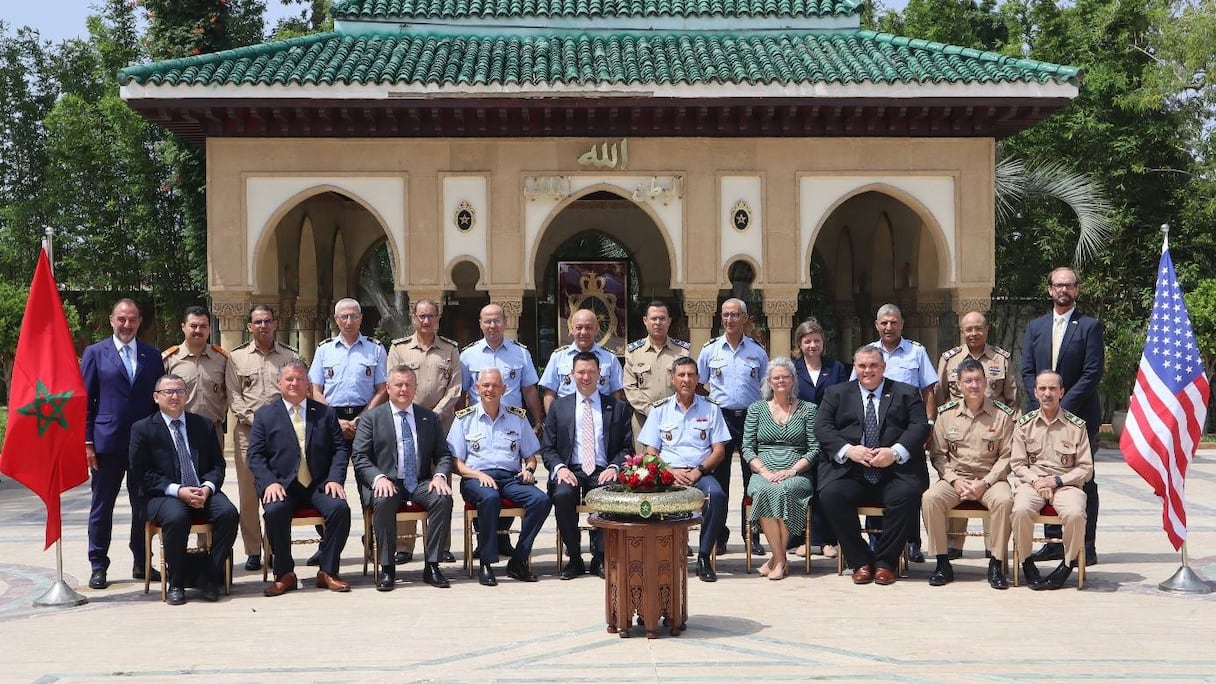
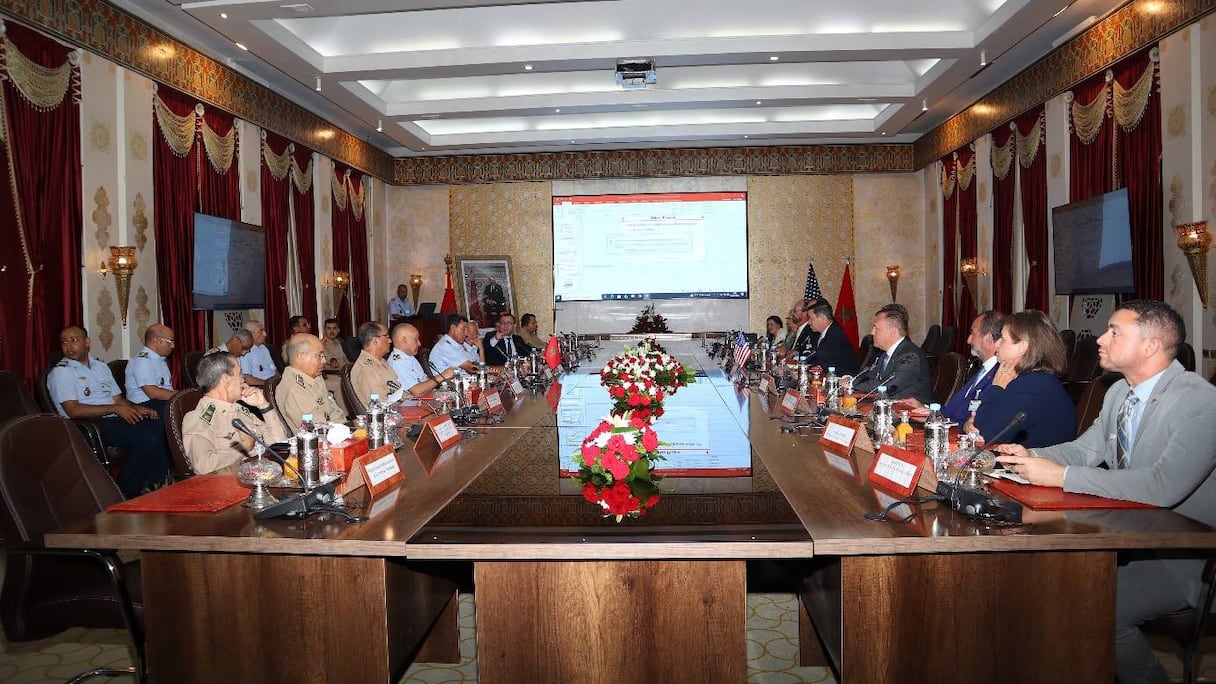
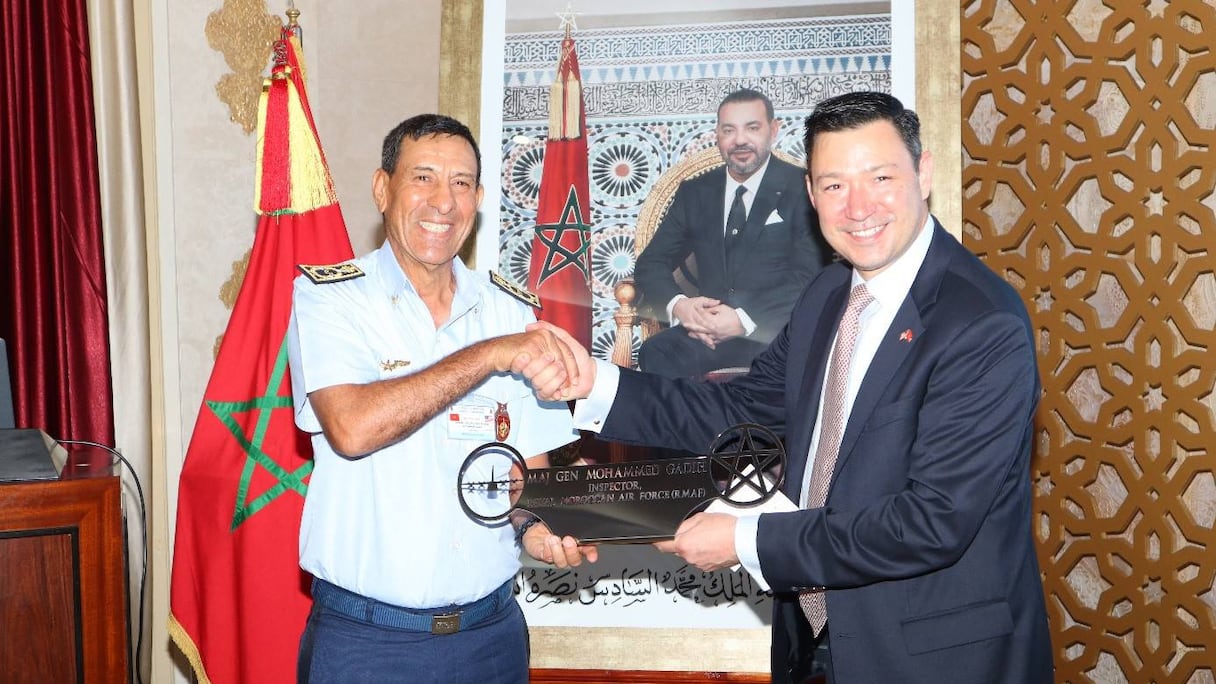
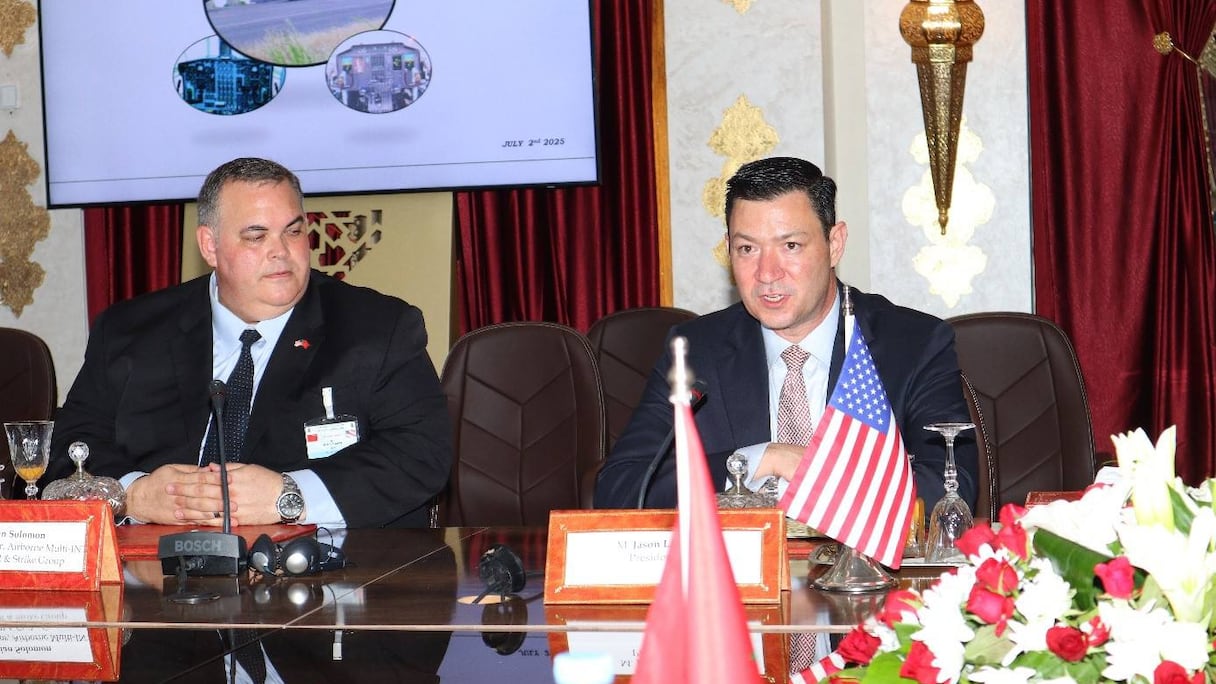
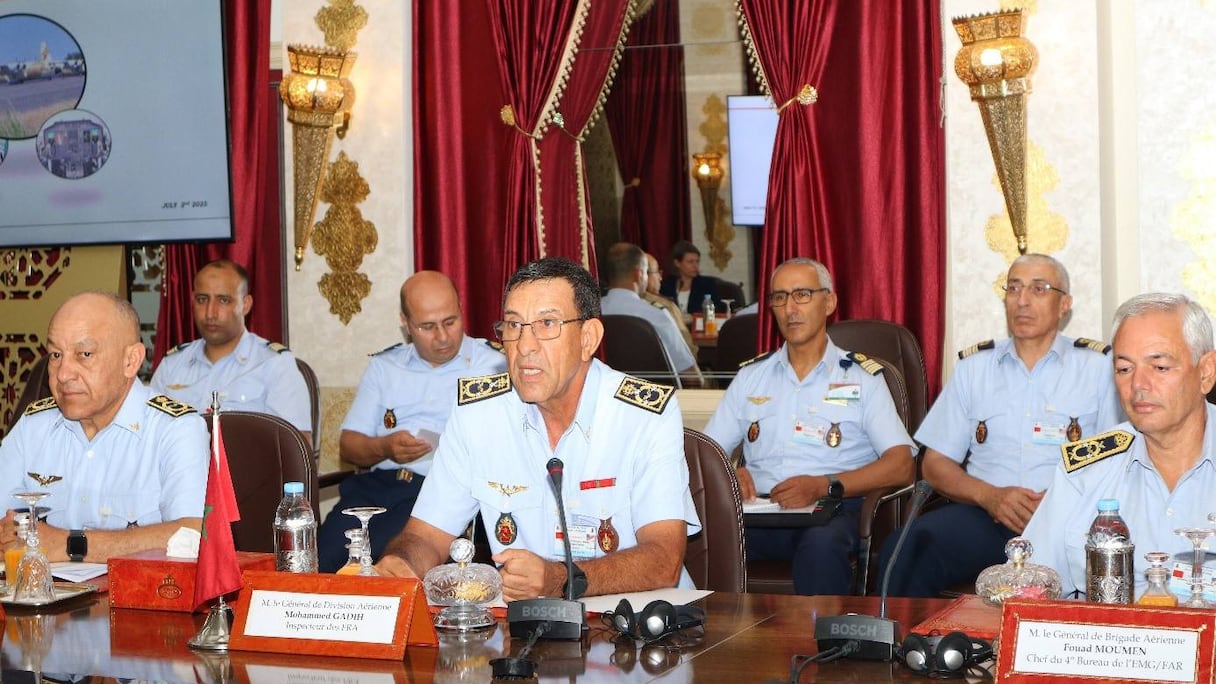
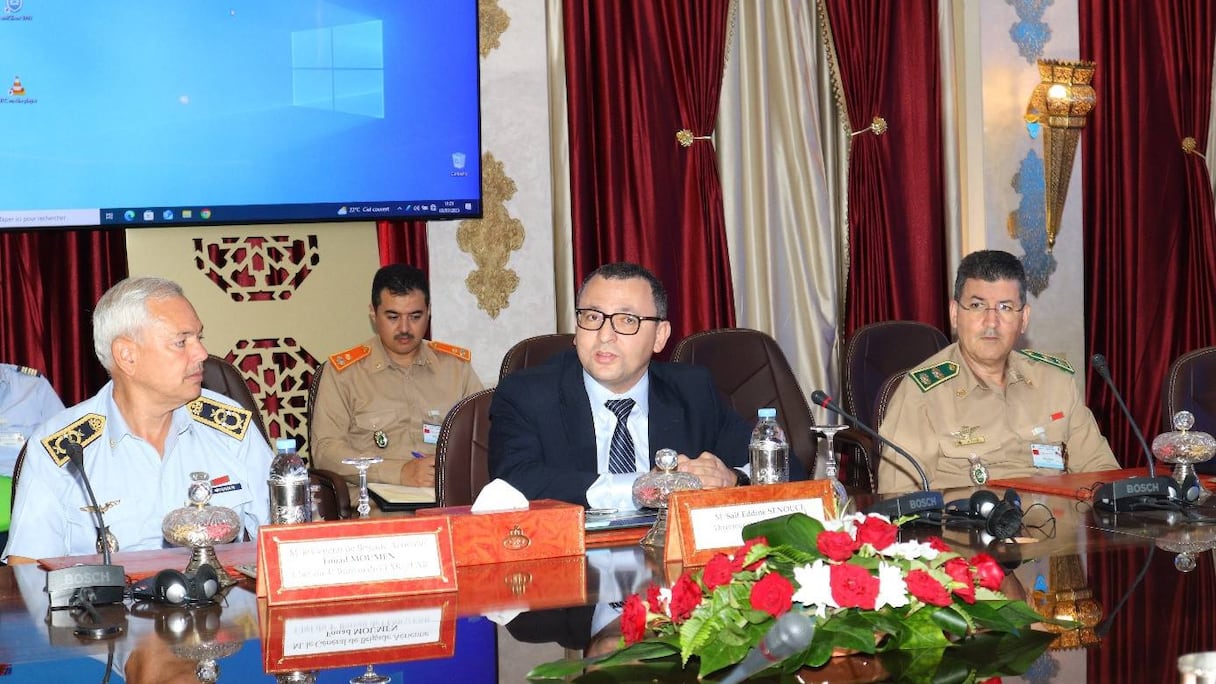
Ceremony marking the official launch of the C-130 upgrade program, held at the Officers’ Club in Rabat on Wednesday, July 2, 2025.
Fighter aircraft account for the largest share of the budget, according to Harifi. He cautions that the first flight of an F-16 Block 72 does not mean delivery is imminent. The arrival of these aircraft is also a prerequisite for upgrading Morocco’s existing F-16 Block 52 fleet to the Viper standard. Replacing training and ground-attack aircraft, including the Alpha Jet, is another issue to be addressed. As for the navy, a national program to renew the existing fleet could also be announced.
Alongside equipment purchases, Morocco is building its own defense industrial base. Abdellatif Loudiyi, minister delegate in charge of the National Defence Administration, outlined the strategy at the opening of the eighth Marrakech Air Show on October 7. He described a three-stage approach: first establishing a legal framework, then creating industrial zones with suitable logistics infrastructure and services, and finally introducing incentives to attract investors.
According to Loudiyi, several projects have been launched with international partners to manufacture military equipment for both the domestic and export markets. His ambition is to transform Morocco from a country that imports defense capabilities into one that “builds national capabilities.” He highlighted Morocco’s stability, its position at the crossroads of Europe, Africa and the Arab world, and its Atlantic access. He also pointed to the localization of military technologies and partnerships bringing together Moroccan public and private-sector players with foreign investors.
The industrial zones were established under a decree issued in June 2024, which created two defense-focused industrial acceleration zones: a 75-hectare site in Nouaceur and a 600-hectare site in Sidi Yahya, near Kenitra. They are managed by the Defence Industrial Zones Management Company (SGZID), established in July 2025 by the Military Housing and Equipment Agency (ALEM) and MEDZ, a subsidiary of the Caisse de Dépôt et de Gestion (CDG).
During the Marrakech Air Show, SGZID signed seven land agreements with Arquus, MARCOTEC, MKU, INKAS Aerospace & Defense, ABA Technology, Harmattan AI and the partnership between IGG and Bal Teq Defense Industries. SGZID chief executive Fayçal Bennouna described the agreements as a “milestone towards the emergence of a sovereign national defense industry.”
