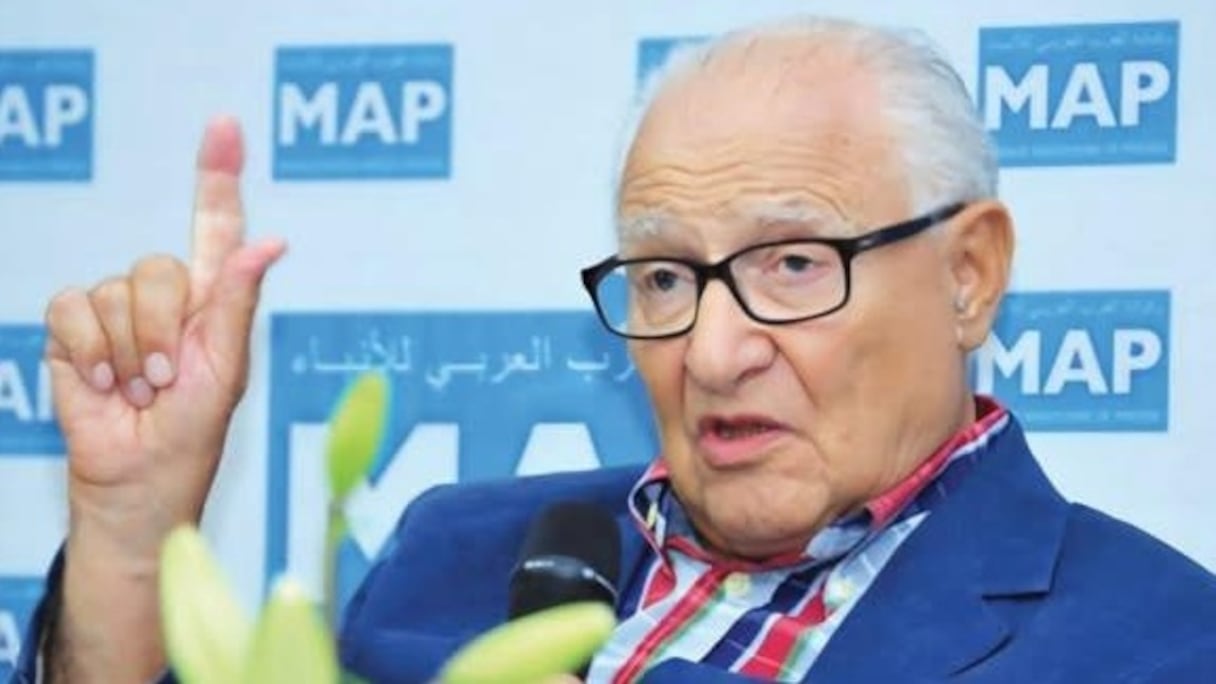
With his death, the Istiqlal Party has lost one of its historic figures. Abdelhak Tazi devoted much of his life to political activity and public service.
Born in Fes in 1939, Abdelhak Tazi belonged to a generation of Moroccans who helped build the country’s institutions and administration in the early years after independence. An agricultural engineer who studied in Paris, among other places, he began his career in agricultural and rural development.
He took part in preparing and implementing the first five-year plan of independent Morocco before holding several positions in the agricultural administration. He also headed the National Office for Agricultural Advisory Services (ONCA).
Alongside his professional career, Abdelhak Tazi became involved in the Istiqlal Party at an early age. He joined the party leadership at its seventh congress in 1965 and, in 1969, became secretary-general of the Istiqlal Youth. He remained among the party’s senior members and leaders for more than four decades.
His political career also led him into government. Starting in 1977, he joined the government and held several positions until the mid-1980s.
He was appointed Secretary of State for the Training of Executives in the government of Ahmed Osman, a position he retained in subsequent governments.
After his time in government, Abdelhak Tazi continued his political career and became a prominent figure in the Istiqlal parliamentary group. He chaired the Unity and Equality Group in the House of Representatives and later also held positions in the House of Councillors.
In 2015, Abdelhak Tazi published his memoirs, titled Memoirs of National, Political and Diplomatic Activism, in collaboration with journalist Tamim Benghmouch.
The book, based on a lengthy journalistic interview, looks back at his professional career, his involvement in the Istiqlal Party, his years in government and several episodes in Morocco’s political history before and after independence.
With his death in Rabat on Wednesday, Morocco loses a figure who lived through several periods of the country’s political life, from the building of independent Morocco to the transformations of its contemporary party and parliamentary landscape.
