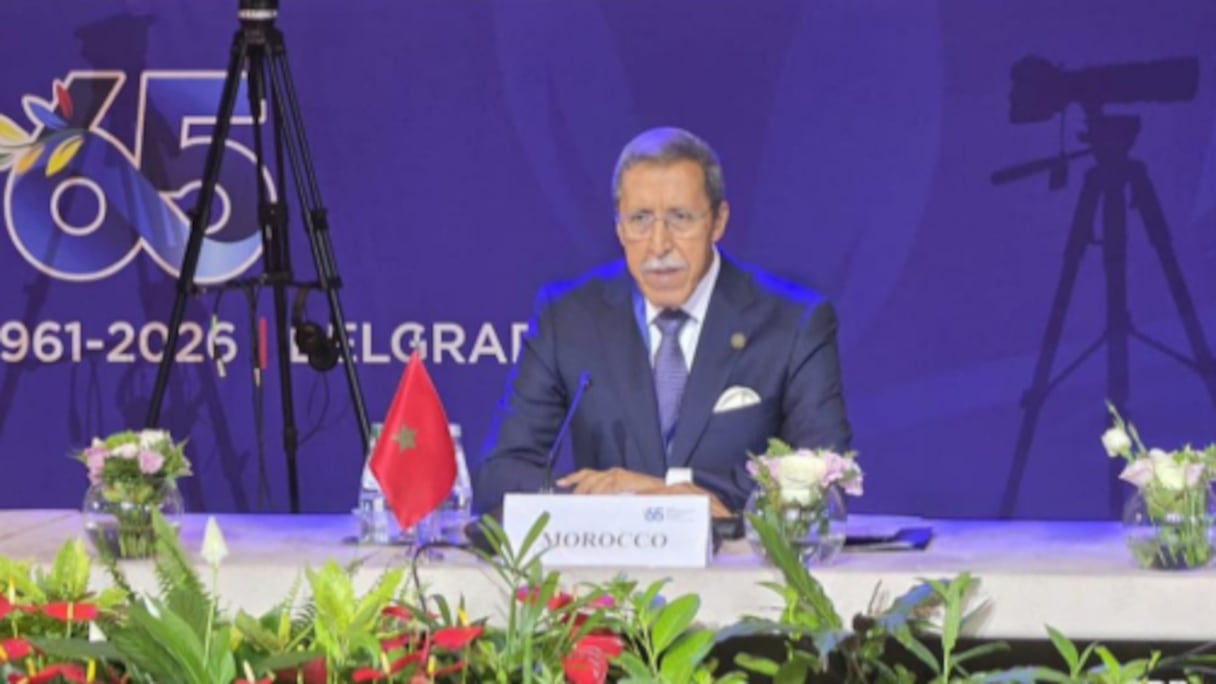
Hilale said the challenges, crises and divisions that have emerged since the Movement was established mean it can no longer address today’s issues by relying on the approaches and working methods of its founding period. He called for stronger consultation mechanisms and updated working methods “so that it can enhance its effectiveness and credibility” and develop “practical and realistic proposals” to address current and emerging international challenges.
He stressed that the NAM must adapt to major changes in the international system and address emerging issues including climate change, artificial intelligence and new technologies, cybersecurity and transnational crime. Rather than replacing the multilateral system, the Movement should strengthen it by coordinating and advancing the priorities of Global South countries within the United Nations.
Read also : Akhannouch received by Angolan President João Lourenço in Luanda
Hilale also highlighted Morocco’s South-South cooperation with African countries, particularly in food security, health, training and human development. He cited several initiatives launched at the initiative of King Mohammed VI, including the Royal Initiative to facilitate Sahel countries’ access to the Atlantic Ocean, the Royal Atlantic Africa Initiative and the Atlantic African Gas Pipeline project. These initiatives, he said, reflect Morocco’s commitment to Africa’s stability and sustainable development and seek to turn the Atlantic space into a platform for “openness, connectivity and economic integration.”
The ambassador also underlined the centrality of the Palestinian issue in Morocco’s foreign policy. He reaffirmed Morocco’s commitment, under King Mohammed VI’s chairmanship of the Al-Quds Committee, to preserving the legal, historical and cultural status of Al-Quds Al-Sharif and supporting the Palestinian people’s right to establish an independent state with East Al-Quds as its capital.
Read also : Germany backs new EU-Morocco trade framework covering products from the Sahara
Within this framework, Hilale said Morocco decided to participate in the International Stabilization Force in Gaza. Morocco’s contribution will include the deployment of military and security personnel, as well as a field military hospital to provide medical assistance to the affected population.