The German government has expressed its support for the new trade arrangement between Morocco and the European Union, which maintains European tariff preferences for products originating from the Sahara. Berlin stated it had no reservations about the new arrangement and considers it compatible with the October 4, 2024 ruling by the Court of Justice of the European Union (CJEU).
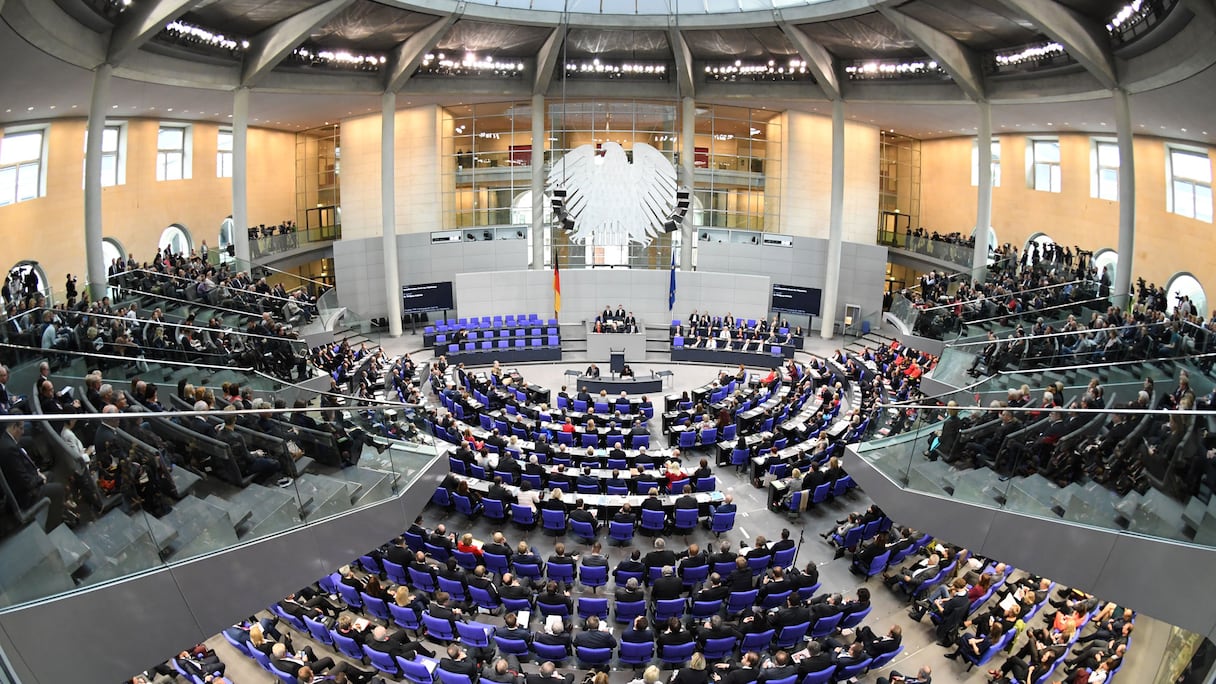
This German position was articulated in the federal government’s response to a parliamentary question submitted by lawmakers from Die Linke. Published on August 24, 2026, under reference Drucksache 21/7703, the response specifically addresses the new EU-Morocco trade arrangement and its application to products from the Sahara.
When asked about any reservations regarding the new framework, the German federal government explicitly stated it had none.
Berlin further confirmed that the new trade arrangement between the European Union and Morocco is compatible with the CJEU’s ruling of October 4, 2024. The German government also noted that the European Commission had confirmed the new agreement fully meets the conditions set by the CJEU in that ruling, including those concerning the benefits arising from the agreement.
This stance comes as Brussels and Rabat work to adapt their trade framework following the European court’s ruling.
The new arrangement also includes a regular monitoring mechanism to oversee its implementation. It establishes rules governing the origin of covered products, including those from the Laâyoune-Sakia El Hamra and Dakhla-Oued Eddahab regions.
The German federal government’s response aligns with the ongoing strengthening of the partnership between Rabat and Brussels. In 2026, the European Union and Morocco continued to deepen their cooperation, notably through the EU-Morocco Association Council.
The European Commission was mandated by EU member states to negotiate the new adaptation of the trade framework with Morocco. On September 10, 2025, the Council of the European Union authorized the opening of negotiations to amend the protocols of the EU-Morocco Association Agreement.
Germany’s position holds significant weight given its role within the European Union. By officially stating it has no reservations and considers the new arrangement compatible with the CJEU ruling, Berlin is endorsing the approach taken by European institutions to preserve and strengthen trade relations with Morocco.