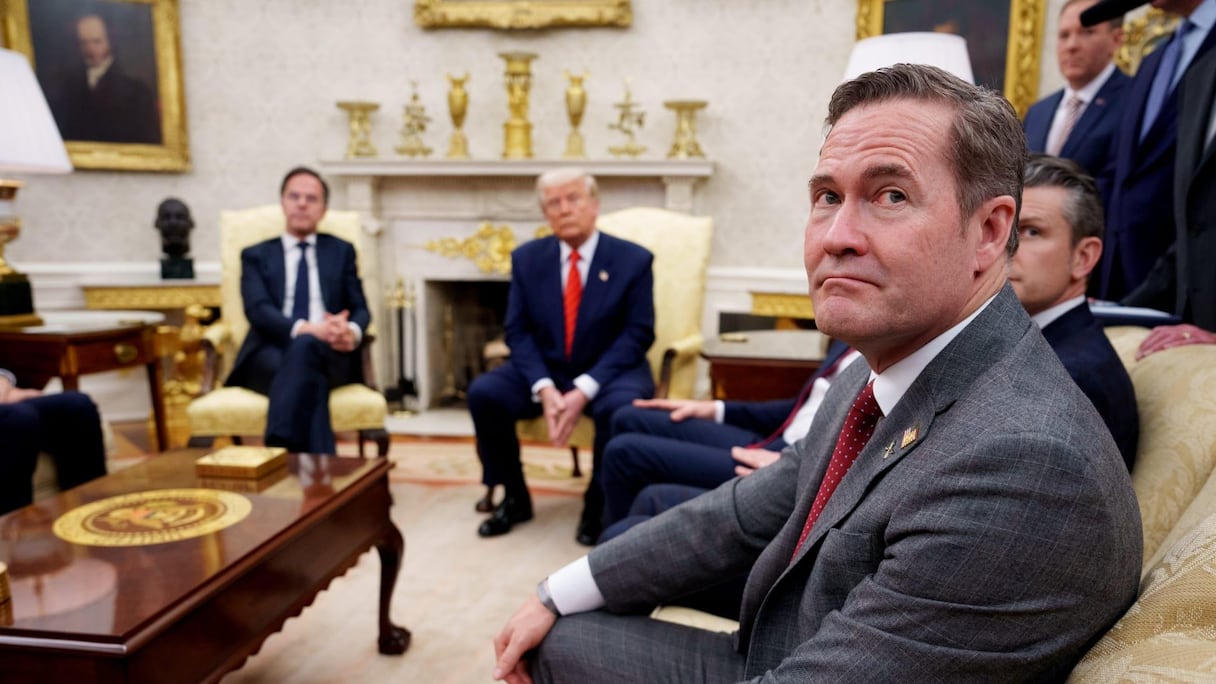
US Ambassador to the United Nations Mike Waltz is making a trip to Lebanon and Morocco from November 15 to 17, the US Mission to the UN announced. In Morocco, the diplomat is scheduled to meet senior government officials to discuss continued cooperation under the Abraham Accords and joint efforts to promote regional security. He will also reaffirm US support for a lasting solution to the Sahara dispute based on Morocco’s autonomy proposal.
In Beirut, the first stop on his tour, Waltz is expected to discuss with Lebanese authorities the implementation of the Trilateral Framework and US support for a sovereign Lebanon free from Hezbollah and Iranian influence. He will also meet UN partners to discuss the end of the UN Interim Force in Lebanon (UNIFIL) mandate and the transfer of security responsibilities to the Lebanese state.
Read also : Experts: MINURSO’s departure could open a new chapter in the Moroccan Sahara issue
Waltz was the US representative who defended the draft resolution before the Security Council. On October 30, the text received 11 votes in favor, one against — Russia’s — and three abstentions by China, Pakistan and Somalia. The resolution was therefore blocked not because it lacked support, but by a single veto, the first of its kind on this issue in 50 years.
The draft called for MINURSO to be transformed into MINUSO (United Nations Mission for Western Sahara) as of November 1, 2026. It also asked the UN Personal Envoy to consult a broader range of interlocutors, including elected representatives from both regions of the Sahara, civil society, the diaspora and alternative movements such as the Sahrawi Movement for Peace.
Russia’s counterproposal, which sought only to extend MINURSO’s mandate by one year, received support from Russia, China and Somalia alone. As a result, the mission’s mandate expired on October 31. On November 1, the United Nations confirmed that the liquidation process for MINURSO had begun.
In a statement issued after the vote, the Royal Cabinet described the non-renewal of the mandate as a significant development and an important step toward bringing the issue of the Moroccan Sahara to a definitive close at the United Nations.
In substance, the veto does not change the framework guiding the process. Autonomy as the basis for negotiations is already included in Resolution 2797, which remains in force despite the veto. When the resolution was adopted a year ago, Moscow had abstained.
Read also : Sahara: At the UN, self-determination becomes an option, “should they so wish”
On November 10, the UN General Assembly met to discuss the Russian veto. Addressing the assembly, Morocco’s ambassador, Omar Hilale, argued that the deadlock was not in Rabat, New York or even Moscow, but in Algiers. France, the United Kingdom, the European Union, Gulf countries and Nordic countries, among others, expressed regret over Russia’s veto and voiced support for the autonomy plan.
Waltz’s tour links two issues that he himself had previously connected. In an interview with the Financial Times, he said the US administration was seeking to bring long-running peacekeeping operations in Lebanon, Somalia and the Sahara to an end. By visiting Morocco in the wake of the latest UN developments, Donald Trump’s representative to the United Nations is signaling that Russia’s veto has not changed Washington’s position: autonomy under Moroccan sovereignty remains, in the US view, the sole basis for a settlement.
