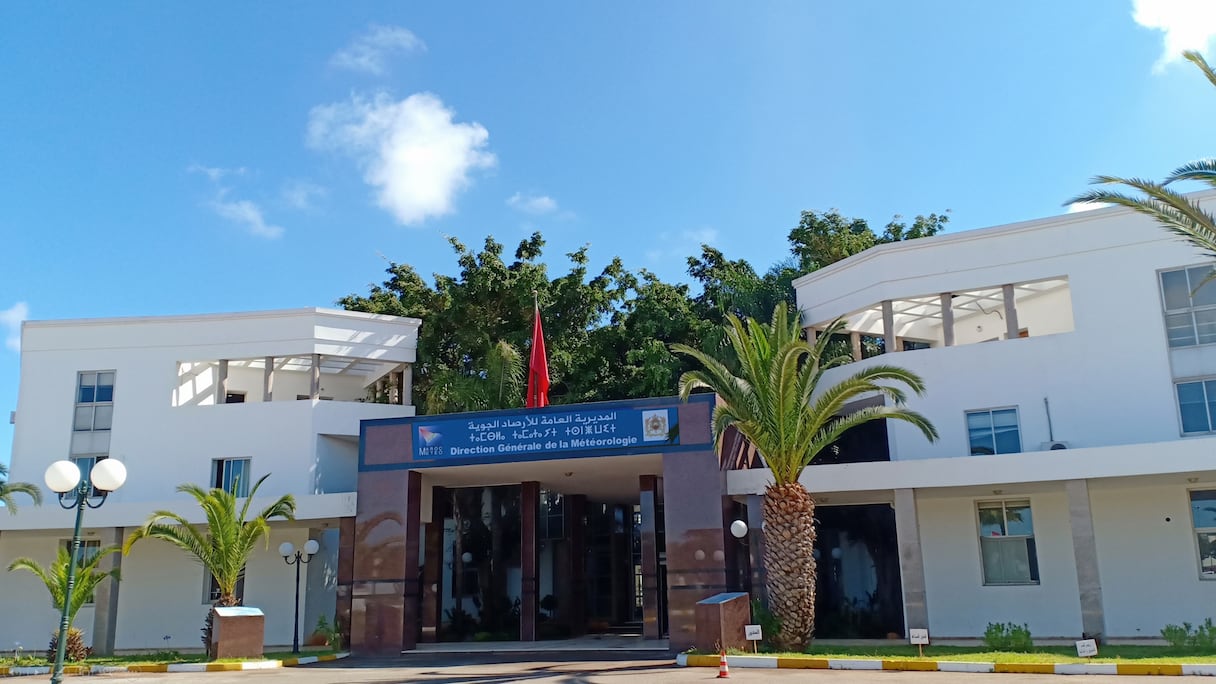
Morocco is preparing the most significant overhaul of its national weather service since its creation more than six decades ago, transforming the General Directorate of Meteorology into an autonomous public institution with legal personality and financial independence.
Approved by the government as a draft law, the reform will establish the Moroccan Agency for Meteorology and Climate, ending decades of direct administrative control by the Ministry of Equipment and Water. The new governance model is expected to enable the institution to respond more rapidly to climate-related emergencies, modernize its infrastructure and diversify its sources of funding.
Six decades of weather monitoring
The General Directorate of National Meteorology was established in 1961 and has since served as Morocco’s main body for collecting and managing weather and climate data nationwide.
The institution underwent several organizational changes, most notably its attachment to the Ministry of Public Works in 1990, before coming under the supervision of the Ministry of Equipment and Water under the modern identity of Maroc Météo.
The service manages meteorological operations and monitoring networks from its historic headquarters on Mohamed Tayeb Naciri Avenue in the Hay Hassani district of Casablanca.
Its role extends far beyond daily weather forecasts. It is responsible for building a comprehensive national climate database and issuing weather alerts through a four-tier warning system, ranging from green to red.
The warning system is designed to protect lives and property by enabling local authorities and field operators to shift from reactive crisis management to a more proactive approach to risk prevention.
The directorate also provides continuous support to sectors highly exposed to weather fluctuations, including aviation, maritime transport, agriculture, water management and energy.
Read also : Why Morocco’s lawyers’ bill is before the Constitutional Court—and Who Can Refer It for Review
Funding constraints and structural shortcomings
The new legal framework is intended to address governance issues highlighted by the Court of Auditors in its 2014 annual report.
An audit conducted by the General Inspectorate of Finance covering the 2018–2021 period further confirmed these structural weaknesses.
Oversight reports found that the directorate’s status as part of the ministry’s administrative structure deprived it of the flexibility needed to upgrade infrastructure and modernize technical systems quickly enough to ensure the accuracy and reliability of data flows.
The lack of legal personality also prevented Morocco from directly benefiting from international grants and financial assistance provided by global funds supporting climate adaptation projects.
The Court of Auditors additionally criticized the absence of flexible mechanisms allowing the directorate to diversify its funding sources by marketing its services and data to productive sectors. As a result, the institution remained entirely dependent on allocations from the ministry’s budget, creating structural obstacles to digital and technological transformation.
Financial autonomy and sovereign services
The new legislation will allow the agency to move beyond traditional administrative management by offering meteorological and climate expertise to government entities and private institutions through commercial agreements.
The law also reinforces Morocco’s sovereignty over climate information by making the agency the sole official body authorized to issue weather forecasts and public alerts.
The agency will be responsible for creating and developing the National Climate Network, which will bring together all monitoring stations across the country. Operators of existing stations will be given a one-year deadline to declare their facilities.
Lawmakers have also introduced strict penalties to protect monitoring stations and safeguard the integrity of climate data, preventing any manipulation of information linked to water and food security.
The agency will carry out a number of sovereign and strategic missions, including meeting the needs of national defense, ensuring air and maritime navigation safety and overseeing cloud-seeding operations.
The explanatory memorandum accompanying the draft law guarantees a smooth transition for employees to the new structure. It explicitly states that staff currently working for the General Directorate of Meteorology will be transferred to the agency while retaining all the rights and benefits they enjoyed under their previous status.
Alongside these employment guarantees, the agency will replace the state in all rights and obligations related to studies, construction projects, procurement contracts and service agreements, as well as all existing contracts linked to the directorate’s responsibilities. The objective is to ensure uninterrupted public service and preserve commitments made to partners without any administrative or technical disruption.
As for the agency’s future headquarters, an authorized source told Le360 that current indications point to no change in its administrative location, making it likely that the agency will continue operating from the same headquarters in Casablanca.
