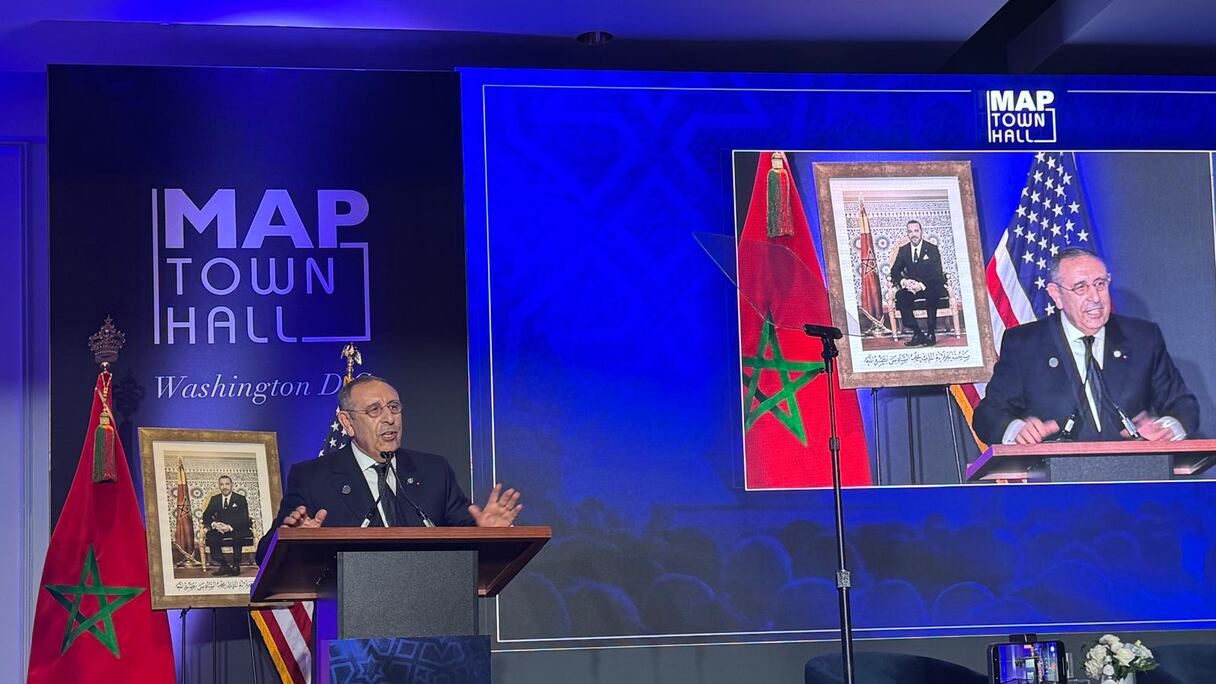
Speaking at a MAP Town Hall on the future of the partnership between the Kingdom of Morocco and the United States, Ambassador Youssef Amrani underscored the strategic depth of bilateral relations and their significant potential for further development.
“If Morocco was the first country in the world to recognize the independence of the United States in 1777, and if the Treaty of Peace and Friendship remains the oldest unbroken treaty in American history, the true uniqueness of this relationship lies in its remarkable ability to renew itself without ever abandoning its foundations,” the diplomat said.
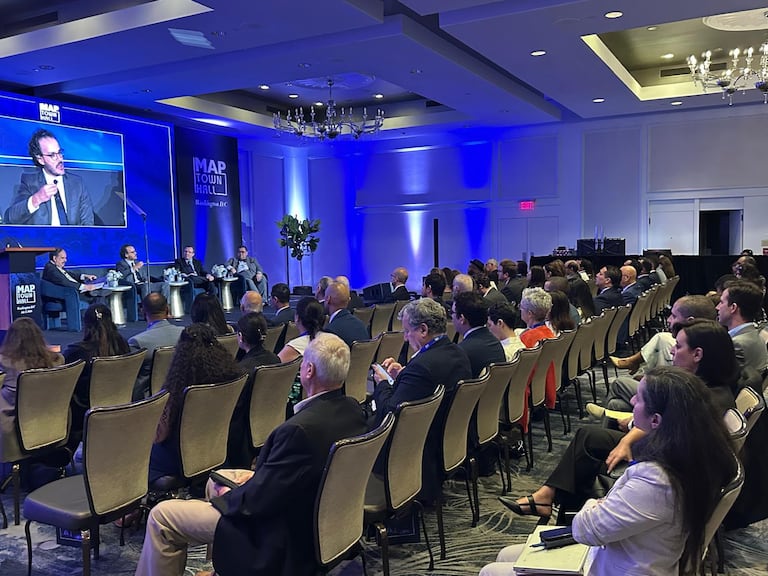
Through political transitions, geopolitical upheavals and shifts in the international order, the Moroccan-American partnership has continued to grow stronger, making mutual trust its greatest strategic asset.
Amrani said that, under the leadership of King Mohammed VI and thanks to the commitment of President Donald Trump, relations between Morocco and the United States are now entering a new strategic phase, driven by growing convergence in political, security, economic and technological interests.
The ambassador also stressed that the strength of an alliance is measured not by the force of its declarations, but by the tangible results it delivers.
In this regard, he noted that Morocco remains the only African country linked to the United States through a free trade agreement, that African Lion has become the continent’s largest military exercise, and that intelligence and counterterrorism cooperation between Rabat and Washington ranks among the most advanced in Africa.
The diplomat further emphasized that defense cooperation has become one of the strongest pillars of the strategic partnership between the two countries. Beyond joint military exercises and exemplary political and military dialogue, he said several major initiatives are expected to materialize in the coming months, further strengthening cooperation built on mutual trust and a shared vision of regional stability.
Against the backdrop of an increasingly uncertain international environment, Amrani highlighted Morocco’s role as a pillar of stability and a trusted partner at the crossroads of Africa, the Atlantic and the Mediterranean.
He said that this strategic position creates new opportunities for cooperation in sectors such as defense, critical minerals, cybersecurity, artificial intelligence, the energy transition and Atlantic infrastructure. In this context, he cited King Mohammed VI’s Atlantic Initiative as the embodiment of an integrated vision that combines security, development and regional integration.
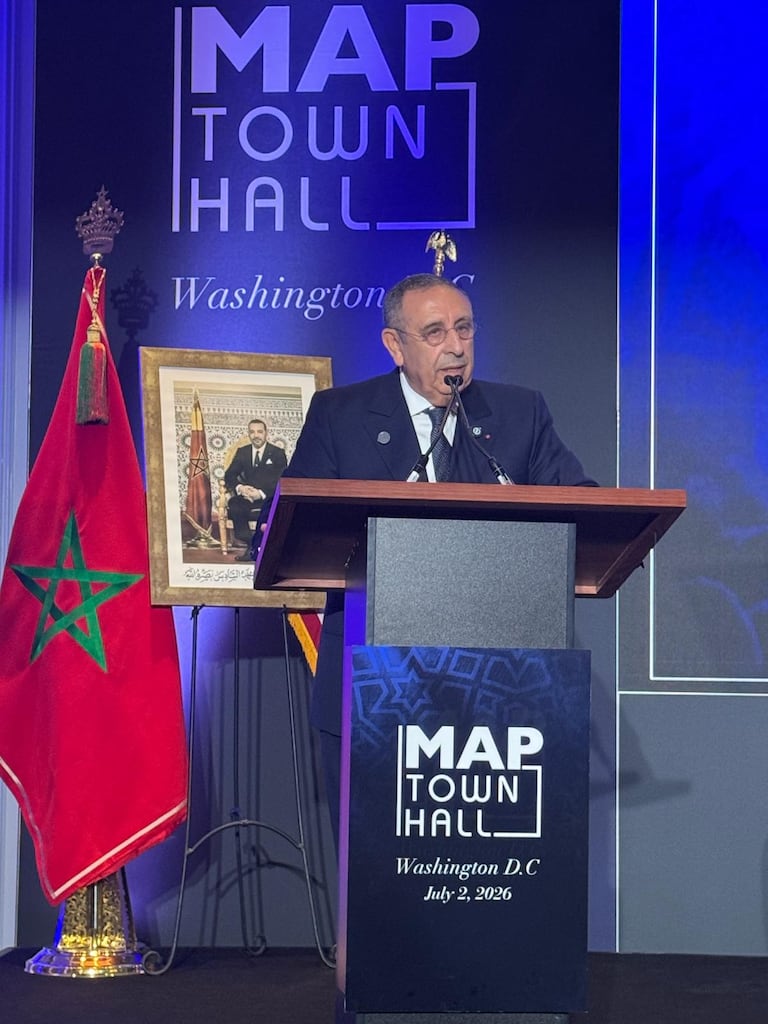
The ambassador also welcomed the bipartisan support Morocco continues to enjoy in the US Congress, saying it reflects a lasting strategic consensus regarding the Kingdom’s role in the regional security architecture and its partnership with the United States in Africa.
Addressing the issue of the Moroccan Sahara, Amrani said that the United States’ recognition of Morocco’s sovereignty over the Sahara marked a major turning point in bilateral relations. He added that the decision reflected Washington’s confidence in Morocco and affirmed the Kingdom’s status as a reliable ally and a key contributor to regional stability.
In closing, Amrani called for the 250-year friendship between Morocco and the United States to enter a new phase, arguing that while history has provided the foundation for the partnership, it is a shared vision for the future that will determine its continued strength and scope.
“For two and a half centuries, Morocco and the United States have consistently chosen trust over uncertainty, action over rhetoric and partnership over distance. It is this shared commitment to a common vision that makes our relationship not only one of the oldest but also one of the most promising of our time,” he concluded.
