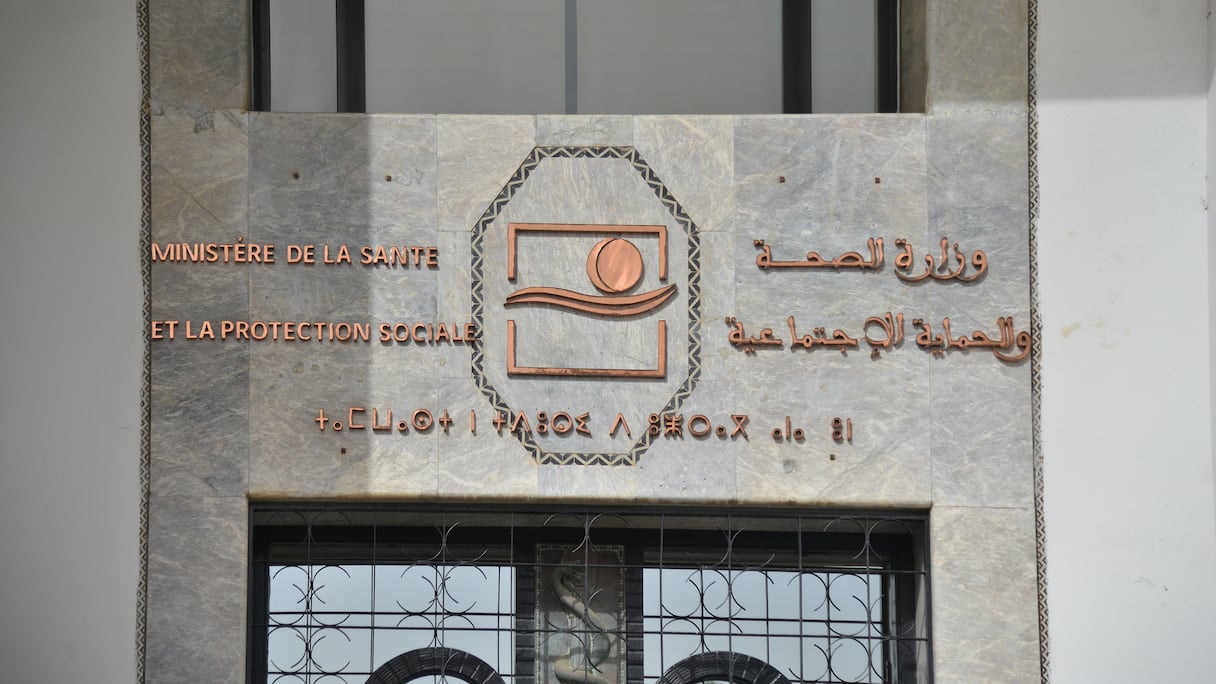
With the appointment of Fatima Ezzahra El Mansouri as Head of Government-designate, attention is now turning to the composition of the next government and, in particular, the personalities who could take charge of its various ministries.
The coming appointments will determine who will be responsible for implementing the government’s priorities across a range of sectors, from the economy and education to social affairs and health. Among them, the health portfolio is likely to attract particular attention.
Health touches directly on some of the most essential concerns for citizens, from access to care and hospitals to medical staffing, medicines and social protection. Morocco is also carrying out a broad transformation of its health system, making the person appointed to oversee the sector a particularly consequential choice.
But beyond the question of who could be appointed, another question arises. What should the country actually look for in its next health minister?
For Dr Anwar Cherkaoui, a physician and expert in medical and health communication, the answer should not necessarily be found in the medical profession itself.
Read also : El Mansouri looks to Koutla trio for next govt, RNI set to miss out: sources
In an op-ed distributed to the press and received by Le360, Cherkaoui makes the case for breaking with the idea that the health portfolio should necessarily go to a doctor, addressing the Head of Government-designate directly as she prepares to form her cabinet.
“I am a doctor, and I am proud of it. But precisely because I am a doctor, I believe the next health minister does not necessarily have to be one,” he writes.
His argument is not that medical knowledge has no place at the head of the ministry. Rather, he questions the assumption that being a doctor should, by itself, make someone the natural choice for the position.
Cherkaoui notes that Morocco has already had health ministers who were not physicians. Among the examples he highlights is Taïeb Bencheikh, whom he describes as the first non-doctor to hold the health portfolio and who remained in the position for seven years.
“You will therefore not be a pioneer,” he writes, noting that Morocco has already had non-doctors serve as health ministers.
For Cherkaoui, the case for reconsidering the profile of the health minister is also linked to how much the sector itself has changed.
“You have the opportunity to be innovative and bold, at a time when medicine in Morocco has changed both in its expansion and in its architecture, with the new agencies, the Territorial Health Groups and the major changes taking place in the private sector with the arrival of mega private structures,” he writes.
Cherkaoui says his position is also informed by what he has observed throughout his career.
“Since 1987, in my dual activity as a doctor and an expert in medical and health communication, I have observed their methods, their relations with professionals, their ability to reform and above all their way of looking at the health system,” he writes.
Looking back at the different ministers he has observed, Cherkaoui singles out the late Taïeb Bencheikh for what he describes as his effectiveness. Bencheikh, he points out, was not a doctor. His background was instead in economics, political science and statistics.
Read also : Govt formation talks will ‘not be easy’, says El Mansouri
For Cherkaoui, that background gave him an important quality for managing a health system.
“He had this essential quality for directing a health system: taking a step back, looking at the data, understanding populations, measuring needs and making decisions,” he writes.
It is this distinction between treating patients and governing an entire health system that sits at the center of Cherkaoui’s argument.
“A doctor treats. A minister governs.”
In his view, the two roles require different approaches.
“The doctor is trained to take care of a patient. The minister must take care of a system: millions of citizens, thousands of professionals, hospitals, clinics, health centers, medicines, budgets, territories, human resources and a social protection system undergoing profound transformation.”
The health minister, he adds, must also negotiate, arbitrate, legislate, convince, manage crises and answer for decisions made by the ministry.
“Medical competence is therefore an asset. But it is not a sufficient condition.”
That does not mean, in his view, that a non-doctor would have to operate without medical expertise. A minister can rely on specialized advisers and seek medical expertise, when necessary, he argues.
Cherkaoui also sees another possible difficulty when a doctor takes charge of the ministry. The health sector contains numerous professional interests and divisions, from general practitioners and specialists to hospital doctors and private practitioners.
“There is even a particular risk when a doctor becomes health minister: that of finding himself trapped in the war between the chapels,” he writes.
“General practitioners against specialists. Public against private. Hospital doctors against private practitioners. One specialty against another. One corporation against another.”
Read also : “We will not repeat the mistakes of the past”: PAM sets out to chart its own course
A doctor appointed as minister may know these divisions particularly well, Cherkaoui argues, but that familiarity does not necessarily make navigating them easier.
“And sometimes, in an almost paradoxical phenomenon, a doctor who becomes a minister may encounter resistance precisely from his own colleagues. Why? Because he ceases to be simply a doctor. He becomes responsible for decisions that affect professional, financial and corporatist interests.”
Cherkaoui then points to what he describes, with irony, as the excessive development of the “medical ego”.
“The doctor is accustomed to being the one who knows, the one who decides in front of the patient. Once he becomes a minister, he must accept changing his posture completely. He is no longer the doctor of his colleagues. He becomes the minister of all citizens.”
For Cherkaoui, this is ultimately part of a wider point about what managing healthcare actually means. The challenges facing the sector cannot be reduced to medical questions alone.
“Health is not only medical. It is probably here that the heart of the problem lies. Health is a medical issue, but it is above all a social and political issue.”
When a citizen cannot afford treatment, when a woman has to travel tens of kilometers to reach a maternity ward or when a patient waits months for an appointment, Cherkaoui argues that the problem extends beyond medicine.
“We are facing a problem for society,” he writes.
This broader perspective, in his view, is particularly relevant as Morocco pursues major changes in its health system, including the expansion of social protection, hospital reform, the development of Territorial Health Groups, digitalization and changes to healthcare financing.
“In this context, the next minister must have a global vision of health policy.”
That vision, he says, must also include the relationship between Morocco’s public and private health sectors.
“The private sector is not the enemy of the public sector,” he writes, arguing that private healthcare meets part of the population’s needs, creates jobs, invests and contributes to the national healthcare offer.
For Cherkaoui, the issue is therefore not whether Morocco should favour one sector over the other.
“The challenge is to put the public and private sectors at the service of the citizen.”
“The private sector must not become an alternative reserved for those who can pay. And the public sector must not be condemned to take care alone of the most vulnerable populations, socially and economically. We must organize complementarity, define everyone’s responsibilities and maintain budgetary balances.”
It is here, he argues, that a perspective outside the traditional medical professional groups could prove useful.
“This is precisely where a perspective from outside the medical chapels can be useful.”
So, doctor or non-doctor? Cherkaoui’s answer is clear. “My answer is simple: competent, yes; doctor, not necessarily.”
He does not exclude a doctor from the position. If a physician has the political, social, economic and strategic vision required to lead the sector, he argues, there is no reason not to appoint one. But he also sees other possible profiles.
“The next health minister could be a doctor. If he has a political, social, economic and strategic vision, so much the better.”
“But he could also be a statistician, economist, lawyer, manager or public policy specialist, provided that he knows the world of health sufficiently and knows how to surround himself with independent medical expertise.”
Read also : El Mansouri appointment formally gazetted as govt talks continue
For Cherkaoui, therefore, the central question should not be whether the person appointed has a medical degree.
“The question is therefore not: ‘Is he a doctor?’ The real question is: ‘Is he capable of governing health?’”
That is the principle he ultimately wants to see applied when the next government takes shape.
“Please, Madam Head of Government, do not necessarily choose a doctor because the portfolio bears the name ‘Health’,” he writes. “Choose a person capable of listening to doctors without becoming their representative. Capable of talking to the private sector without abandoning the public hospital. Capable of defending the public sector without considering the private sector an adversary. Capable of managing budgets without turning health into a simple accounting line.”
And for Cherkaoui, the ultimate measure remains the citizen at the center of the system.
“And above all, capable of understanding that at the end of all the reforms, statistics, billions of dirhams and administrative battles, there is a citizen waiting to be treated.”
His conclusion returns to the position from which he began, as a doctor arguing against making the medical profession a prerequisite for leading the health system.
“I am a doctor. I stand by that. But precisely because I am a doctor, I would rather have a good non-doctor as health minister than a doctor who would make a bad health minister.”
“Morocco does not need a ‘great doctor’ at the head of its health system. It needs a great strategist of public health.”
